

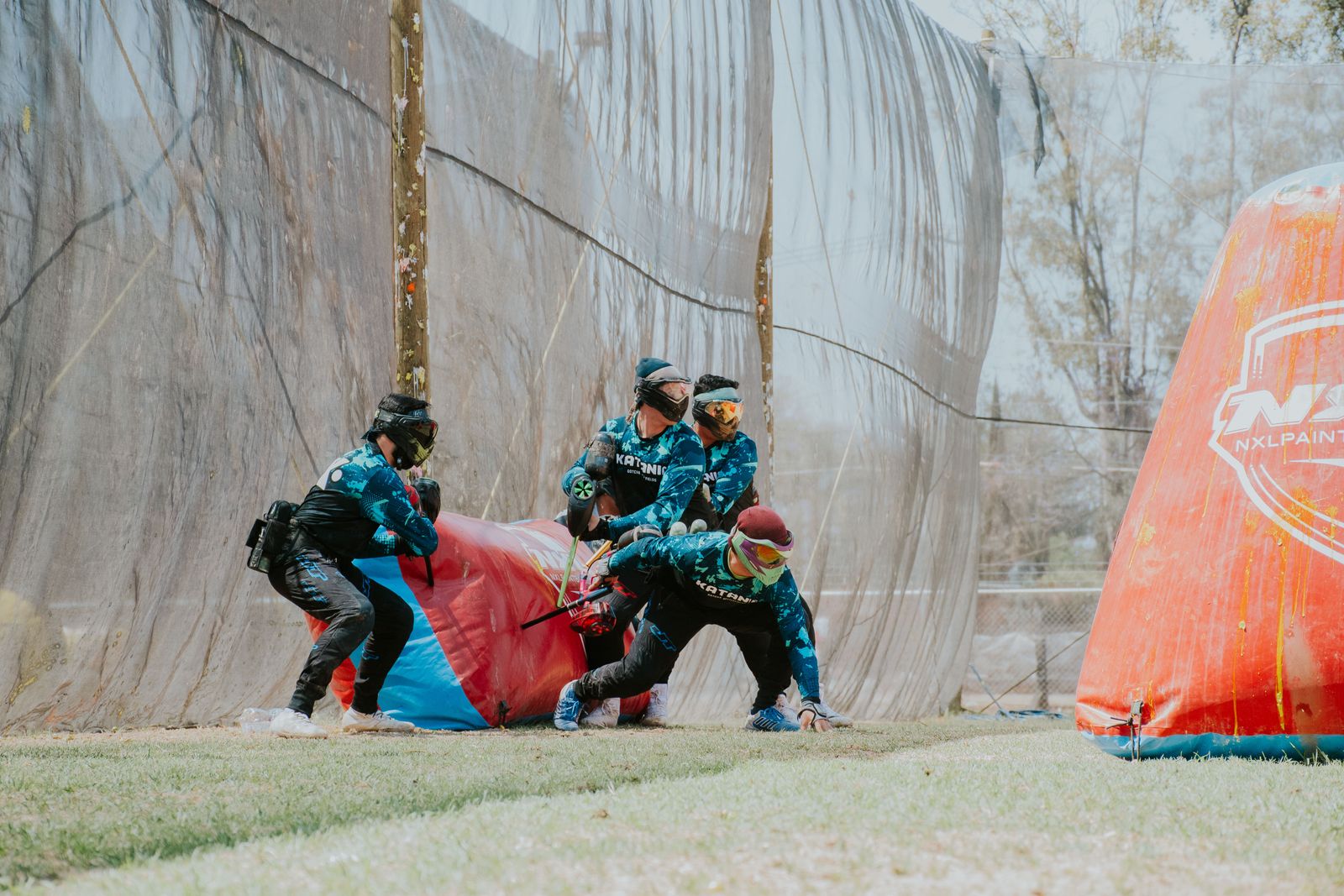
The short version: same gear aisle, two different businesses
Side by side, GellyBall and paintball look like the same operation with different-sized ammunition. They are not. They split on the three things an operator weighs before adding either one: what it costs to run, how often someone gets hurt, and what it costs to insure. Get those three right and the choice between them, or the choice to run both, is straightforward. If the names alone are tripping you up, our explainer on what is a gel blaster sorts gel blasters from Orbeez guns and airsoft.
The headline is that GellyBall runs cheaper, hurts people less often, and should insure for less than paintball at the same revenue. The trap is that last word. Should. A GellyBall arena written up as paintball pays a paintball premium for a risk it does not carry. Here is the head-to-head.
| Factor | Paintball | GellyBall |
|---|---|---|
| Projectile | .68 caliber gelatin capsule | 7.4mm hydrogel gellet |
| Velocity and impact | Around 280 fps, breaks and leaves a welt | Well below paintball, bursts with minimal sting |
| Face protection | Full-face mask, ASTM F1776 standard | Light mask or goggles |
| Typical minimum age | Around 10 and up | Marketed for ages 5 and up |
| Dominant injury type | Welts, bruising, lifted-mask eye injury | Trips, slips, minor contact |
| Cost to run a game | Higher: paint is the consumable | Lower: gellets cost a fraction of paint |
| What carriers do with it | Standard action-sports class | Often misclassified as paintball |
| Premium at equal revenue | Higher, for the impact-severity tail | Lower, when classified correctly |
Cost: GellyBall is the cheaper game to run
The cost gap starts with the consumable. Paintball is sold by the case, players burn through hundreds of rounds a game, and paint has to be stored, hauled, and cleaned up after it breaks. GellyBall fires a hydrogel gellet that hydrates from water, costs a fraction of a paintball per round, bursts into nothing, and leaves no mark to scrub off a wall or a jersey. That single difference is why GellyBall scales down to ages most paintball fields will not take, and why it fits birthday-party and family-entertainment-center economics that paintball cannot reach.
Equipment runs cheaper too. A GellyBall blaster costs less per unit than a paintball marker, and the lower-impact format means lighter barriers, smaller footprints, and indoor arenas that do not need a netted acre. Gel-blaster play has grown from a novelty into a recognized location-based-entertainment category on those economics, with industry coverage reporting one gel-blaster experience passing 80,000 players and dozens more venue installations in the pipeline (blooloop, gel-blaster industry coverage).
On the insurance side, the same logic holds when the carrier rates it right. A small paintball field with real coverage commonly runs well into four or five figures a year, with the drivers broken down in our paintball insurance cost guide. A comparably sized GellyBall operation should land below that, because the impact-severity exposure that drives paintball pricing is not present. When a GellyBall quote comes back at a paintball number, the classification is the problem, not the math. For the actual numbers a correctly classified GellyBall operation should see, read our GellyBall insurance cost guide.
Safety: the impact gap is the whole story
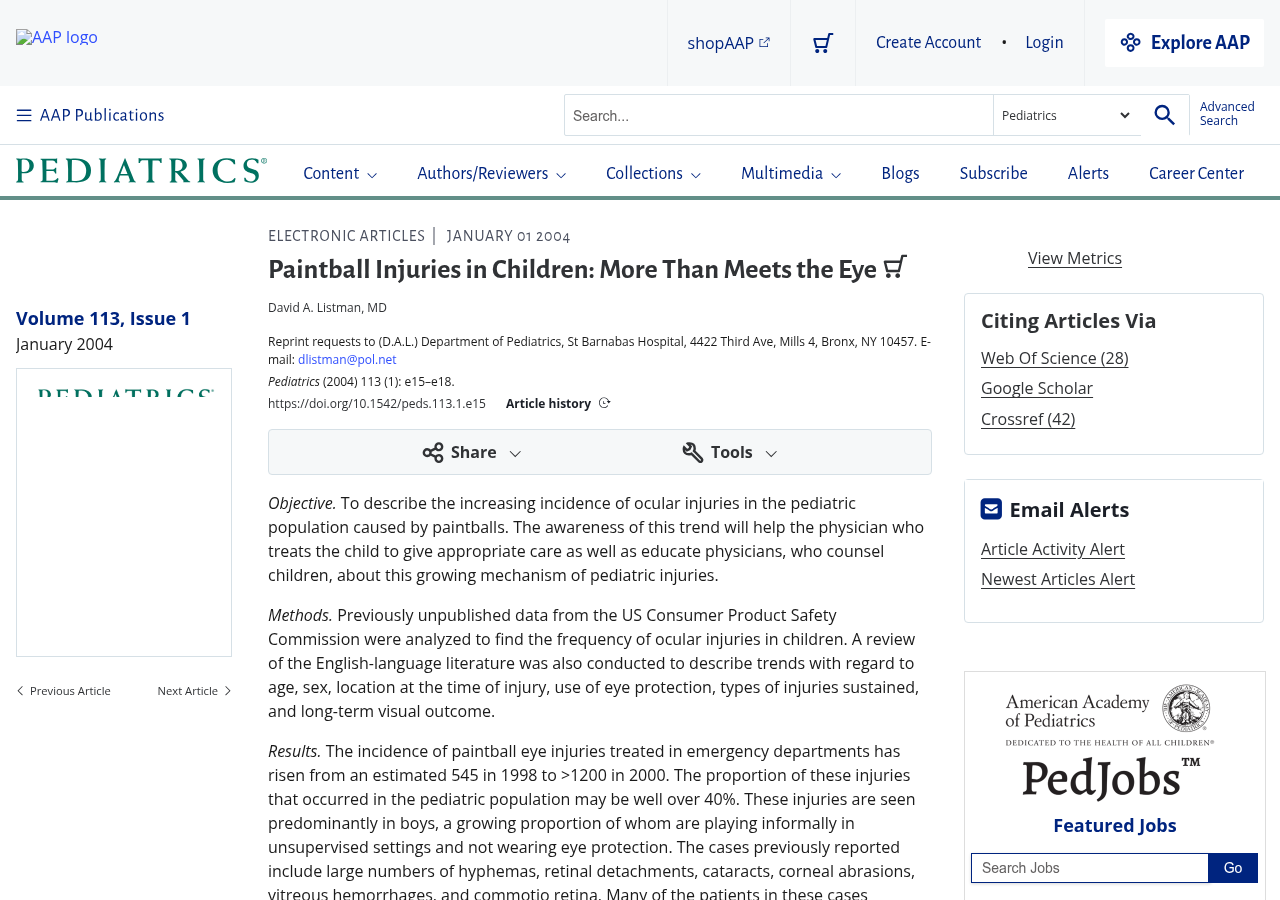
Paintball carries a measurable, documented injury exposure. A .68 caliber capsule traveling around 280 fps leaves welts and bruises, and the lifted-mask eye injury is the severe tail. The clinical record on it is decades deep: a peer-reviewed study in Pediatrics documented emergency-department-treated paintball eye injuries more than doubling from 545 in 1998 to over 1,200 in 2000, with about 43% of patients left with follow-up vision of 20/200 or worse (Listman, Pediatrics, January 2004). That severity is the reason paintball eye protection is governed by a published standard, ASTM F1776, and why the full-face mask is mandatory rather than optional.
Source 1 of 3 · Peer-reviewed clinical record
The Pediatrics study behind paintball's eye-protection rules: ER-treated paintball eye injuries more than doubled from 545 in 1998 to over 1,200 in 2000, with about 43% of patients left at 20/200 vision or worse. GellyBall has no equivalent severe-injury literature.
Source: publications.aap.org/pediatrics
The protective requirement follows the data: because that eye-injury tail is real, the paintball mask is held to a published standard, not a field preference.
Source 2 of 3 · Published safety standard
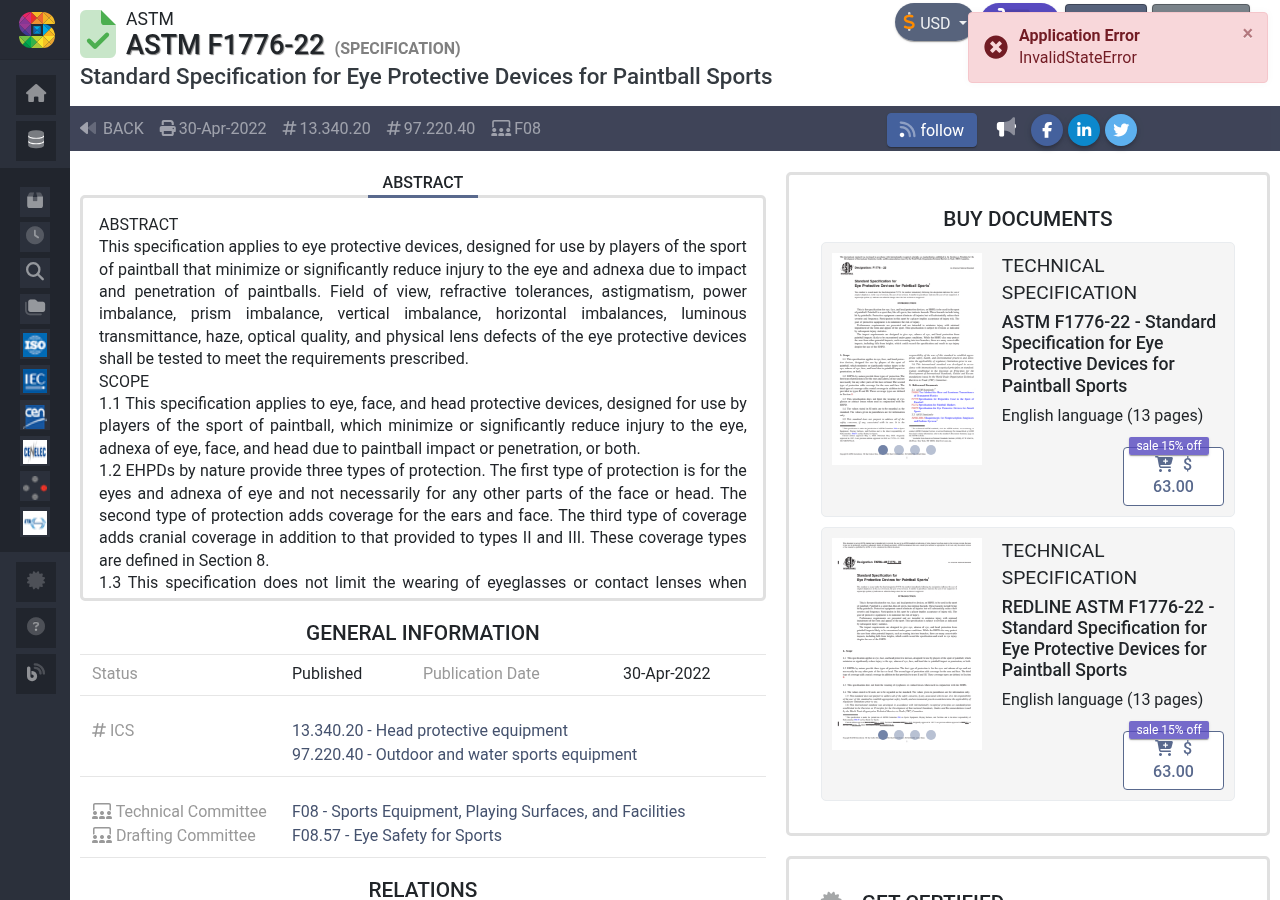
Paintball eye protection is governed by a published ASTM standard, F1776, which is why the full-face mask is mandatory. There is no equivalent mandatory mask standard for GellyBall's low-impact gellet, because the impact it manages is far lower.
Source: standards.iteh.ai/astm-f1776-22
GellyBall sits on the other end of that scale. The gellet is soft, bursts on contact, and carries a fraction of a paintball's impact energy, which is why operators run it for five-year-olds in a light mask. There is no GellyBall equivalent to the paintball eye-injury literature, and that absence is the risk profile, not an oversight. Its dominant injuries are the trips, collisions, and twisted ankles any active play space produces. Lower impact does not mean zero claims, but the welt-and-eye-injury pattern behind paintball pricing is largely missing. We lay out the full safety record, and the one real exposure, in is GellyBall safe.
Carriers price the tail, not the average day. Paintball has a documented eye-injury tail with decades of clinical record behind it. GellyBall does not, and that absence is exactly what an underwriter is reading when the two land on the same desk.
Bobby Sharp, Action Sports Practice Lead, Specialty Insurance
Insurance: where the two really diverge
Here is the part operators get backwards. The two sports need the same coverage architecture, and they hit the same wall on a generic policy. Both need:
- General Liability for third parties: a spectator slip, property damage, a parking-lot incident.
- Participant Injury for the players, the coverage a generic policy strips out.
- Property for the equipment fleet, scheduled at replacement cost.
- Inland Marine and Commercial Auto for mobile operators, covering gear in transit and the hauling vehicle.
The wall both sports hit is the participant. A standard General Liability policy carries the ISO CG 21 01 exclusion for athletic or sports participants, which strips coverage for injuries to the people playing. It does not matter whether the projectile is a paintball or a gellet. If the policy is a generic General Liability form with that exclusion attached, the players are not covered, and Participant Injury has to be named coverage. Whether an existing paintball policy stretches to cover GellyBall on its own is a separate question, answered in is GellyBall insurance the same as paintball coverage.

Source 3 of 3 · Standard ISO exclusion form
The ISO CG 21 01 athletic-or-sports-participants exclusion removes player-injury coverage from a standard General Liability policy. It applies to GellyBall and paintball alike, which is why Participant Injury must be named coverage for either sport.
Source: insurancexdate.com/CG-21-01
We walk through how that exclusion guts a generic policy in why your paintball field's GL policy probably has gaps. Where the two diverge is pricing and classification. Paintball is priced for its impact-severity tail; GellyBall, rated on its own profile, should price below it. The common failure mode: a carrier unfamiliar with GellyBall reaches for the nearest class it knows and writes the activity as "paintball-type activity," rating the gellet like a paintball. The operator overpays, and if a claim ever turns on what the policy says the business does, that description sitting over a room full of five-year-olds with gel blasters is a problem nobody wants to litigate. Our GellyBall insurance guide covers the classification fix in full.
Side by side, the GellyBall account should price under the paintball account at the same revenue. When it does not, the file almost always reads "paintball-type activity." The carrier is rating the welt, and a gellet does not leave one.
Bobby Sharp, Action Sports Practice Lead, Specialty Insurance
Operators who run the gel-tag and GellyBall format tend to hear that distinction from a specialist, not from a generalist who has never priced a gellet. The ones who land with a broker who writes the class say the same thing.
"Specialty Insurance diligently takes their time and works with you, making sure your business has all the correct and specific coverages you need. There is no other source out there that does what they do for the airsoft and paintball industries."
Gel Tag San Diego LLC
Verified customer review
When to pick which, or run both
The decision comes down to your space, your audience, and your tolerance for cleanup.
Pick GellyBall if your audience skews young, you want indoor or small-footprint play, you run birthday parties and corporate events, or you operate mobile. The lower impact, lower consumable cost, and no-cleanup gellet are built for that market. Insure it as GellyBall, on its own class.
Pick paintball if your audience is older, you have land for a netted outdoor field, and your customers want the higher-intensity game. Budget for the higher consumable cost and the higher premium the impact-severity profile earns. The paintball claim patterns worth underwriting against are laid out in common paintball field claims.
Run both for the broadest audience, with GellyBall feeding younger players and parties while paintball serves the core. Name both activities on the policy and price each on its own class. The same disclosure discipline applies that we cover in airsoft vs paintball insurance: a policy that says one thing while the business does another is the gap that surfaces at claim time. Schedule both fleets at replacement cost and confirm the Property limit covers the whole inventory.
Talk to a GellyBall and paintball specialty broker
A generalist agent prices both sports off one line and defaults to the paintball class, which overcharges the GellyBall operator and underprotects the participant on both. A specialty broker writes General Liability with named Participant Injury, classifies GellyBall as GellyBall, prices paintball on its real severity, names every activity the business runs, and adds Inland Marine for mobile operators so the gear is covered off-site, where a fixed-location property policy stops at the property line.
Frequently Asked Questions
Is GellyBall cheaper to run than paintball?
Yes. GellyBall fires a hydrogel gellet that hydrates from water, costs a fraction of a paintball per round, bursts into nothing, and leaves no mark to clean up. Blasters cost less per unit than paintball markers, and the lower-impact format needs lighter barriers and smaller spaces, which is why GellyBall scales to younger players and birthday-party economics that paintball cannot reach.
Is GellyBall safer than paintball?
GellyBall is lower impact. A soft gellet bursts at low velocity, while a .68 caliber paintball travels around 280 fps, leaves welts, and carries a documented eye-injury tail that a peer-reviewed Pediatrics study tracked over multiple years. GellyBall's dominant injuries are trips, collisions, and minor contact. Lower impact does not mean no insurance is needed, but it does mean the severe-injury pattern behind paintball pricing is largely absent.
Is GellyBall insurance cheaper than paintball insurance?
It should be, at the same revenue level. GellyBall does not produce the welt-and-eye-injury severity that drives paintball pricing, so rated on its own class it costs less to insure. If a GellyBall quote matches a paintball quote, the activity was probably misclassified as paintball-type activity, and the operator is paying for a risk the business does not carry.
Do both GellyBall and paintball need participant injury coverage?
Yes. A standard General Liability policy carries the ISO CG 21 01 exclusion for athletic or sports participants, which strips coverage for injuries to the people playing, regardless of whether the projectile is a paintball or a gellet. Participant Injury has to be named coverage on the policy for either sport.
Can one venue run both GellyBall and paintball on one policy?
Usually yes, but the policy must name both activities by name and price each on its own class. The risk is a carrier that rates the GellyBall side at paintball's severity, or a policy that lists only one sport while the venue runs both, which can be treated as an undisclosed exposure at claim time.
Sources
- blooloop. Gel-blaster industry coverage, location-based-entertainment growth. blooloop.com
- Listman DA. "Paintball Injuries in Children: More Than Meets the Eye." Pediatrics, Vol. 113, January 2004. publications.aap.org
- ASTM International. F1776-22 Standard Specification for Eye Protective Devices for Paintball Sports. standards.iteh.ai
- ISO Commercial General Liability form CG 21 01, Exclusion: Athletic Or Sports Participants. insurancexdate.com
- Specialty Insurance. GellyBall Insurance: Why It Should Not Be Priced Like Paintball
- Specialty Insurance. Why Your Paintball Field's GL Policy Probably Has Gaps