

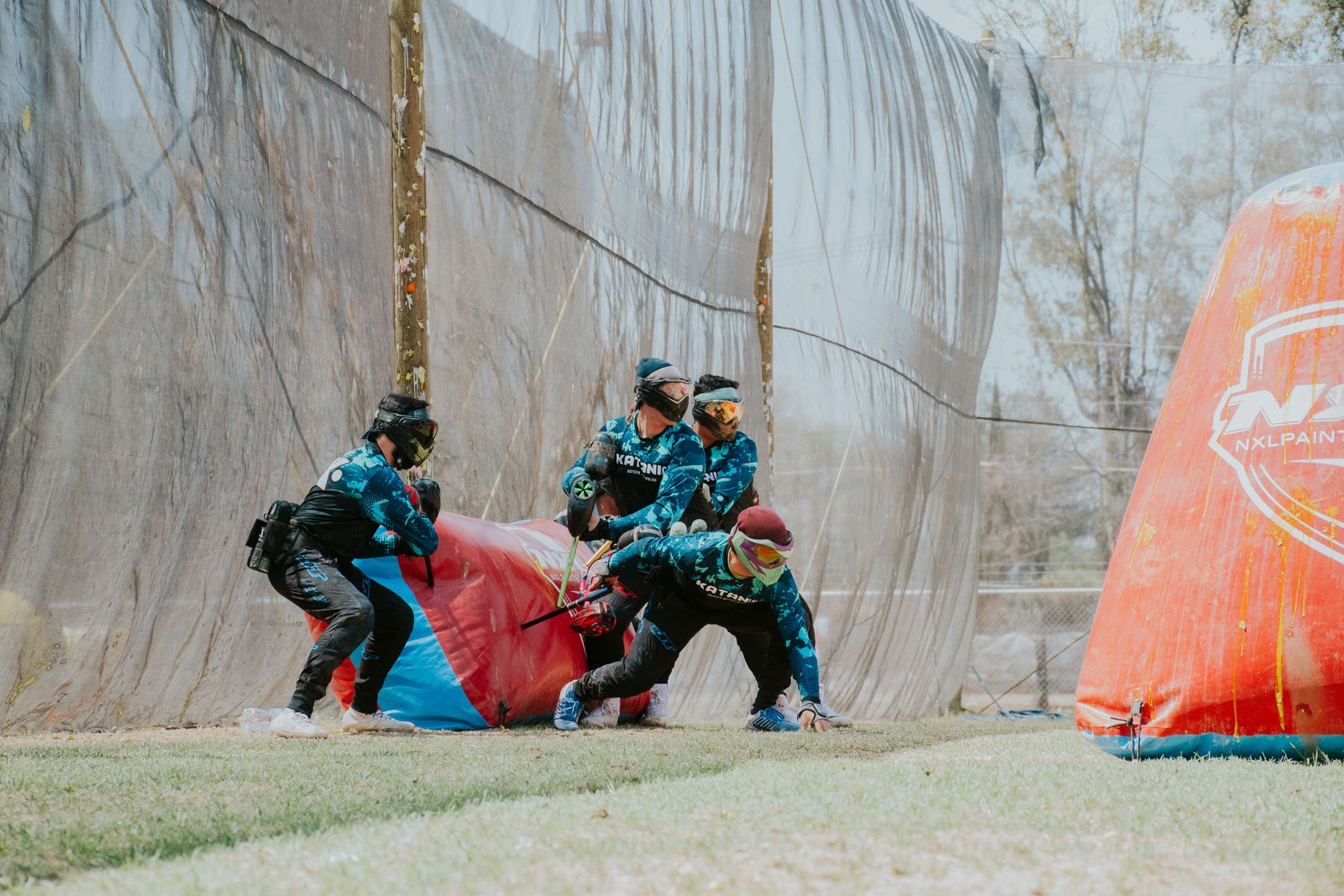
The quick answer: same architecture, different policy
Add GellyBall to a paintball operation and the insurance feels like the one item already handled. The new game is softer than the one the policy was written for, so the coverage should stretch to fit. That reasoning fails on the first page of the policy, because coverage follows the operations the carrier described and priced, not the impact energy of the projectile.
So no, GellyBall insurance is not the same as paintball coverage, and a paintball policy does not extend to GellyBall on its own. Both games need the same coverage architecture: General Liability, named Participant Injury, Property, Inland Marine for mobile operators. What changes is everything the carrier wrote around that architecture: the described operations, the activity classification, the safety conditions, and the price. An operator who runs GellyBall on an unmodified paintball policy is exposed in specific, predictable places. Here is where. For the broader cost and safety comparison behind the coverage difference, see GellyBall vs paintball.
What a paintball policy does carry over
Start with what transfers, because some of it does.
| Policy element | Carries over to GellyBall? | The condition |
|---|---|---|
| General Liability for third parties | Usually | A lobby slip or parking-lot incident follows the location more than the game. The description of operations still controls what the carrier agreed to insure. |
| Property on scheduled equipment | Only what is scheduled | A schedule listing markers, compressors, and netting says nothing about a blaster fleet. New gear must be added at replacement cost. |
| Underwriting credits for waivers and supervision | Partially | Credits earned on chronograph logs and mask checks do not transfer to a game with neither. GellyBall earns credits on its own documented program. |
The pattern across all three rows: nothing extends automatically. Each element carries over only as far as the paperwork is updated to say GellyBall.
Where the gaps open
Every gap below traces to one root. The policy describes a business the carrier priced, and GellyBall was not part of that description.
| The gap | Why it opens |
|---|---|
| Description of operations names only paintball | GellyBall sessions become an exposure the carrier never saw and never priced. At claim time, that mismatch is the first thing an adjuster reads. |
| Participant Injury is written around the named activity | Participant coverage responds to the activity the policy describes. A GellyBall player injured under a paintball-defined schedule is standing in the gap. |
| Safety conditions are keyed to paintball standards | ASTM F1776 masks, chronograph limits, and minimum-age rules describe a paintball session, not a GellyBall party for young children in light masks. |
| The customer profile changes | Paintball underwriting assumes an older player base. GellyBall is marketed for ages 5 and up, a materially younger risk the carrier never rated. |
| Mobile bookings leave the premises | Mobile GellyBall parties at parks, schools, and backyards sit outside a premises-based field policy unless off-premises liability and Inland Marine are added. |
| The certificate describes the wrong game | A certificate generated off a paintball policy describes paintball operations. A park or school booking a GellyBall event can reject it, and a misdescribed certificate helps nobody once a claim exists. |
The participant row carries the highest stakes. On a generic General Liability form, the players are not covered at all: the ISO CG 21 01 exclusion for athletic or sports participants strips coverage for injuries to the people playing, whichever projectile is in the air. We walk through how that exclusion guts a generic policy in why your paintball field's GL policy probably has gaps. A proper action-sports program fixes it with named Participant Injury coverage, but that coverage is written around a described activity. If the schedule describes paintball, the GellyBall player's claim starts with a definition argument instead of a payment.

Source 1 of 3 · Standard ISO exclusion form
The ISO CG 21 01 exclusion strips player-injury coverage from a standard General Liability form regardless of the game. Its fix, named Participant Injury, is itself written around a described activity, which is why "paintball" on the schedule matters to a GellyBall claim.
Source: insurancexdate.com/CG-21-01
Reading those two pages takes less time than reading this article, and it is the fastest audit an operator can run before the season opens.
When an operator tells me their paintball policy covers the GellyBall parties, I ask for two pages: the description of operations and the Participant Injury schedule. If GellyBall is not written on either one, the carrier never priced the game, and what we are holding is not coverage. It is an argument waiting for a claim.
Bobby Sharp, Action Sports Practice Lead, Specialty Insurance
How the gap surfaces at claim time
Picture the booking, a mechanics walk-through rather than a war story. A field adds GellyBall birthday parties in the spring; the policy renewed in January as an outdoor paintball field. In July, a mobile party at a county park ends with a child's eye injury and a parent's attorney. The adjuster reads the description of operations first, and three questions follow, each one a question only because the policy describes a different business: Was the activity disclosed? Is the injured child a participant as the schedule defines one? Was a county park even covered territory?
None of those questions needs to exist. Each one is a page that was never updated.
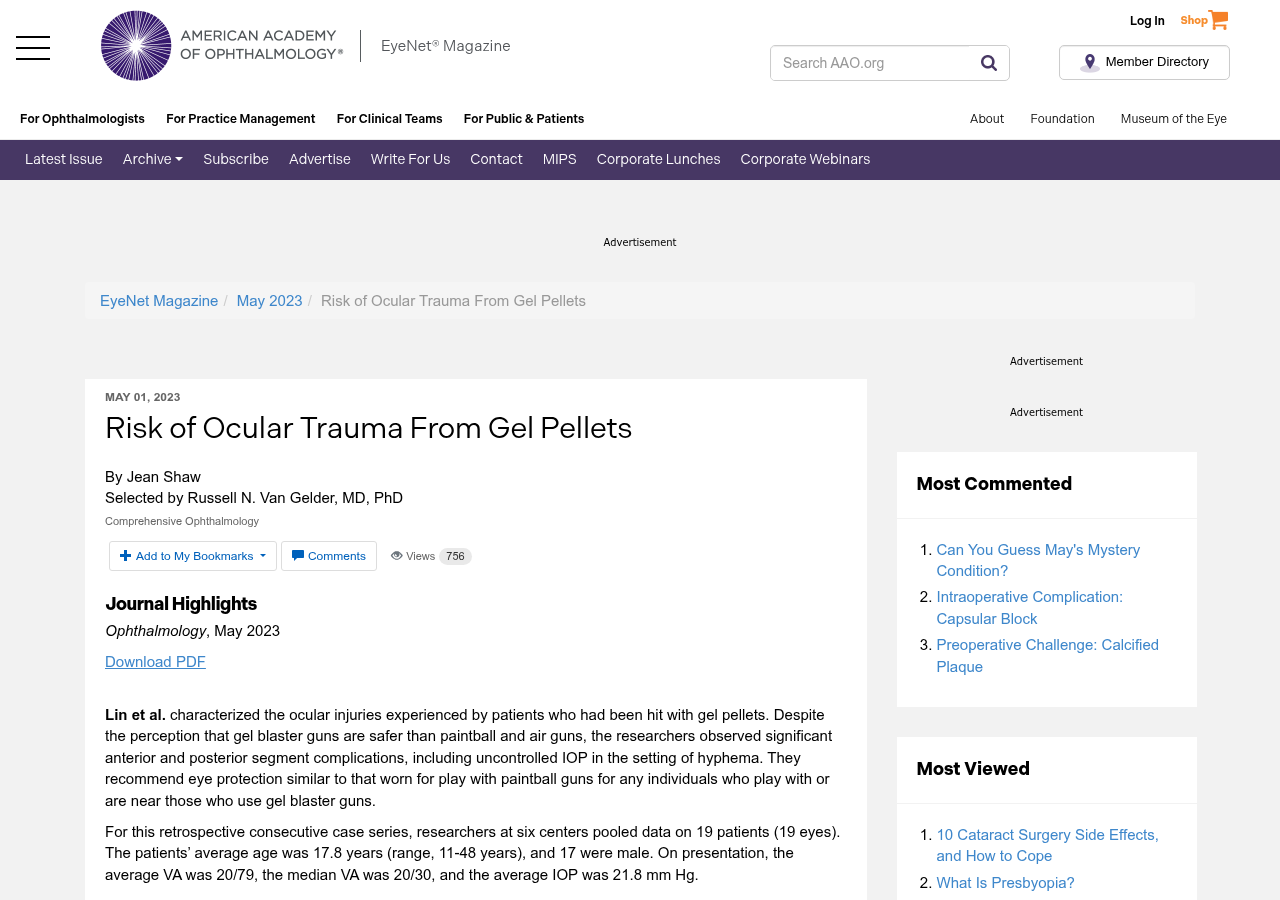
The severity nuance cuts both ways. GellyBall's party-grade format is genuinely low impact, which is the argument for pricing it on its own class. But the gel category is not risk-free at its hot end: a multicenter case series in Ophthalmology, the journal of the American Academy of Ophthalmology, documented 19 patients with gel pellet eye injuries, hyphema in 12 eyes, surgical procedures in 7, with hobby-grade pellets measured at 200 to 300 feet per second (Lin et al., Ophthalmology, May 2023). The researchers recommended paintball-style eye protection. The conclusion runs the same in both directions: the game deserves underwriting as what it is, not coverage borrowed from a class that describes a different sport.
Source 2 of 3 · Peer-reviewed clinical record
The gel category has its own documented injury record at the hobby-grade end: 19 gel pellet eye injuries in a multicenter Ophthalmology case series, hyphema in 12 eyes, surgery in 7. The case for underwriting GellyBall as its own activity, not as a soft paintball.
Source: aao.org/eyenet/risk-of-ocular-trauma-from-gel-pellets
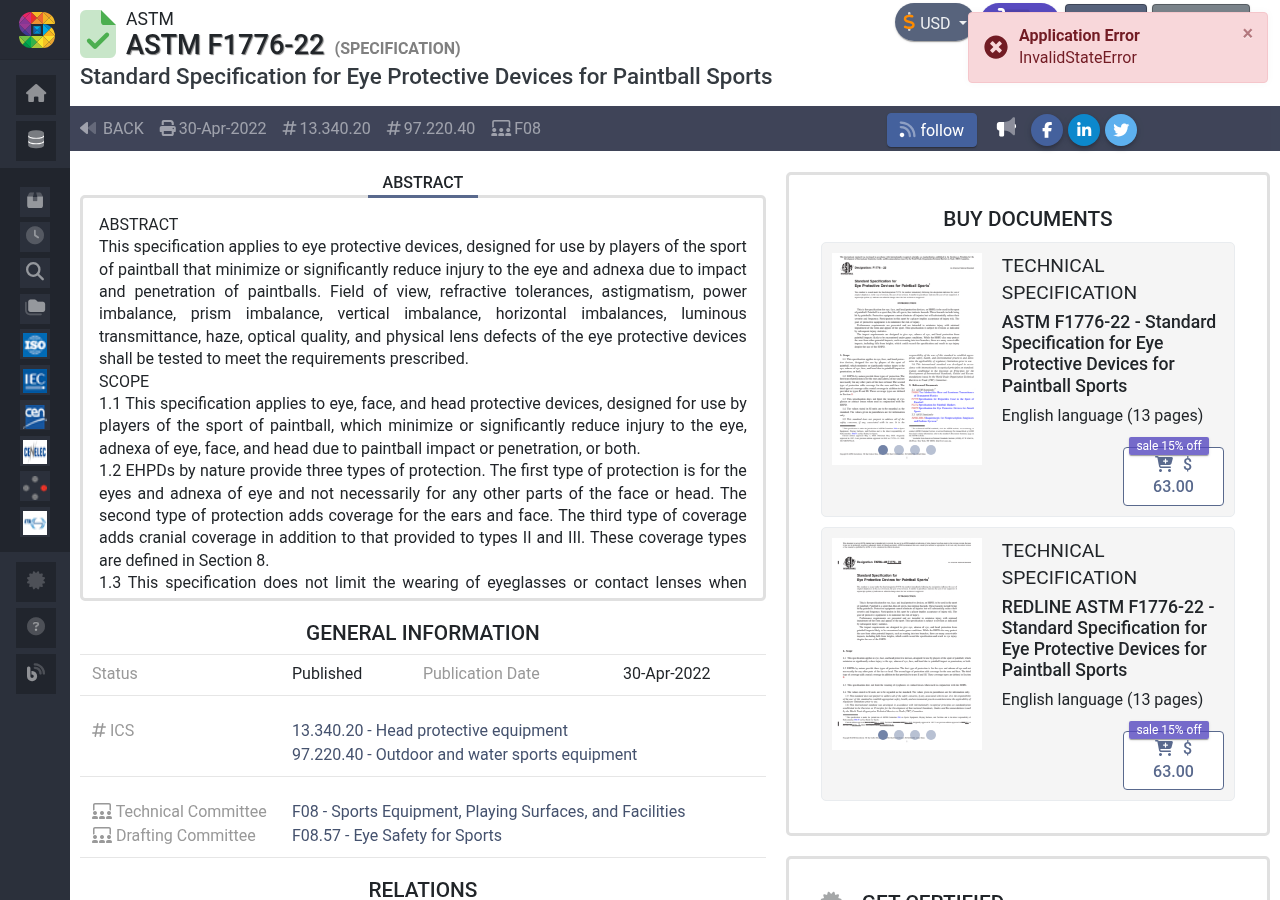
The paintball policy's safety conditions make the same point from the other side. Paintball coverage is conditioned on a documented safety system built to a published standard: ASTM F1776 full-face masks, chronographed velocity, minimum ages. A GellyBall session for six-year-olds in light masks runs on none of that machinery, so the operator is left holding conditions written for a game nobody on the floor is playing.
Source 3 of 3 · Published safety standard
Paintball policy conditions are keyed to paintball-specific standards like the ASTM F1776 mask requirement. A GellyBall operation cannot comply with, or earn underwriting credits against, conditions that describe a different game.
Source: standards.iteh.ai/astm-f1776-22
The pattern repeats across every gap in the table above: the policy describes one game, the floor runs another, and the distance between the two is where claims stall.
An adjuster does not measure how soft a gellet is. They read what the policy says the business does and compare it to what the business was doing when someone got hurt. Every coverage question I see in this category lives in that gap.
Bobby Sharp, Action Sports Practice Lead, Specialty Insurance
Even with no claim, a GellyBall operation classified as paintball pays paintball's premium for a severity tail it does not have. The mispricing, and the classification fix, is the subject of our GellyBall insurance guide. For the actual dollar bands, our GellyBall insurance cost guide breaks the number down.
How to close the gap before the next booking
The fix is paperwork, not premium heroics, and a specialist can run the whole list in one review:
- Name GellyBall in the description of operations. Disclosure is the cheapest coverage you will ever buy.
- Match the Participant Injury schedule to every game you run, so no player stands outside the defined activity.
- Reclassify the GellyBall exposure on its own class, priced for its own severity profile rather than paintball's.
- Align the safety conditions with the real operation, and document the GellyBall program (briefing scripts, eye protection, supervision ratios) the way a paintball field documents chronograph logs.
- Add off-premises liability and Inland Marine if you run mobile parties, so the gear and the liability travel with the booking. Our guide to gel blaster party rental insurance covers that mobile workflow in full.
- Re-issue certificates that describe GellyBall, so the park or school sees the activity they booked.
The same disclosure discipline applies to any venue running two games on one policy, which we cover in airsoft vs paintball insurance: a policy that says one thing while the business does another is the gap that surfaces at claim time.
Operators who made the switch describe the difference between a generalist guessing at the class and a specialist who already writes it.
"Specialty Insurance diligently takes their time and works with you, making sure your business has all the correct and specific coverages you need. There is no other source out there that does what they do for the airsoft and paintball industries."
Gel Tag San Diego LLC
Verified customer review
Talk to a broker who writes both games
A generalist agent stretches the paintball policy because it is the form already on file. A specialty broker writes General Liability with Participant Injury named for every activity, classifies GellyBall as GellyBall, keeps the paintball side priced on its real severity, and issues certificates that match each booking. The result is a policy that describes the business you run, the only kind that pays without an argument.
Frequently Asked Questions
Does paintball insurance automatically cover GellyBall?
No. Coverage follows the operations the policy describes and the activity class the carrier priced, not the relative softness of the game. If GellyBall is not named in the description of operations and the Participant Injury schedule, the carrier never agreed to insure it.
Can I run GellyBall parties under my paintball field's policy?
Only after the policy is updated to name GellyBall in the description of operations, the Participant Injury schedule, and the classification. Without those updates the parties are an undisclosed exposure, and mobile bookings may sit outside the policy's covered territory entirely.
What happens if a GellyBall player is injured and my policy only describes paintball?
The claim starts with the mismatch instead of the injury. The adjuster compares the described operations to what the business was doing and tests whether the injured player fits the schedule's definition of a covered participant. Those questions can delay or contest a claim a correctly written policy would simply pay.
Is GellyBall insurance cheaper than paintball coverage?
Rated on its own class, it generally should be, because the impact-severity tail that drives paintball pricing is largely absent. The classification mechanics, and why a GellyBall quote at a paintball number signals a misclass, are covered in our GellyBall insurance guide.
What should my certificate of insurance say for GellyBall bookings?
The certificate should describe GellyBall operations, name the venue or event holder as required, and reflect a policy that covers off-premises events if the booking is mobile. A certificate off an unmodified paintball policy describes the wrong activity, and a park or school that cross-checks it can reject the booking.
Sources
- ISO Commercial General Liability form CG 21 01, Exclusion: Athletic Or Sports Participants. insurancexdate.com
- Shaw J. "Risk of Ocular Trauma From Gel Pellets." EyeNet Magazine, American Academy of Ophthalmology, May 2023, summarizing Lin et al., Ophthalmology. aao.org
- ASTM International. F1776-22 Standard Specification for Eye Protective Devices for Paintball Sports. standards.iteh.ai
- Specialty Insurance. GellyBall Insurance: Why It Should Not Be Priced Like Paintball
- Specialty Insurance. Why Your Paintball Field's GL Policy Probably Has Gaps