


The mispricing happens at the word "paintball"
A GellyBall operator calls a carrier, says "I run a GellyBall arena," and the carrier writes it up as paintball. That single step is where the overpaying starts. GellyBall and paintball are not the same activity, they are not the same risk, and they should not carry the same premium. An operator paying a paintball rate on a GellyBall business is usually paying for a risk profile they do not have.
This is a cost question with a coverage question hiding inside it. Get the classification wrong and you do not just overpay; you can also create a claim problem if the carrier believes you are firing .68 caliber paintballs and you are firing 7.4mm gellets.
GellyBall vs paintball: the risk difference an underwriter prices
The two activities differ on every variable a carrier uses to rate the risk.
| Factor | Paintball | GellyBall |
|---|---|---|
| Projectile | .68 caliber gelatin capsule | 7.4mm hydrogel gellet |
| Projectile behavior | Breaks on impact, leaves a welt | Bursts on impact, minimal sting |
| Typical velocity | Around 280 fps | Markedly lower |
| Eye protection | Full-face mask, ASTM F1776 standard | Light mask or goggles |
| Typical minimum age | 10 to 12 and up | Marketed for ages 5 and up |
| Dominant injury type | Welts, bruising, lifted-mask eye injury | Trips, slips, minor contact |
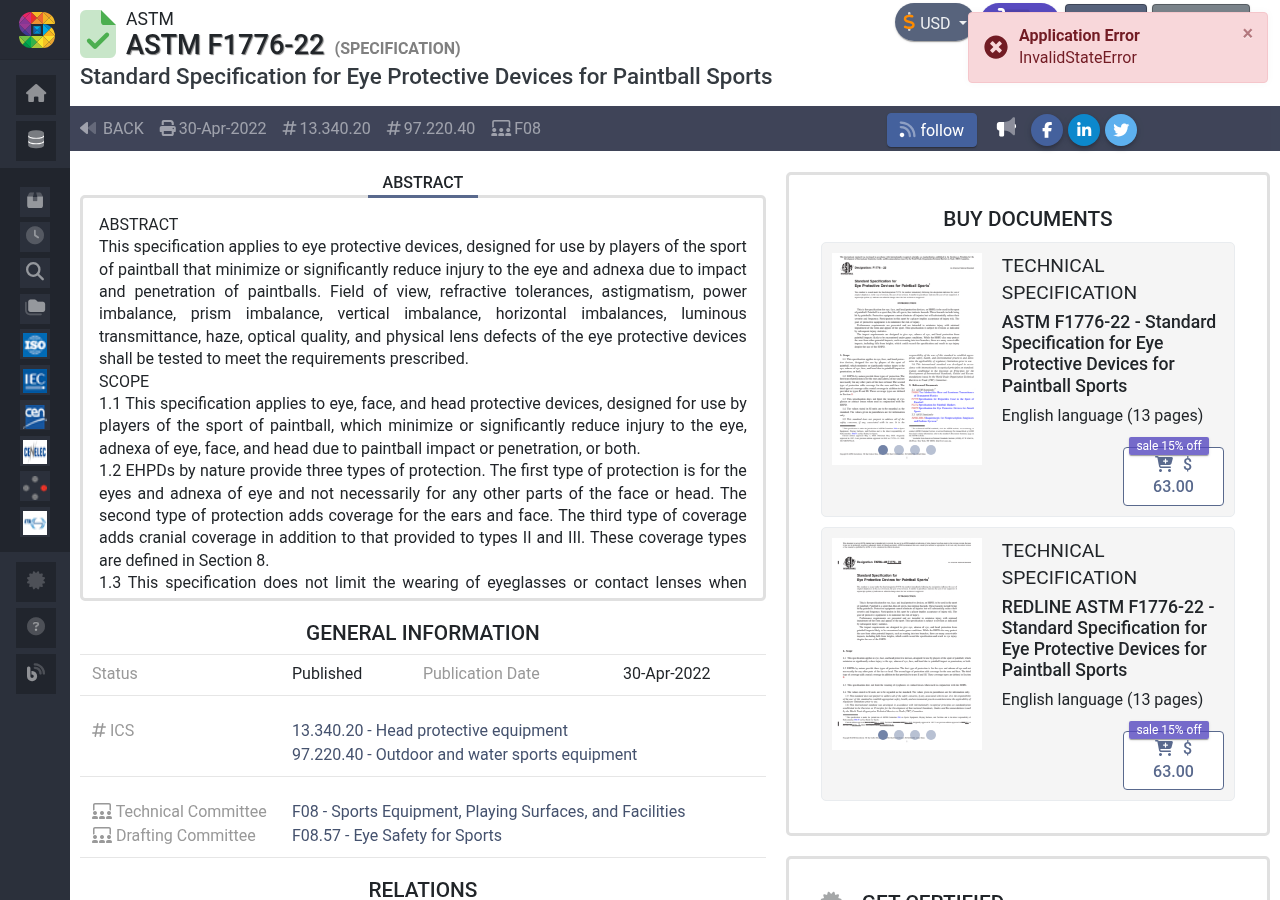
Source 1 of 2 · Paintball protective standard
ASTM F1776-22, the paintball eye-protection standard. It exists to manage paintball's measurable impact-injury exposure, a severity profile that GellyBall's low-velocity gellet does not produce.
Source: standards.iteh.ai/catalog/standards/astm/.../astm-f1776-22
Paintball carries a measurable impact-injury exposure that the ASTM F1776 full-face mask standard exists to manage. GellyBall, fired at lower velocity with a soft gellet, does not generate the same welt-and-bruise claim pattern. A carrier that prices GellyBall as paintball is charging the operator for impact severity the activity does not produce.
When a GellyBall arena gets a paintball quote, the operator usually thinks the number is just high. It is not just high. It is the wrong risk. We requote it as GellyBall and the classification, not a discount, is what moves the premium.
Bobby Sharp, Action Sports Practice Lead, Specialty Insurance
Why GellyBall is worth pricing correctly: it is growing
GellyBall and gel-blaster play have moved from a novelty into a recognized location-based-entertainment category. Industry coverage of the gel-blaster segment reports rapid adoption across family entertainment venues, with one gel-blaster experience product reporting more than 80,000 players and a pipeline of dozens of additional venue installations (blooloop, gel-blaster industry coverage).

Source 2 of 2 · Attractions-industry trade coverage
blooloop, an attractions-industry publication, on gel-blaster growth in location-based entertainment: 80,000-plus players reported on one experience product and dozens more venue installations in the pipeline.
For an insurance market, a growing category with a thin underwriting history is exactly where misclassification happens most. The carrier reaches for the nearest familiar class, paintball, and applies it. The fix is a broker who writes the GellyBall class specifically and rates it on its own profile.
What coverage a GellyBall operation needs
Lower impact does not mean no coverage. A GellyBall arena still needs the core action-sports package.
Participant injury coverage. GellyBall is softer than paintball, but participants still trip over barriers, run into walls, and twist ankles, and a young player can lift a mask. Standard General Liability carries the athletic-participants exclusion, so participant injury must be named coverage. One participant claim can cost more than a decade of premium.
General Liability. Third-party exposure: a spectator slip, property damage, a parking-lot incident. Most landlords and event venues require at least $1M per occurrence before they will sign.
Inland Marine, if you go mobile. A large share of GellyBall operations are mobile: birthday parties, schools, corporate events. Equipment in transit and at off-site locations needs Inland Marine coverage, because a fixed-location property policy stops at the property line.
What GellyBall insurance costs
A small GellyBall operation doing around $100,000 in annual revenue should expect roughly $2,500 to $5,000 a year for a real package: General Liability, Participant Injury, and Property. If a quote comes back at $8,000 to $10,000 for that size of operation, it is almost certainly priced as paintball. That is the signal to push back and ask for the classification in writing.
Mobile operators sit higher. Operating at a different location every week is a higher-frequency profile, and the package usually adds Inland Marine and Commercial Auto for the hauling vehicle. A mobile GellyBall operator should budget roughly $4,000 to $7,000 depending on revenue and equipment value.
The fastest way to tell if your GellyBall policy is mispriced: read the activity description. If it says "paintball-type activity" or "recreational shooting sports," the carrier is not rating GellyBall. It is rating paintball and putting your name on it.
Bobby Sharp, Action Sports Practice Lead, Specialty Insurance
"Specialty Insurance diligently takes their time and works with you, making sure your business has all the correct and specific coverages you need. There is no other source out there that does what they do."
Gel Tag San Diego LLC
Verified customer review
How to keep your GellyBall policy from being mispriced
Three steps keep the classification correct and the premium honest.
- Make the carrier name GellyBall in the policy. The activity description should say "GellyBall" or "low-impact gel marker activity," not "paintball-type activity" and not "recreational shooting sports." Vague language overprices the policy and creates a claim argument.
- Schedule the equipment correctly. GellyBall markers cost less per unit than paintball markers, but operators own more of them. The property schedule should reflect the actual replacement cost of the full fleet.
- Work with a broker who knows the difference. A broker who has never heard of a gellet will struggle to place the coverage and is likely to reach for the paintball class by default. We placed the same correction logic for dual paintball-and-airsoft operators in our guide to airsoft vs paintball insurance.
Frequently Asked Questions
How much does GellyBall insurance cost?
A small GellyBall operation doing around $100,000 in annual revenue typically pays roughly $2,500 to $5,000 a year for General Liability, Participant Injury, and Property. Mobile operators commonly budget $4,000 to $7,000 once Inland Marine and Commercial Auto are added.
Is GellyBall insurance cheaper than paintball insurance?
It should be, at the same revenue level. GellyBall fires a low-velocity gellet and does not produce the welt-and-bruise impact-injury pattern that drives paintball pricing. If a GellyBall quote matches a paintball quote, the activity was probably misclassified.
Why do carriers price GellyBall like paintball?
GellyBall is a newer category with a thin underwriting history, so carriers unfamiliar with it default to the nearest familiar class, paintball. A broker who writes the GellyBall class specifically rates it on its own risk profile instead.
Do I need participant injury coverage for a GellyBall arena?
Yes. GellyBall is lower-impact, but participants still trip, collide with barriers, and twist ankles, and standard General Liability excludes participant injury. Participant injury must be named coverage on the policy.
Does a mobile GellyBall operation need different insurance?
Yes. A mobile GellyBall operator needs Inland Marine for equipment in transit and at off-site events, and usually Commercial Auto for the hauling vehicle, on top of the core General Liability and Participant Injury coverage.
Sources
- blooloop. Gel-blaster industry coverage, location-based-entertainment growth. blooloop.com
- ASTM International. F1776-22 Standard Specification for Eye Protective Devices for Paintball Sports. standards.iteh.ai
- Specialty Insurance. Airsoft vs Paintball Insurance
- Specialty Insurance. Inland Marine Insurance for Action Sports