

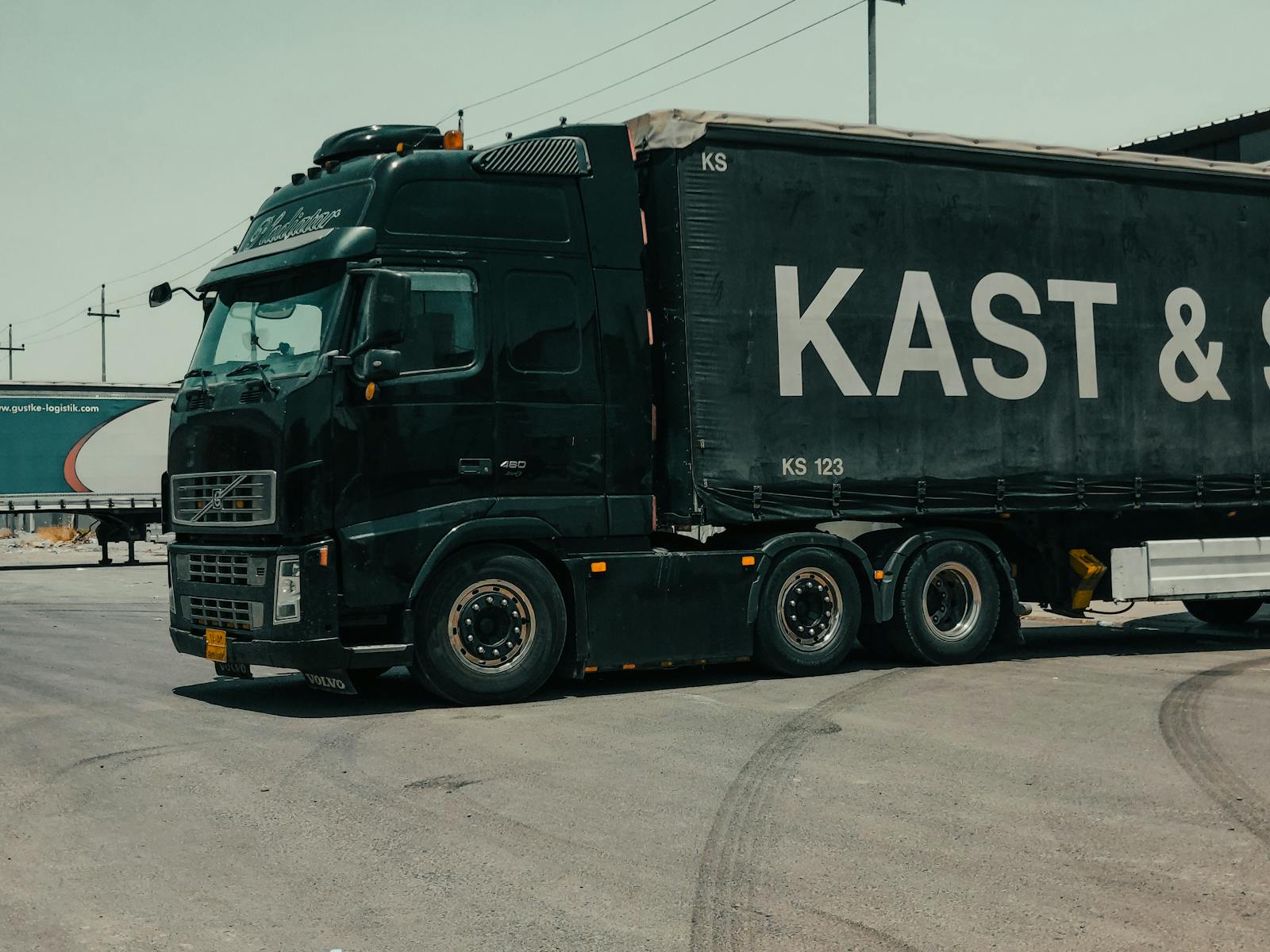
Your property policy has a property line, and your gear keeps crossing it
A commercial property policy covers a building and the contents inside it, at the scheduled address. That phrase, at the scheduled address, is the whole story. The moment your paintball markers, your axe-throwing targets, your inflatable system, or your laser-tag vests leave the building, on a truck, at a birthday party, at a corporate event, the property policy generally stops applying.
Inland Marine is the coverage that picks up where the property line ends. The name is a historical accident; it has nothing to do with boats. What it does have to do with is every action-sports operator whose equipment moves, and that is most of them.
What Inland Marine covers
Inland Marine covers property in three situations a standard property policy does not reach reliably:
- Property in transit: equipment on a truck or trailer between your base and an event.
- Property temporarily off-premises: gear at a client site, an event venue, a school, a corporate campus.
- Property at multiple or changing locations: equipment that does not have one fixed home.
For an action-sports business, that means the rental fleet you haul to a tournament, the mobile trailer and its contents, the timing systems and scoring equipment used in the field, the inflatable system that goes to a different backyard every weekend. Inland Marine covers the loss scenarios that follow moving equipment: theft, transit damage, weather, vandalism, loading and unloading mishaps.
The loss it exists for is rising
Cargo theft at a glance
What the National Insurance Crime Bureau reports about property in transit, the exposure most mobile action-sports operators carry without coverage.
Source: National Insurance Crime Bureau, Cargo Theft (2024 reported figures).
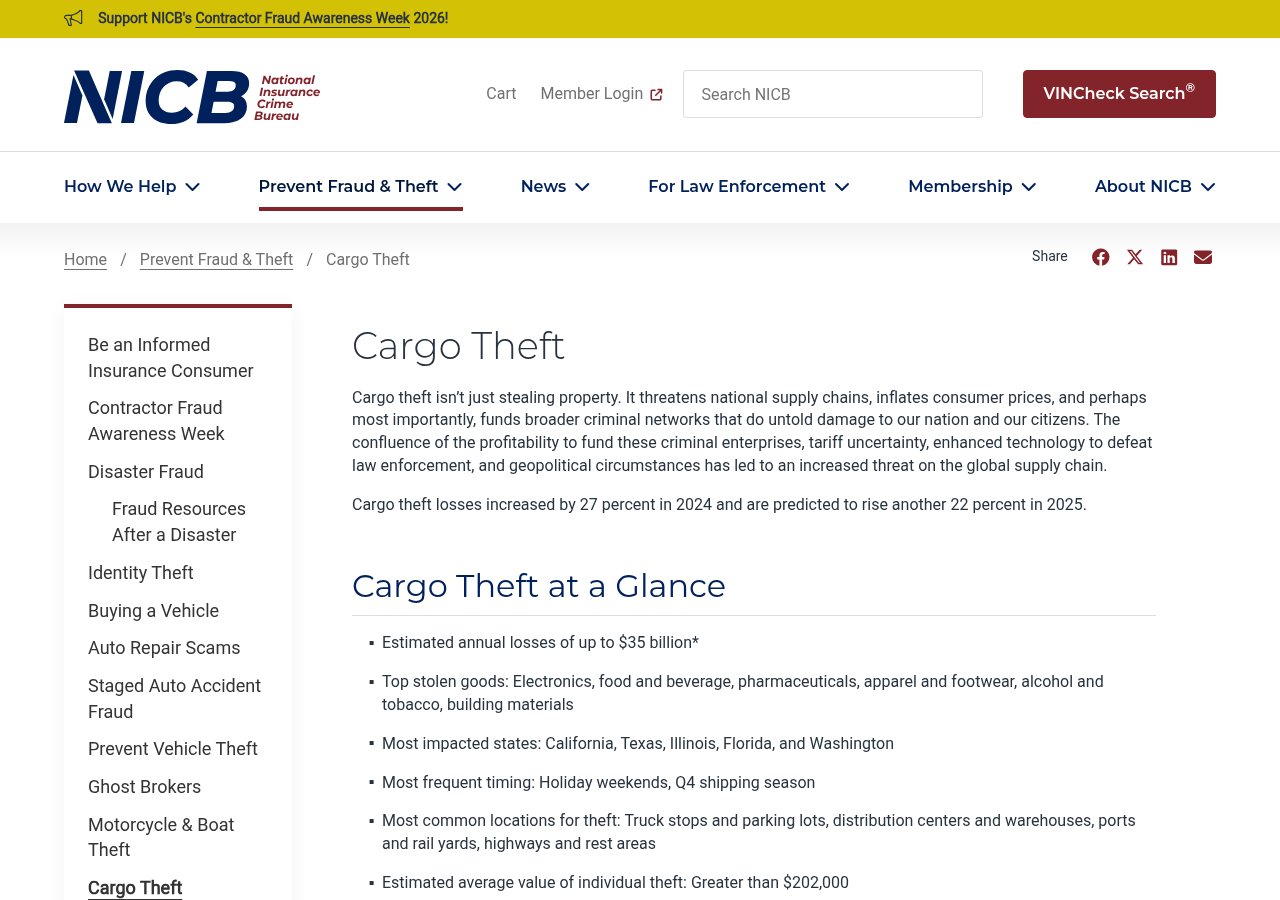
Equipment in transit is not a hypothetical exposure. The National Insurance Crime Bureau reports that cargo theft, the criminal taking of goods in transit, costs an estimated $35 billion annually in the United States, and that confirmed cargo-theft losses rose roughly 27% in 2024 with a further increase projected for 2025 (National Insurance Crime Bureau, Cargo Theft).
Source 1 of 1 · National Insurance Crime Bureau
The National Insurance Crime Bureau on cargo theft: an estimated $35 billion in annual US losses, with confirmed losses up roughly 27% in 2024 and a further rise projected for 2025. Property in transit is a growing exposure.
The NICB headline number is the punchline; the trajectory underneath it is what shapes a mobile operator’s risk picture year over year. Indexed to a 2023 baseline, the rise looks like this:
A mobile action-sports operator is not moving freight, but the principle is identical: property in transit is exposed property, the exposure is growing, and a fixed-location policy does not respond to it. A trailer broken into overnight, a rig of rental markers stolen from an event parking lot, a set of timing equipment damaged in a road accident: those are Inland Marine claims, and only Inland Marine claims.
The mobile operator who calls me after a stolen trailer almost always had property coverage. It just covered the warehouse the trailer was not parked at. The gear was three states away at an event. That gap has one name, and the name is Inland Marine.
Bobby Sharp, Action Sports Practice Lead, Specialty Insurance
Who needs Inland Marine
Two groups of action-sports operators need it, and the second group is the one that gets surprised.
Mobile operators are the obvious case. If the business model is travel-to-the-customer, a fixed-location property policy protects almost none of the core assets, because the core assets are almost never at the fixed location.
Fixed-location operators with any off-premises activity are the surprised group. A paintball field that takes a rig to an off-site tournament, a trampoline park that runs a school event, an axe-throwing venue that does a corporate pop-up: each has equipment that leaves the building, and each usually assumes the building policy follows it. It does not. If equipment leaves your address for any reason, confirm what covers it. Most fixed-location property policies do not.
How Inland Marine is written: scheduled vs blanket
Inland Marine comes in two structures, and the right one depends on the equipment.
| Structure | How it works | Best for |
|---|---|---|
| Scheduled | Each item listed individually with its own value | High-value, identifiable items: a custom trailer, a specialized inflatable system, an air-fill rig |
| Blanket | Categories of equipment covered up to an aggregate limit | Smaller equipment, large fleets, gear that changes often |
Most action-sports operators end up with a mix: the few high-value items scheduled by serial number for certainty, the rest of the fleet on a blanket limit for flexibility. A specialty broker builds the schedule with you. A generalist often writes a single blanket number that turns out to be short.
Schedule the trailer and the air system by serial number. Blanket the markers and the vests. Get that split right and a transit loss pays cleanly. Get it wrong and the operator is arguing with an adjuster about whether a $30,000 rig counted as a category or an item.
Bobby Sharp, Action Sports Practice Lead, Specialty Insurance
That is the level of detail a specialist broker brings to an equipment list. It is also the level of responsiveness new mobile operators tell us they remember from the underwriting conversation, the difference between a policy that pays cleanly on a transit loss and one that argues with an adjuster.
"Bobby Sharp and the team at Specialty Insurance had a fast turnaround, professional service, and answered every question I had as a brand-new operator."
Grimnir Tactical LLC
Verified customer review
Property vs Inland Marine, side by side
The two coverages are not competitors. They are a relay, and the handoff point is the property line.
| Loss event | Commercial Property | Inland Marine |
|---|---|---|
| Fire in your building damages stored gear | Covers | Not needed |
| Trailer of equipment stolen from an event lot | Does not cover | Covers |
| Markers damaged in a road accident in transit | Does not cover | Covers |
| Inflatable destroyed at an off-site school event | Does not cover | Covers |
| Theft from your locked on-site storage room | Covers | Not needed |
| Timing equipment lost between two of your locations | Gap | Covers |
Every "does not cover" on the Property side is a row where a mobile operator without Inland Marine pays out of pocket. The same building-vs-beyond logic drives the gaps we mapped for paintball fields in why your paintball field's GL policy probably has gaps.
How to get the Inland Marine coverage right
Four questions shape the policy. Answer them before you ask for a quote.
- What equipment leaves your primary location, and how often? Daily mobile operation and an occasional off-site event are different risk pictures.
- What is it worth, item by item? Build a real replacement-cost list. The high-value items get scheduled; the rest gets a blanket limit.
- Where does it go? In-state events, multi-state travel, and international are priced differently.
- What are the real loss scenarios? Theft, transit damage, weather, vandalism, loading mishaps. The mix shapes the form.
If you run a mobile operation, you will also want Commercial Auto, or Hired-and-Non-Owned Auto, for the vehicle itself, and the off-premise extension on your liability coverage. For multi-location operators, the equipment-sharing question connects to the program structure we cover in multi-location coverage for action-sports businesses.
Frequently Asked Questions
What does Inland Marine insurance cover for an action-sports business?
It covers equipment in transit, equipment temporarily off-premises, and equipment at multiple or changing locations: the mobile trailer, the rental fleet hauled to events, timing and scoring gear, and inflatable systems, against theft, transit damage, weather, and vandalism.
Does my commercial property policy cover equipment at an off-site event?
Usually not. Standard commercial property coverage applies at the scheduled address. Once equipment leaves the building for an event or client site, the property policy generally stops applying and Inland Marine is what responds.
What is the difference between scheduled and blanket Inland Marine?
Scheduled coverage lists each item individually with its own value, best for high-value identifiable items. Blanket coverage insures categories of equipment up to an aggregate limit, best for large fleets and gear that changes often. Many operators use both.
Do I need Inland Marine if I only do occasional off-site events?
Most likely yes. Even one off-site event means equipment crossed the property line, and a fixed-location property policy generally does not follow it. The exposure is occasional, but a single transit theft is not a small loss.
Is Inland Marine the same as commercial auto insurance?
No. Commercial Auto covers the vehicle and its liability. Inland Marine covers the equipment being transported. A mobile action-sports operator typically needs both, plus an off-premise extension on the liability coverage.
Sources
- National Insurance Crime Bureau. Cargo Theft. nicb.org/prevent-fraud-theft/cargo-theft
- Specialty Insurance. Why Your Paintball Field's GL Policy Probably Has Gaps
- Specialty Insurance. Multi-Location Coverage for Action-Sports Businesses