

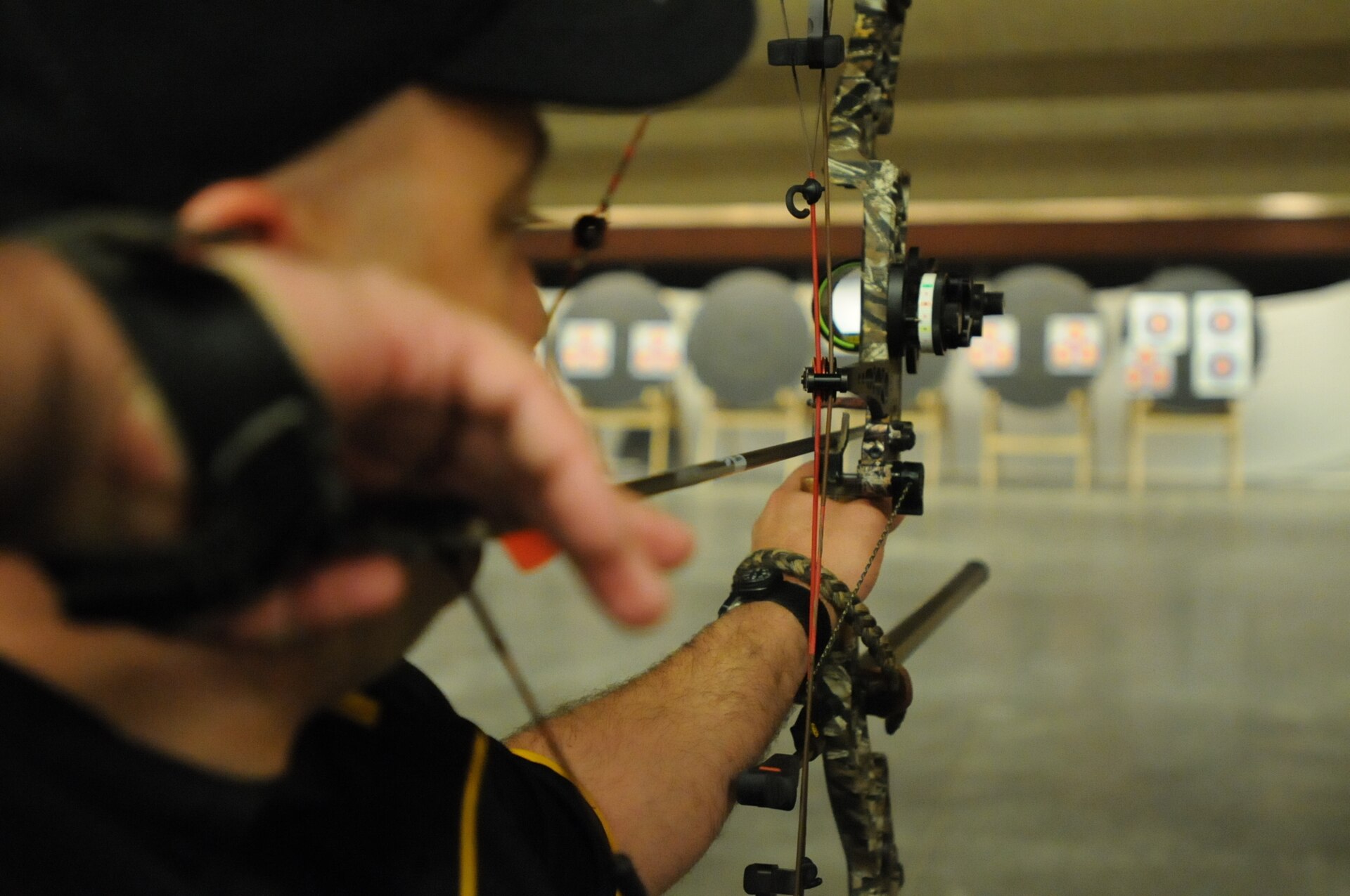
A recurve archer holds every ounce of a shot in their fingers. A cocked crossbow holds it behind a metal catch at a peak draw weight of a few hundred pounds, and lets it go when a trigger releases. Your insurance application calls both of these "archery," on one line. An underwriter who prices the class does not.
Your application says archery, your risk says two different sports
To a generalist agent, a crossbow lane and a traditional shooting line are the same product: a projectile range. To a specialty underwriter they are two risk profiles that differ in how the shot is stored, how it is fired, what it does to a body, and how much the gear on your line is worth. The short version is below.
| Factor | Traditional bow range | Crossbow range |
|---|---|---|
| How the shot is held | Held at full draw by the archer's muscles; cannot sit loaded | Cocked and latched behind a mechanical catch; sits loaded until the trigger releases |
| How it fires | Released by hand | Released by a trigger, the same interface as a firearm |
| Typical draw weight | 18 to 32 lbs adult beginner recurve, up to about 48 to 50 lbs elite target | 125 lbs (a common state minimum) up to about 300 lbs peak, cocked with as little as 5 lbs of effort |
| Speed | Compound lab ratings reach the low 330s fps; recurve is slower and not published as a speed spec | 350 fps entry to 505 fps flagship |
| Energy at the top of the range | Lower | About 92 ft-lbs on an entry model to 227 ft-lbs on a flagship |
| Regulatory profile | Minimal; treated as a bow | Some states set a minimum draw weight and a higher minimum age, and at least one groups a cocked crossbow with firearms |
| Dominant exposure | Coaching negligence, participant strain, spectator strays | Penetrating third-party injury, accidental discharge, higher-value inventory |
| Carrier treatment | Standard archery class | Underwritten for higher severity and equipment value |
Where the risk diverges: stored energy versus the shooter's muscles
A recurve, longbow, or compound bow only holds energy while the archer holds the draw. World Archery notes that adult beginners typically shoot recurve draw weights of 18 to 32 pounds, and even elite target archers hold around 48 to 50 pounds at full draw (World Archery). A compound bow's let-off, 70 to 80 percent on a modern flagship, lightens the holding weight, but the shooter still controls the string and cannot set the bow down loaded.
A crossbow is different in kind, not degree. Its string is cocked behind a mechanical catch, and in the words of the Texas Parks and Wildlife hunter-education course, "a lever or trigger releases the catch which holds the string and arrow" (Texas Parks and Wildlife). Indiana's administrative code defines a crossbow as a bow whose string is "drawn, held, and released by a mechanical device," with a minimum pull of 125 pounds (Indiana Administrative Code). Modern models make the gap vivid: a TenPoint Nitro 505 carries a 300-pound peak draw weight that a shooter cocks with about 5 pounds of effort, then sends a bolt downrange at 505 feet per second with 227 foot-pounds of energy. That energy sits latched on your shooting line until the trigger releases it.
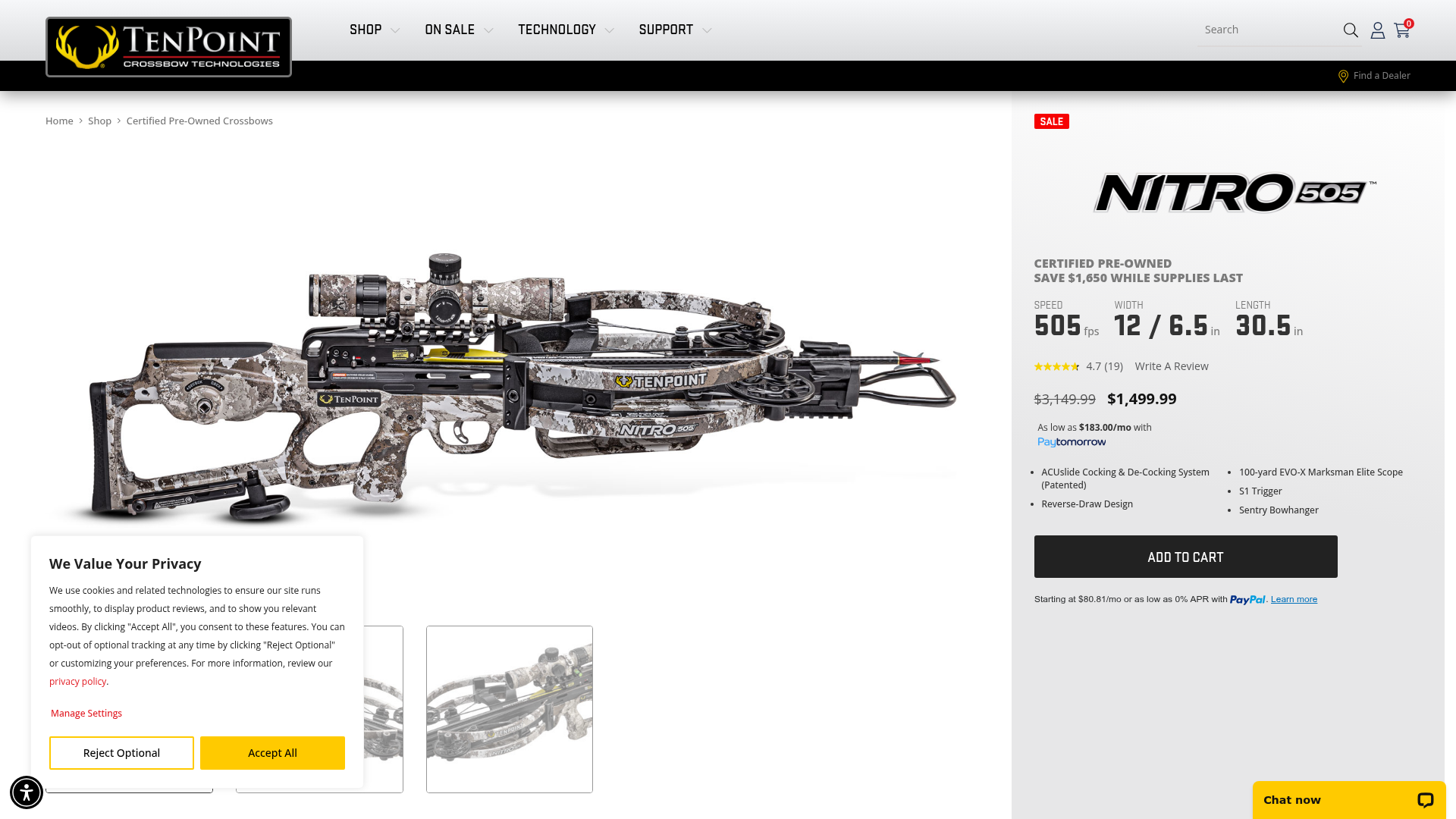
Source 1 of 3 · Manufacturer specification
A flagship crossbow rated at 505 feet per second with a patented cocking and de-cocking system and a mechanical trigger. It stores firearm-adjacent energy that a person cocks with almost no effort, then holds it latched on the line until the trigger releases, the mechanical fact that separates a crossbow range from a traditional one.
Two hazards follow from the mechanism. A crossbow that is dry-fired, released with no bolt loaded, sends its stored energy back into itself: the manufacturer warns that "dry firing will immediately void your warranty and result in catastrophic damage to the crossbow" (Barnett Crossbows), and state hunter-education material warns it can injure the shooter. And because the string and cables travel a fixed rail, a support hand or thumb that strays into that path when the bow fires can be severely injured. Neither failure mode exists on a traditional line.
When a generalist quotes archery, they picture a kid with a recurve at summer camp. They are not picturing a 300-pound draw held by a metal catch and let go with a trigger. Those are two different files. We rate them like two different files, because a claims adjuster will read them like two different files.
Bobby Sharp, Action Sports Practice Lead, Specialty Insurance
What the injury data can and cannot tell you
Here an honest comparison has to admit a limit. The federal injury dataset carriers lean on, the Consumer Product Safety Commission's NEISS system, codes archery under a single product code, 1235, and crossbows fall under that same code as vertical bows. No federal source can tell you whether crossbow ranges send more people to the emergency room than traditional ranges, because the data never separates the two. That gap is itself underwriting information: where the data is silent, the underwriter prices the mechanism.
What the data does show is volume and severity direction. A 2023 epidemiological study in Orthopedic Reviews, using that NEISS archery code, counted about 43,083 archery-related injuries treated in United States emergency departments from 2013 to 2022, an average of roughly 4,308 a year, and found that about 96 percent of patients were treated and released (Konda et al., Orthopedic Reviews, 2023). Most archery injuries are minor. The tail is not, and we cover the wider picture in our breakdown of archery range injury statistics.
The penetrating injury is the tail an underwriter watches. Clinical literature on arrow and bolt wounds notes they carry low kinetic energy compared with a gunshot and create no cavitation cavity, which reads as reassuring until the next line: the external entry wound can look minor while the internal injury, often vascular, is major (U.S. National Library of Medicine). A bolt carrying more than 200 foot-pounds that reaches a spectator or a person downrange is a low-frequency, high-severity claim. That profile is what general liability, participant accident, and an umbrella layer exist to absorb.
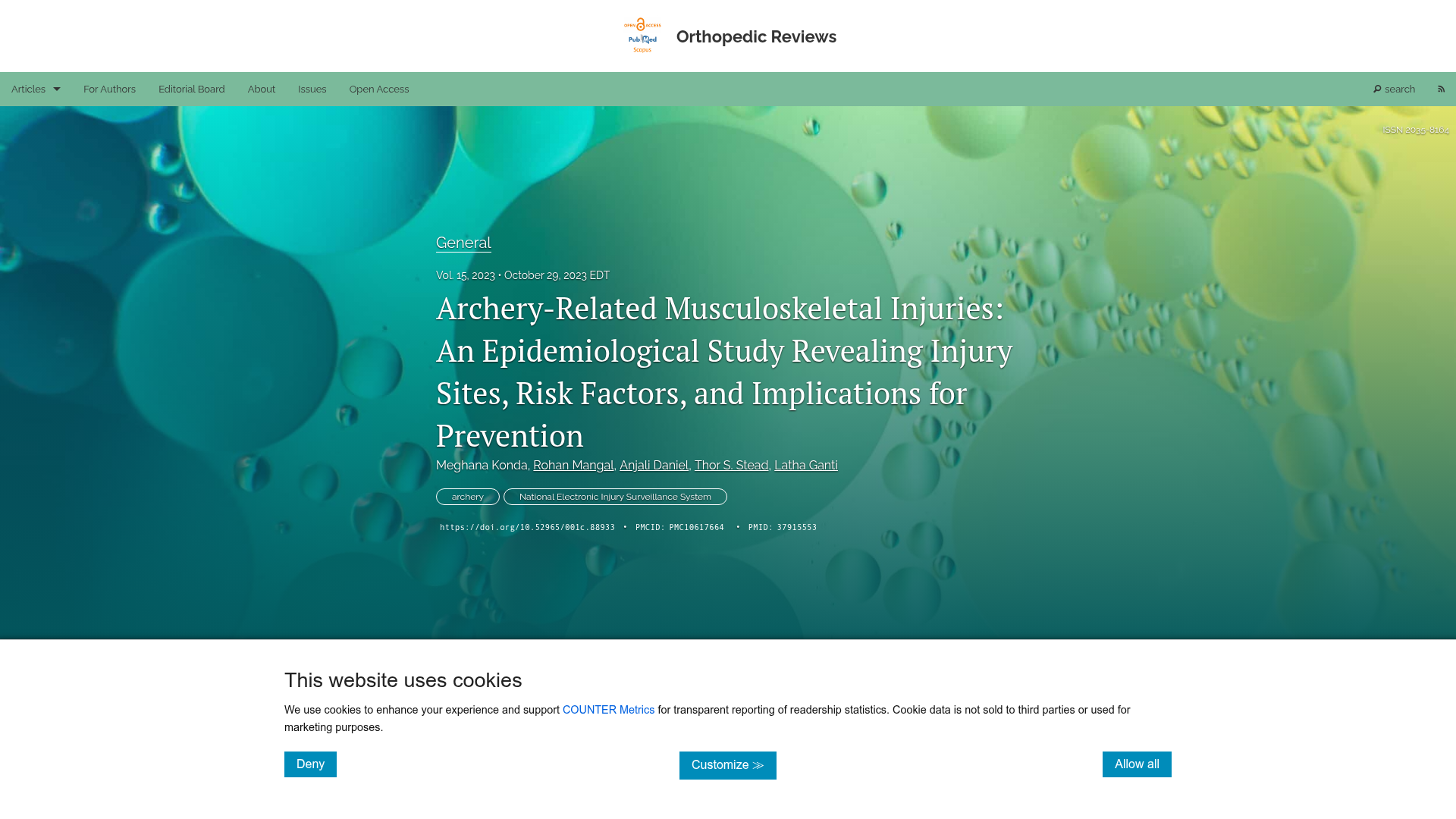
Source 2 of 3 · Peer-reviewed injury surveillance
A 2023 study in Orthopedic Reviews built on the CPSC NEISS archery code (1235), which groups crossbows and vertical bows together. It documents the volume of archery emergency-department visits and that most are minor, while confirming no federal dataset separates crossbow ranges from traditional ranges.
Source: doi.org/10.52965/001c.88933
How each side changes your coverage stack
Both a crossbow range and a traditional range buy from the same menu. What changes is where the weight lands.
General Liability. General liability covers third parties: a stray arrow that reaches a spectator, a slip on the range floor, a ricochet off a hard backstop. Standard forms exclude injuries to the paying participants who are the ones shooting, the single biggest gap generalist policies leave on an archery account. On a crossbow range the severity ceiling is higher, so the layer above general liability matters more.
The umbrella above general liability. That layer is a commercial umbrella. A crossbow penetrating-injury claim that breaches your general liability limit is the exact event the umbrella exists for: it pays the archery range injury cost that lands above the general liability limit. The capacity is inexpensive, and it is the coverage you are most glad to carry on the one bad day.
Participant accident. Participant accident coverage fills the participant gap general liability leaves open, the same participant-versus-general-liability split we walk through for paintball fields. It pays a shooter's medical bills up front, no-fault, which lowers the odds a minor injury becomes a lawsuit. If you host leagues or events, tournament participant accident medical coverage extends that to competitors, and many venue and park-district contracts require it before they will let you run the event.
Property, target butts, and customer bow damage. Property is where the crossbow range quietly costs more. Crossbow inventory runs several times the price of recurve rental gear, so the schedule is larger. Your target butts and backstops belong on that property schedule at replacement value, and a crossbow range replaces them faster because higher-energy bolts chew through a butt sooner than arrows do. Confirm too how the policy treats customer bow damage: a customer's own bow damaged on your line, or a rental bow whose limb fails, is a claim you want addressed rather than assumed.
A Business Owner's Policy and equipment breakdown. Indoor ranges add a mechanical layer. A Business Owner's Policy that bundles property and liability, with equipment breakdown added, covers the electronic target-retrieval carriers, ventilation, and lighting an indoor range depends on. When a target-retrieval system fails, equipment breakdown is what keeps you open.
Professional liability. This is where the traditional side carries the heavier weight. Recurve and compound instruction is coaching-intensive: form, draw length, release. USA Archery gates its coach general liability coverage to certified Level 2-plus coaches with current membership, at 1,000,000 dollars each occurrence and 2,000,000 dollars aggregate per event, and requires background screening and SafeSport training for every coach (USA Archery). A range that teaches carries a professional liability, or errors and omissions, exposure that a walk-up crossbow lane largely does not.
| Coverage | Traditional bow range | Crossbow range |
|---|---|---|
| General liability | Standard third-party exposure | Higher severity ceiling |
| Umbrella above GL | Advisable | Strongly advised for the penetration tail |
| Participant accident | Core coverage | Core, with higher medical exposure |
| Property and target butts | Standard butts at replacement value | Larger schedule, faster butt replacement |
| Equipment and customer bow damage | Recurve-value inventory | Crossbow-value inventory, higher schedule |
| BOP with equipment breakdown | If indoor | If indoor |
| Professional liability | Heavier, coaching-intensive | Lighter, walk-up |
Crossbow only, traditional only, or both under one roof
The structure depends on what you run.
Traditional only. A standard archery package weighted toward participant accident, and toward professional liability if you coach. Confirm the participants are covered and not excluded, and confirm your coaches are certified and screened.
Crossbow only, or crossbow-heavy. Push the umbrella limit up, schedule the higher-value inventory and the faster butt replacement, and document your down-range control and de-cock discipline. Those are the safety practices an underwriter credits, and the ones a claims file will look for after an accidental discharge.
Both on one site. This is where the disclosure trap catches operators. The mistake that denies a claim is adding crossbow lanes to a recurve range and never telling the carrier. If your policy names "archery range operations" and an adjuster later learns the injury happened on a 300-pound crossbow line the carrier never rated, that undisclosed exposure becomes a denial argument. The policy has to name crossbow operations explicitly.
The regulatory line reinforces the point. New York, as of fall 2025, lets a crossbow be used like a vertical bow, but only if it has a working trigger safety and a minimum peak draw weight of 100 pounds, and it sets the minimum crossbow age at 14 where a vertical bow starts at 12 (New York State DEC). Maine goes further and groups a cocked crossbow with firearms, not bows, in its loaded-weapon-in-a-vehicle statute (Maine Legislature). When the state treats a crossbow as a heavier instrument than a bow, your carrier will too.
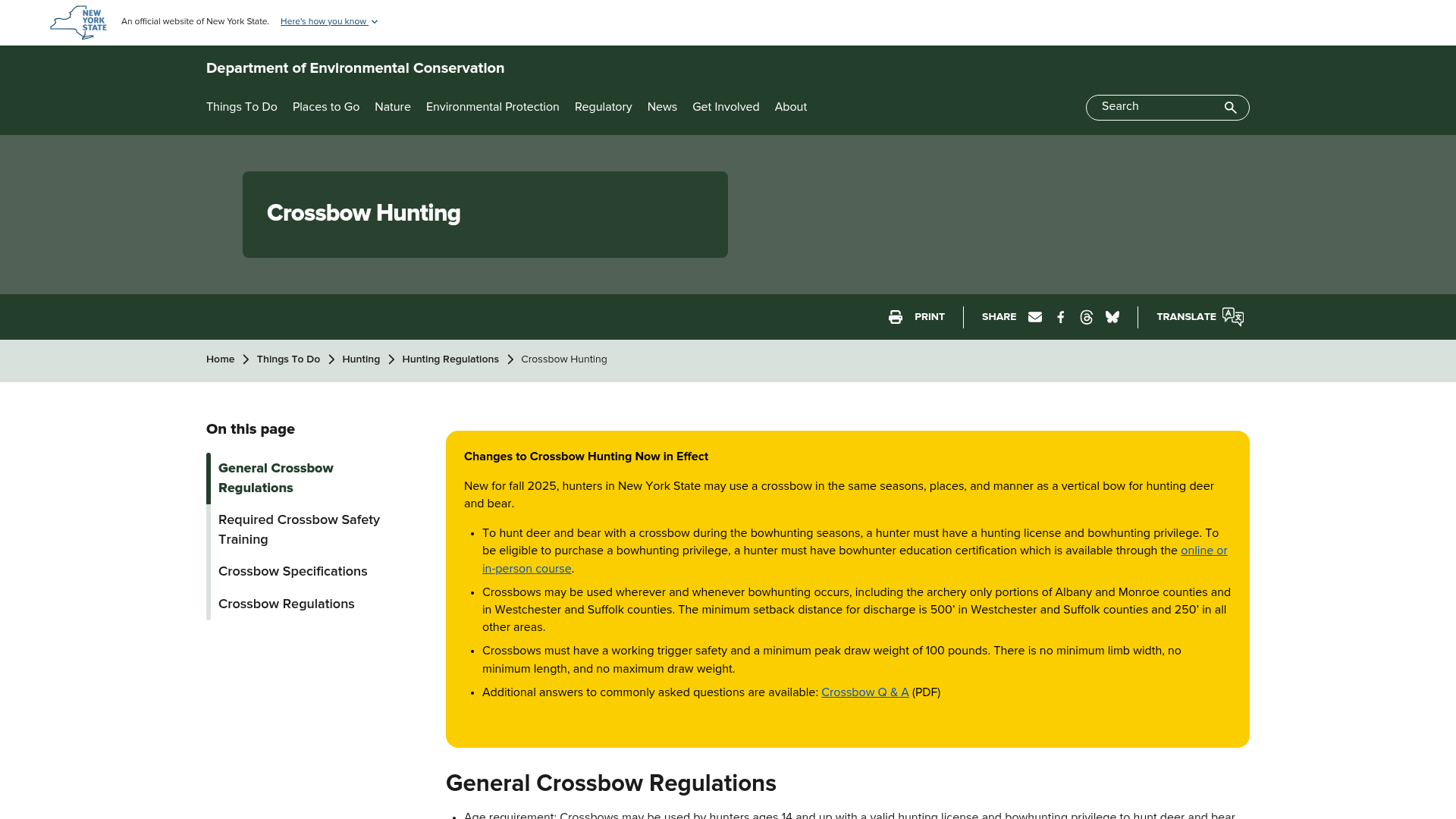
Source 3 of 3 · State regulation
New York sets a power threshold on crossbows that it does not set on vertical bows: a working trigger safety and a minimum peak draw weight of 100 pounds, plus a higher minimum age. When a state regulates a crossbow to a firearm-adjacent standard, an underwriter reads it the same way.
Source: dec.ny.gov/things-to-do/hunting/regulations/crossbow
The mistakes operators make insuring an archery range
These are the recurring errors a specialty broker catches on an archery account.
- Undisclosed crossbow lanes. Running crossbow sessions on a policy that names only general archery operations. If the carrier learns of the undisclosed exposure at claim time, it has grounds to dispute.
- Assuming premises liability covers participants. The paying shooter on the line is the person standard general liability excludes. That is what participant accident coverage is for, the same gap we detail in why a field's general liability policy probably has gaps.
- Under-scheduling crossbow inventory and target butts. Crossbows and their optics cost several times what recurve rentals do, and higher-energy bolts retire target butts faster. A property limit set for a recurve fleet leaves the crossbow side underinsured.
- Buying one backstop for both. A backstop rated for recurve arrows is not automatically rated for crossbow bolts. No ASTM standard governs archery range design, so the penetration upgrade is on the operator, and the underwriter will ask about it.
- Letting a generalist blend the rate. A generalist prices "archery" as one class. A specialty broker prices the crossbow and traditional exposures on their real split, which is usually the difference between a fair premium and an overpriced or underinsured one.
The archery account that pays the least is the one whose policy names the crossbow line, schedules the butts at replacement value, and can show me a down-range control routine. The one that pays the most found out at a claim that archery on the application did not mean the crossbow lane they added last spring.
Bobby Sharp, Action Sports Practice Lead, Specialty Insurance
That underwriting conversation is exactly what a crossbow or dual-bow operator needs from a specialty broker, and it is the difference between a policy whose scope matches the whole range and one that only matches half of it.
"Bobby Sharp and the team at Specialty Insurance had a fast turnaround, professional service, and answered every question I had as a brand-new operator. They wrote the policy I'd want defending me if a player ever filed a claim."
Grimnir Tactical LLC
Verified customer review
What archery range insurance costs, and how to price it right
As a Specialty Insurance quoting range, a standalone archery range budgets roughly 1,500 to 5,000 dollars a year for a real package of general liability, participant accident, and property. A mixed operation that runs nerf and archery party events sits around 2,000 to 3,000 dollars. Those are starting ranges, not a crossbow-versus-traditional split, because the split is an underwriting judgment rather than a published rate.
Inside that band, the crossbow-heavy range prices toward the top: higher stored energy, higher penetration severity, and higher-value inventory all push the number up. A beginner recurve range prices toward the bottom. The same levers move both directions. Documented safety briefings, enforced down-range control, quality backstops, a clean multi-year loss history, and certified coaches on the traditional side all pull the premium down. A range that can show those at renewal prices below one that cannot, whichever bow it hands across the counter.
Frequently Asked Questions
Is crossbow range insurance more expensive than traditional archery insurance?
There is no published crossbow versus traditional rate, because federal injury data groups both under one code and cannot separate them. In practice a crossbow-heavy range prices toward the top of the archery band and a beginner recurve range toward the bottom, because underwriters weigh the crossbow's higher stored energy, penetrating-injury severity, and higher-value inventory. A standalone archery range typically runs 1,500 to 5,000 dollars a year for a real package.
Why does a crossbow change my archery range's risk profile?
A crossbow holds its full draw weight, up to about 300 pounds, latched behind a mechanical catch and fires with a trigger, so it sits loaded on your line and carries firearm-adjacent stored energy. A vertical bow only holds energy while the archer holds the draw. That difference drives higher penetrating-injury severity, an accidental-discharge and dry-fire hazard, and more expensive inventory to schedule.
Does general liability cover a customer hit by an arrow or bolt on my range?
General liability covers third parties such as spectators and bystanders, but standard forms exclude injuries to the paying participants who are the ones shooting. To cover a shooter's injury you need participant accident coverage alongside general liability. On a crossbow range the higher severity also makes a commercial umbrella above the general liability limit worth carrying.
Do I need to tell my insurer if I add crossbow lanes to a traditional range?
Yes. The policy must name crossbow operations explicitly. If your policy lists only general archery operations and a claim later arises on a crossbow line the carrier never rated, the carrier can treat it as an undisclosed exposure and dispute the claim. Disclose the crossbow lanes and schedule the added inventory before the first shot.
How much does archery range insurance cost?
As a Specialty Insurance quoting range, a standalone archery range budgets roughly 1,500 to 5,000 dollars a year for general liability, participant accident, and property, and a mixed nerf and archery party operation runs about 2,000 to 3,000 dollars. Documented safety practices, quality backstops, and a clean loss history move the premium down.
Does archery instruction need separate professional liability coverage?
If you coach, yes. Teaching form, draw length, and release creates a professional liability, or errors and omissions, exposure that general liability does not cover. USA Archery gates its coach liability program to certified coaches with current membership and requires background screening and SafeSport training, and carriers expect the same discipline on a range that teaches.
Sources
- TenPoint Crossbow Technologies. Nitro 505 specifications. tenpointcrossbows.com
- Barnett Crossbows. Crossbow Safety. barnettcrossbows.com
- Indiana Administrative Code, 312 IAC 9-1-5.3 (crossbow definition). law.cornell.edu
- Texas Parks and Wildlife Department. Hunter Education: How to Shoot a Bow. tpwd.texas.gov
- World Archery. Recurve bow draw weight guidance. worldarchery.sport
- Konda M, Mangal R, Daniel A, Stead TS, Ganti L. Archery-Related Musculoskeletal Injuries. Orthopedic Reviews, 2023. doi.org/10.52965/001c.88933
- U.S. National Library of Medicine (PubMed Central). Penetrating arrow and bolt injuries. ncbi.nlm.nih.gov
- New York State Department of Environmental Conservation. Crossbow Hunting regulations. dec.ny.gov
- Maine Legislature. Title 12, Section 11212-A (loaded firearm or crossbow in a vehicle). mainelegislature.org
- USA Archery. Certified Coaches Program General Liability Summary of Insurance. usarchery.org