

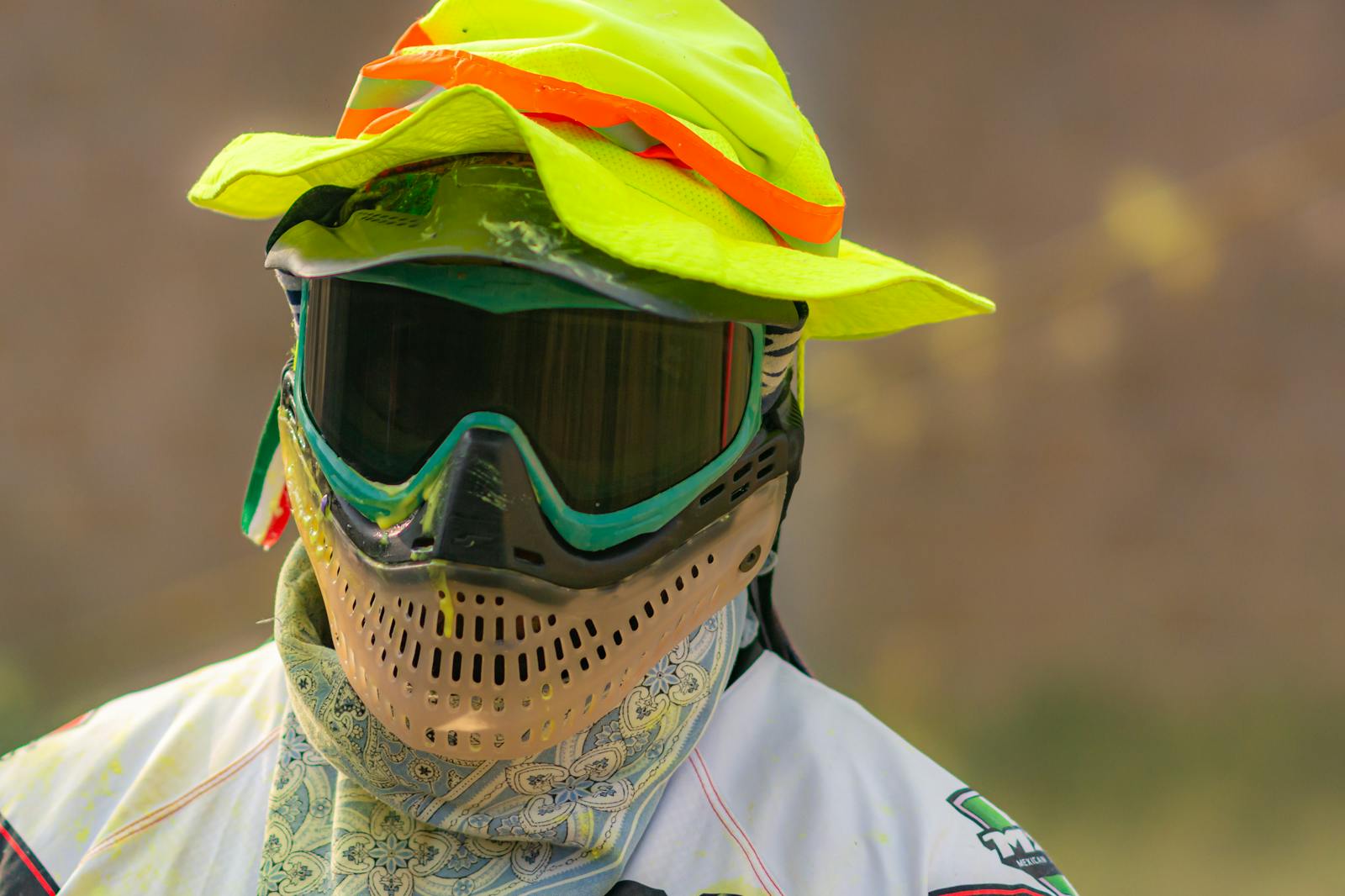
Quick answer: GL covers the bystander, Participant Injury covers the player
Every paintball field policy I review starts with the same first task: read the exclusions before the coverages. A substantial share of generalist GL policies issued for paintball fields carry language that quietly turns the policy into spectator-only coverage, and the operator has no idea it's there. The exclusion is on the standard ISO Athletic or Sports Participants Exclusion endorsement (CG 21 01), and any underwriter who works the class will tell you the same: read the exclusions first.
Here's the difference between the two coverages, side by side.
| Coverage | Who it pays out to | The trigger event |
|---|---|---|
| General Liability | A third party. Spectator in the parking lot, vendor delivering paint, the parent who tripped over a tank in the lobby. | Slip, trip, parking-lot fall, property damage caused by you. |
| Participant Injury | The paying customer who's actively playing. | Paintball welt, ankle twist in a bunker, goggle strike, close-range hit. |
A standard general liability policy can have an "Athletic or Sports Participants Exclusion" attached to the policy form. The applicable language reads, verbatim: "With respect to any operations shown in the schedule, this insurance does not apply to bodily injury to any person while practicing for or participating in any sports or athletic contest or exhibition that you sponsor." The full text of the endorsement is published on the ISO form catalog (CG 21 01 reference, insurancexdate.com).
At a paintball field, that exclusion strips the policy down to a spectator-liability policy. Every paying player on the field falls outside the coverage.
The most troubling exclusion on a paintball general liability policy is the athletic or sports participants exclusion. When it's in there, your coverage shrinks to spectator injuries only. Roughly one in four of the paintball policies I review has the language buried in the policy form, and the operator usually has no idea until a claim gets denied.
Bobby Sharp, Paintball Practice Lead, Specialty Insurance
Roughly 1 in 4 paintball general liability policies contains the Athletic or Sports Participants Exclusion.
When it's in there, the policy is reduced to spectator-injury coverage only. Every paying player on the field falls outside it.
What General Liability covers at a paintball field
General Liability is the foundation. It covers third-party bodily injury, third-party property damage, your legal defense, and personal and advertising injury claims.
At a paintball field, that means GL is on the hook when:
- A spectator slips on a wet floor in the lobby.
- A neighbor's car gets a paintball mark from a stray shot over the netting.
- A vendor delivering propane trips over an extension cord and hurts a wrist.
- A parent in the parking lot turns an ankle on a pothole walking back to the car.
- A delivery driver's truck mirror gets clipped by a player in face paint walking through.
What GL is NOT on the hook for, by default, when the policy contains the Athletic Participant Exclusion: the player who paid you to play. That gap is the whole reason this article exists. The exclusion language to look for in your own policy: "athletic or sports participants," "any person while practicing for or participating in any sports or athletic contest," "active participant in the activity."
Our Specialty Insurance underwriter blog has covered this with a real claim: a Texas paintball field carried $2 million in general liability, took a participant injury claim, and settled $42,000 out of pocket because the carrier denied coverage under the participant exclusion (Why Your Paintball Field's GL Policy Probably Has Gaps). The operator had paid the premium for two years thinking the player was covered. The dec page said yes. The policy form said no.
What Participant Injury covers at a paintball field
Participant Injury insurance is the policy that fills the gap. It pays when the paying customer gets hurt during the activity you sold them.
At a paintball field, that means Participant Injury is on the hook when:
- A player takes a close-range goggle strike and the lens fractures.
- A player twists an ankle running between bunkers.
- A player gets a paint welt that develops into a real medical claim.
- A player files a negligence suit after being hit while complying with a referee's call.
Some carriers grant the coverage affirmatively through a Participants Legal Liability endorsement. The endorsement can show up on a certificate of insurance, which is what landlords and city parks often want to see. Published industry program details show Accident Medical limits typically up to $25,000 and Accidental Death and Dismemberment up to $10,000 for paintball programs. Participant Accident insurance is the related no-fault medical-payment companion. Specialty Insurance writes both Participant Injury and Participant Accident on a single proprietary form, so the field operator gets one policy, one broker, one renewal.
When to pick GL only vs Participant Injury only vs both
The right answer for almost every paintball field is both. Stacked. Here's how the math works.
| Scenario | What you need |
|---|---|
| Paintball field with paying players, open play, leagues, or tournaments | GL plus Participant Injury. Both. No exceptions. |
| Paintball-adjacent retail (pro shop, online retailer, no on-site play) | GL only. Participant Injury is unnecessary if no participants. |
| Strictly private invitation-only paintball game on private land, no paying customers, no rental, no advertised play | Homeowner's plus a one-off gig binder, not commercial GL. Different article. |
| Mobile paintball party-rental that travels to private addresses | GL plus Participant Injury plus Commercial Auto plus Inland Marine. The full stack. |
The single mistake I see at renewal more than any other: a paintball field carrying GL only and assuming Participant Injury is inside it. It almost never is unless the broker placed coverage with a specialty carrier that grants Participants Legal Liability affirmatively. Generalist carriers do not.
The 4 mistakes operators make choosing between them
After 100+ paintball quotes, the same four patterns keep showing up.
- Treating the waiver as a substitute. A waiver is a contract defense. It shifts the legal posture and can end a case at summary judgment. It does not pay your defense costs, your settlement, or the player's medical bills. Insurance pays those. The two work together, not as substitutes.
- Confusing Participant Accident with Participant Injury. Participant Accident is no-fault medical. It pays a fixed schedule of benefits regardless of liability. Participant Injury is liability coverage. It pays when the operator is held legally responsible. Most paintball fields want both.
- Buying GL and Participant Injury from different brokers. Operators sometimes end up with overlapping exclusions, gaps where neither policy responds, or one renews on a different date than the other and lapses. Specialty Insurance writes both on a single proprietary form for this reason.
- Letting one lapse at renewal. Participant Injury is the coverage operators are most likely to drop when premium pressure hits. It is also the coverage that pays the largest claims. Dropping it to save 10% on premium is the worst trade in paintball insurance.
I see this same exclusion gap on roughly one in four paintball dec pages that get sent to me for review. The operator paid the premium thinking the player was covered. The policy says otherwise. The denial letter arrives after the lawsuit does.
Bobby Sharp, Paintball Practice Lead, Specialty Insurance
"Specialty Insurance is a great choice! I highly recommend this company for your business! They diligently take their time and work with you, making sure your business has all the correct and specific coverages you need. Cathy was a huge help, and gave me exactly what I needed, making it budget friendly and greatly affordable. Choose Specialty Insurance if you want the best service and fair treatment for your business!"
The bigger picture: liability claim severity is rising fast
The Insurance Information Institute and the Casualty Actuarial Society published a joint study in 2025 showing that economic and social inflation have added between $231.6 billion and $281.2 billion to liability losses across auto and general liability lines between 2015 and 2024 (Triple-I, "Claims Severity Drives Liability Insurance Losses"). The Other Liability Occurrence line, which covers general liability for businesses, posted a 6.8% compound annual severity growth rate over the same period, well above CPI.
What that means for paintball: claim frequency has not spiked, but the cost per claim has. A single participant injury lawsuit that would have settled at $30,000 a decade ago can settle at $75,000 today. A goggle strike with a real eye injury that would have been $200,000 is now mid-six-figures. The Triple-I severity trend documents that pattern across the whole liability class, and paintball is not insulated from it.
If your only coverage is GL with the Athletic Participant Exclusion attached, a six-figure participant claim lands on you, not your carrier.

Talk to a specialty broker before your next renewal
I write paintball policies through Specialty Insurance. We cover roughly 1 in 4 of the ~1,700 commercial paintball fields in the United States. Every field we onboard gets the GL and Participant Injury question answered on the first call: both, stacked, on a single proprietary form. No two-broker juggling, no surprise gap at the claim.
Three things you can do today, whether or not you call us:
- Pull your current GL policy and search the policy form for "athletic," "participant," "sports contest," or "active participation." If those words appear in an exclusion, your coverage has the gap.
- Pull your current certificate of insurance and look for "Participants Legal Liability" as a separate line item. If it is not there, the gap might still be in your policy.
- Ask your current broker, in writing, "Does my policy cover bodily injury to a paying paintball player who is hit during gameplay?" Save the answer.
If the answer is anything other than "yes, here is the endorsement," send us your dec page.
Specialty Insurance writes paintball in all 50 states with specialty underwriters who know projectile-sport risk profiles. Call us at (888) 673-7228 or send us your current dec page.
Frequently asked questions
Does a waiver replace participant injury insurance?
No. A waiver is a contract defense that shifts the legal posture of a case and can sometimes end the case at the summary-judgment stage. It does not pay your defense costs, your settlement, or the injured player's medical bills. Insurance pays those. The two work together, not as substitutes.
Is participant injury insurance required by my landlord or my state?
Required by state, generally no. No US state's insurance code currently mandates Participant Injury for paintball fields specifically. Required by landlord, city park, or event venue, almost always yes. The Certificate of Insurance most landlords ask for either lists "Participants Legal Liability" as a line item or implicitly assumes it through silence on the Athletic Participant Exclusion.
Can one policy cover both GL and Participant Injury?
Yes, if the carrier writes both on a single form. Specialty Insurance does. Generalist carriers usually require a separate Participants Legal Liability endorsement, and some refuse to add it to a sports or recreation risk at all. The single-form approach prevents the two-broker overlap problem.
What is the difference between Participant Injury and Participant Accident?
Participant Injury is liability coverage. It pays when the operator is found legally responsible for a participant's injury. Participant Accident is no-fault medical-payment coverage. It pays a fixed schedule of medical benefits regardless of liability. Most paintball fields carry both because they address different sides of the same claim.
Does my umbrella policy extend over Participant Injury?
It depends on the underlying coverage. An umbrella policy is excess coverage on top of an underlying primary policy. If your primary GL excludes athletic participants, the umbrella usually inherits that exclusion. If you have a Participant Injury policy underneath, the umbrella can sit on top of it. Always confirm in writing with both carriers before assuming umbrella coverage applies.
Sources
- ISO Athletic or Sports Participants Exclusion endorsement (CG 21 01), insurancexdate.com form catalog: the standard endorsement that creates the participant-coverage gap when attached to a GL policy.
- Specialty Insurance, "Why Your Paintball Field's GL Policy Probably Has Gaps": the Texas $42,000 out-of-pocket settlement.
- Triple-I Insurance Information Institute and Casualty Actuarial Society, "Claims Severity Drives Liability Insurance Losses," 2025: $231.6B to $281.2B liability loss inflation 2015 to 2024, Other Liability Occurrence 6.8% CAGR severity.
- McCune v. Myrtle Beach Indoor Shooting Range, Inc., 364 S.C. 242 (S.C. Ct. App. 2005): the paintball waiver case operators should know.