

Short answer: yes, if you own any of the things on this list
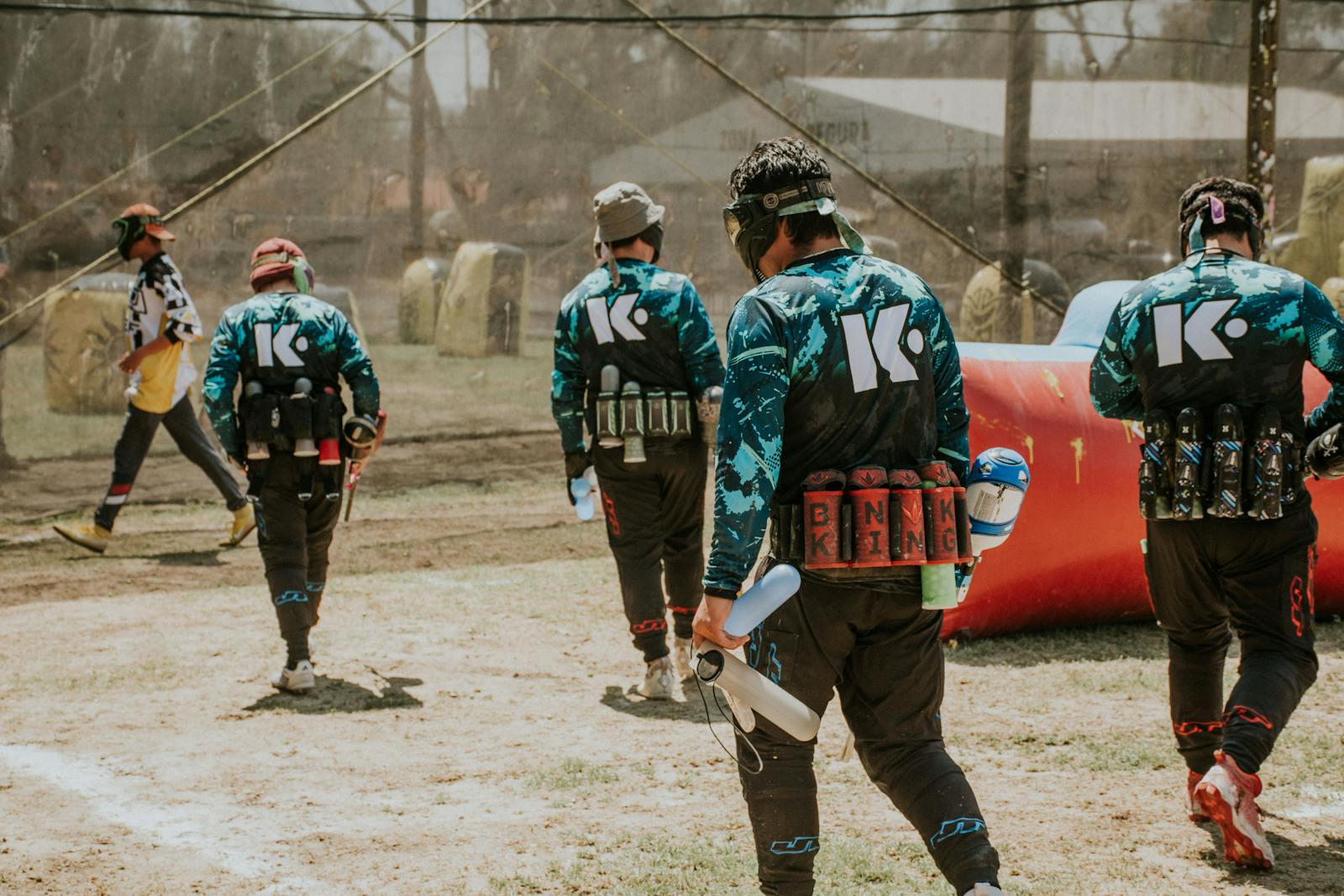
If your paintball field owns any of the following, GL is not enough on its own: a fleet of rental markers, a chronograph station, a CO₂ or HPA refill rig, a section of outdoor bunkers and netting, indoor turf, lobby furniture, a pro-shop selling masks and paint, a point-of-sale system, a signage trailer, or the building you operate out of. All of those are property. None of them are covered by your general liability policy.
The cleanest way to think about it: GL covers what you do to other people and their stuff. Property covers what happens to your stuff. The two policies sit side by side; they don't overlap.
What GL does NOT cover at a paintball field
The published industry guidance is unambiguous. A general liability policy at a paintball field does not pay for damage to the field's own equipment, bunkers, netting, signage, pro-shop stock, or building. That includes losses from storm, hail, wind, fire, theft, and vandalism. Industry-standard policy language is unambiguous on this point: a general liability policy does not cover the operator's own equipment, period.
This is the same coverage gap we've covered in more depth in our paintball GL gaps walkthrough, which lists the four named property categories that fall through standard GL forms: outdoor structures, scheduled equipment, business income, and rental inventory.
Why 2025 made this more expensive to skip
The 2025 catastrophe-loss numbers reset the math on whether a paintball field can afford to skip property coverage.
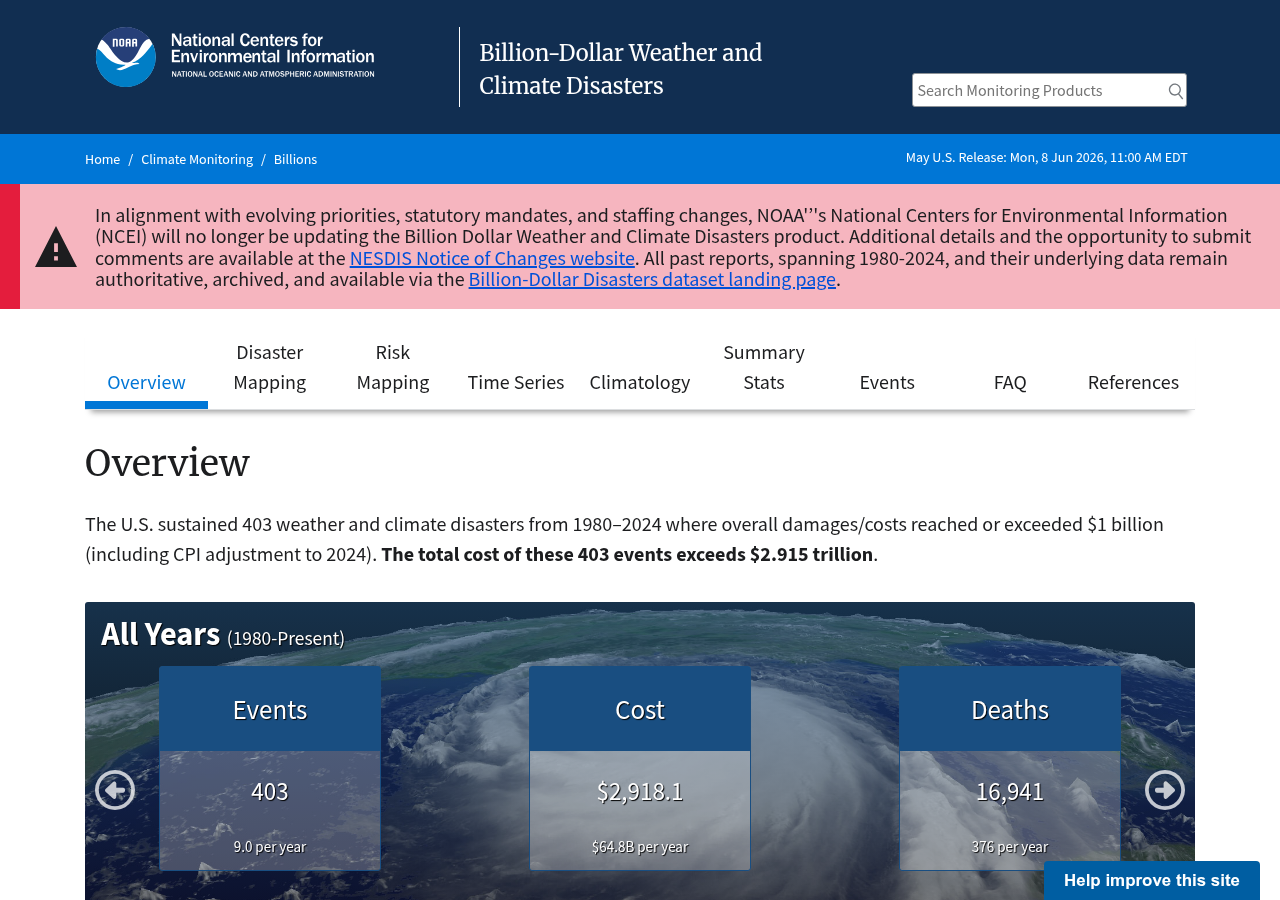
The National Centers for Environmental Information's Billion-Dollar Weather and Climate Disasters tracker showed 27 confirmed weather and climate disaster events with losses exceeding $1 billion each in 2024 alone in the United States, including one drought, multiple severe-convective-storm clusters, hurricanes, and wildfires (NCEI, NOAA).
Source 1 of 2 · Federal climate-loss dataset
NOAA NCEI Billion-Dollar Weather and Climate Disasters tracker, the authoritative federal record of US disasters causing $1B+ in damages. 2024 alone logged 27 events.
Source: ncei.noaa.gov/access/billions
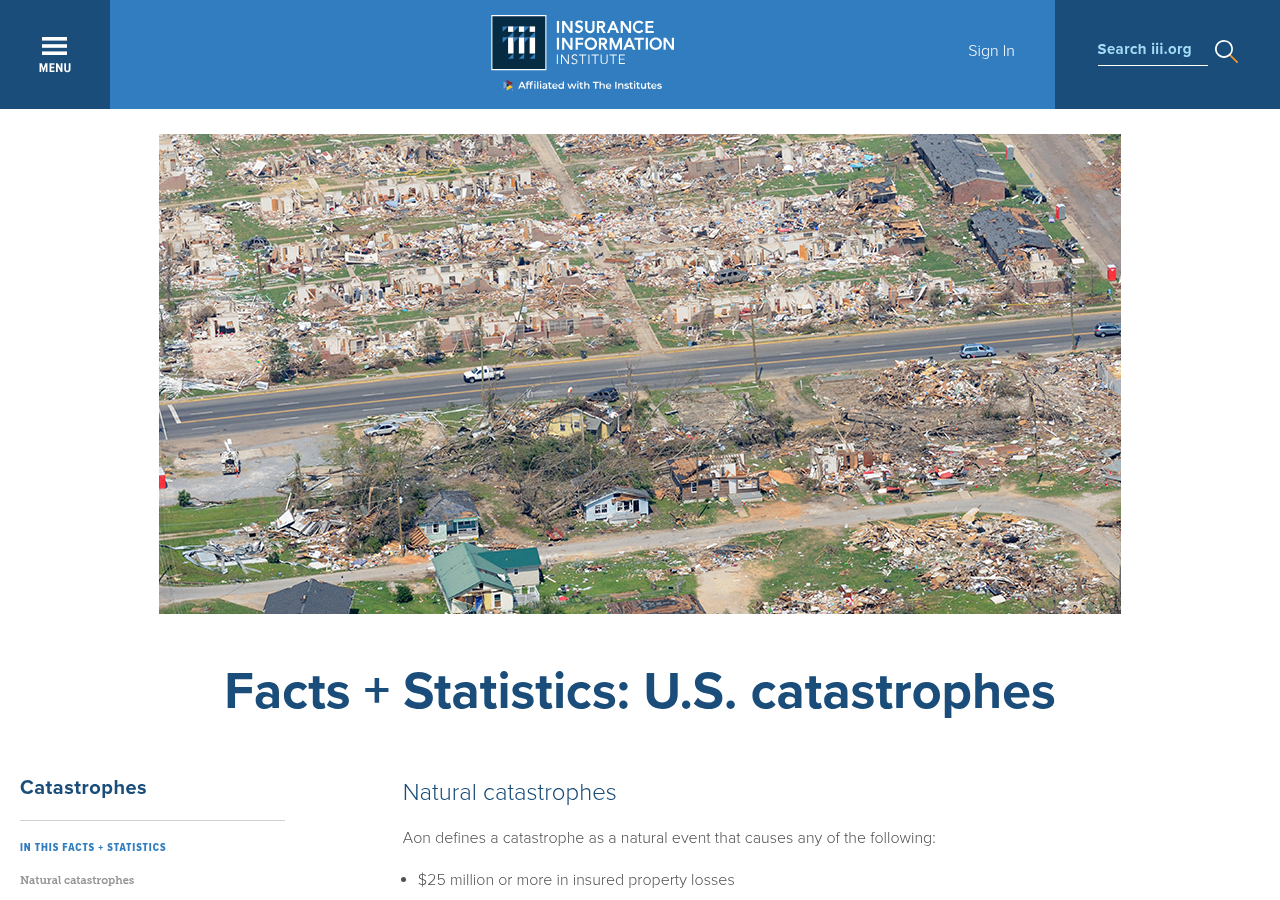
Severe convective storms, hail, and wind are precisely the perils that hit outdoor paintball infrastructure first. The Insurance Information Institute's Facts + Statistics page on U.S. catastrophes breaks the multi-year loss totals down by peril and shows severe convective storms have been the largest single driver of insured property losses every year since 2020 (III). That trend is why commercial-property premiums for outdoor venues have moved more than indoor SMB risks.
Source 2 of 2 · Insurance-industry loss aggregation
Insurance Information Institute Facts + Statistics page on US natural catastrophes. The reference source insurers cite when explaining why outdoor commercial property premiums have moved.
Source: iii.org/fact-statistic/facts-statistics-us-catastrophes
The pattern is not limited to the U.S. Swiss Re reported that 2025 was the sixth consecutive year insured natural-catastrophe losses exceeded $100 billion globally (Swiss Re Institute).
For a paintball field, the relevance is concrete. The single largest outdoor-property loss our underwriters paid on a paintball field in the last 24 months was a severe-convective-storm event that destroyed $38,000 in outdoor bunkers, netting, and signage on one site in a Midwest state in a single afternoon. The field had a $500,000 building-property limit. It had no scheduled coverage for outdoor structures. The loss was paid out of pocket, not by the carrier.
The single biggest gap I find on paintball property schedules is outdoor structures. The building's covered. The bunkers and netting around it aren't. A storm wipes out $30,000 in field infrastructure and the operator finds out after the claim is denied.
Bobby Sharp, Paintball Practice Lead, Specialty Insurance
What property coverage really does at a paintball field
A paintball-specific property schedule maps each category of asset to the right form. The mapping matters because each form has different deductibles, sub-limits, and exclusions.
| Asset category | Right form | Why it's separate |
|---|---|---|
| Building (if owned) | Commercial Property | Building structure only, not contents |
| Furniture, fixtures, lobby gear | Business Personal Property (BPP) | Inside-the-building contents |
| Bunkers, netting poles, fencing | Scheduled outdoor structures | Excluded by default from BPP |
| Rental marker fleet | Inland Marine (mobile equipment) | Moves between sites; can be off-premises |
| Pro-shop stock | Stock / merchandise sub-limit | Treated as inventory, not equipment |
| POS, computers, cameras | Electronics floater | Often sub-limited under BPP |
| Air-fill compressor, chronograph | Scheduled equipment | High value, often serial-tagged |
| Business income during shutdown | Business Interruption | Lost revenue during repair period |
| Mobile trailer, party rig | Inland Marine (mobile) | Off-premises by definition |
A paintball-specific carrier walks the operator through each line of the schedule. A generalist carrier writes "Building: $500K, Contents: $50K" on the dec page and calls it done.
BOP vs separate GL + Property
A Business Owners Policy (BOP) bundles GL and Property into one form. For some paintball operations, the bundle is the right answer. For others, the bundle costs more in coverage gaps than it saves in premium.
The bundle wins when:
- You operate a single location, mostly indoor, with limited outdoor structures.
- Your rental fleet is small (under $20K in scheduled value) and stays at the property.
- You don't run mobile, off-premise, or event coverage.
- Your revenue is under $750K.
The bundle loses when:
- You have meaningful outdoor structures (bunkers, netting, towers).
- Your rental fleet moves between locations or off-site for events.
- You operate multiple locations.
- Your annual revenue is above $750K (BOPs typically cap there).
- You need product liability on pro-shop sales of masks, paint, or tanks.
A paintball-specific carrier will tell you which side of the line your field sits on before writing the quote. A generalist BOP writer will just quote the bundle.
The 3 property mistakes paintball fields make
1. Outdoor structures excluded by default
Most standard Commercial Property forms cover the building. They exclude outdoor structures (fences, sheds, netting frames, light poles, signage) unless those structures are specifically scheduled. A paintball field with $30K to $100K in outdoor bunkers, netting, and perimeter infrastructure can find out at claim time that none of it was on the schedule.
2. Rental inventory miscoded as "stock"
A rental marker fleet is equipment. It is not stock. Stock means inventory for resale. Equipment means assets used to deliver the service. The two are sub-limited differently on most BOPs, and a fleet coded as stock can be capped at $5K to $10K instead of the $30K to $50K the operator owns.
3. ACV (Actual Cash Value) vs RCV (Replacement Cost Value)
ACV pays the depreciated value of the property at the time of loss. RCV pays the cost to replace it new. A five-year-old paintball mask fleet at ACV is worth a fraction of what it costs to re-stock. Specialty Insurance writes paintball property at replacement cost by default; the standard SMB carrier writes ACV unless the operator specifically asks.
What to ask your current broker today
If your renewal is more than 60 days out, send your broker these four questions in an email. The answers tell you whether you're under-covered.
- Are my outdoor structures (bunkers, netting, perimeter fencing, signage) scheduled by category and dollar value on my policy? Send me the schedule.
- Is my rental fleet coded as equipment with a serial-numbered schedule, or coded as stock? At what sub-limit?
- Is the policy ACV or RCV on equipment and outdoor structures? If ACV, what would the replacement cost be after depreciation?
- Does the policy include business income / business interruption coverage, and for how many months at what daily limit?
If your broker can't answer all four in 48 hours, send the same questions to a paintball-specific broker.
Inland Marine for the moving parts
The Inland Marine form is the unsung hero for any paintball operator with equipment that moves. A paintball rental fleet that travels to a tournament, a mobile party-rental trailer, a chronograph station that goes to off-site events, a pop-up field, an outdoor pop-up for a corporate event: all of those need Inland Marine, not Commercial Property.
A standard Commercial Property form covers property at a scheduled location. Take the property off the schedule address (on a truck, at an event, at a customer site) and the coverage stops at the property line. Inland Marine extends coverage to property in transit and at temporary off-site locations.
The paintball operators most likely to need Inland Marine are mobile / party-rental operators, multi-location operators (cross-site fleet sharing), tournament hosts shipping inventory, and any operator running off-premise events. More on this in our writeup on Inland Marine for action-sports operators.
"Bobby Sharp and the team at Specialty Insurance had a fast turnaround, professional service, and answered every question I had as a brand-new operator. They wrote the policy I'd want defending me if a player ever filed a claim."
Grimnir Tactical LLC
Verified customer review
Property vs GL at a paintball field, side by side
| Loss event | GL pays? | Property pays? |
|---|---|---|
| Player slips in the lobby, breaks wrist | Yes (third-party bodily injury) | No |
| Spectator's car hit by paintball | Yes (third-party property damage) | No |
| Storm destroys outdoor bunkers and netting | No | Yes (if scheduled) |
| Pro-shop mask theft overnight | No | Yes (BPP / stock) |
| CO₂ refill rig damaged in fire | No | Yes (scheduled equipment) |
| Rental marker stolen from event venue | No | Yes (Inland Marine) |
| Building fire halts operations 60 days | No | Yes (Business Interruption) |
| Player injured by defective sold mask | No | Yes (Product Liability, separate) |
| Employee injured on the course | No | Yes (Workers Comp, separate) |
Every row that says "no" on the GL side is a row where a paintball field without property coverage writes a check out of pocket. Read more in our coverage of common paintball field claims and our 2026 paintball insurance cost guide.
Frequently Asked Questions
Does my paintball field need both GL and property insurance?
Yes, almost always. GL pays for damage you cause to other people and their property. Property pays for damage to your own equipment, bunkers, fleet, and building. They cover different events and one does not substitute for the other.
Is property insurance required by my landlord?
Most commercial paintball leases require both general liability and property coverage as a condition of the lease. The landlord typically requires the building (their asset) to be insured to a stated replacement cost and the tenant's contents to be insured for a stated minimum.
Does property insurance cover my rental fleet if a marker is stolen from a customer event?
Only if the policy includes Inland Marine coverage for off-premises mobile equipment. Standard Commercial Property typically stops coverage at the property line. Inland Marine extends it.
Is a Business Owners Policy (BOP) cheaper than separate GL and Property?
Sometimes, for small single-location paintball fields with limited outdoor exposure. For most commercial fields with bunkers, netting, mobile fleet, or multi-location operations, separate GL plus Property gives broader coverage and is competitive on price.
What scope does a BOP cover for a paintball field?
A BOP bundles GL and Property and often adds business interruption. It typically excludes auto, workers comp, product liability, professional liability, and excess limits, all of which most paintball fields need to add as separate policies.
Sources
- NOAA NCEI. Billion-Dollar Weather and Climate Disasters. ncei.noaa.gov/access/billions
- Insurance Information Institute. Facts + Statistics: U.S. Catastrophes. iii.org
- Swiss Re Institute. 2025 marks sixth year insured natural catastrophe losses exceed USD 100 billion. swissre.com
- Specialty Insurance. Why Your Paintball Field's GL Policy Probably Has Gaps
- Specialty Insurance. Inland Marine for Action-Sports Operators