

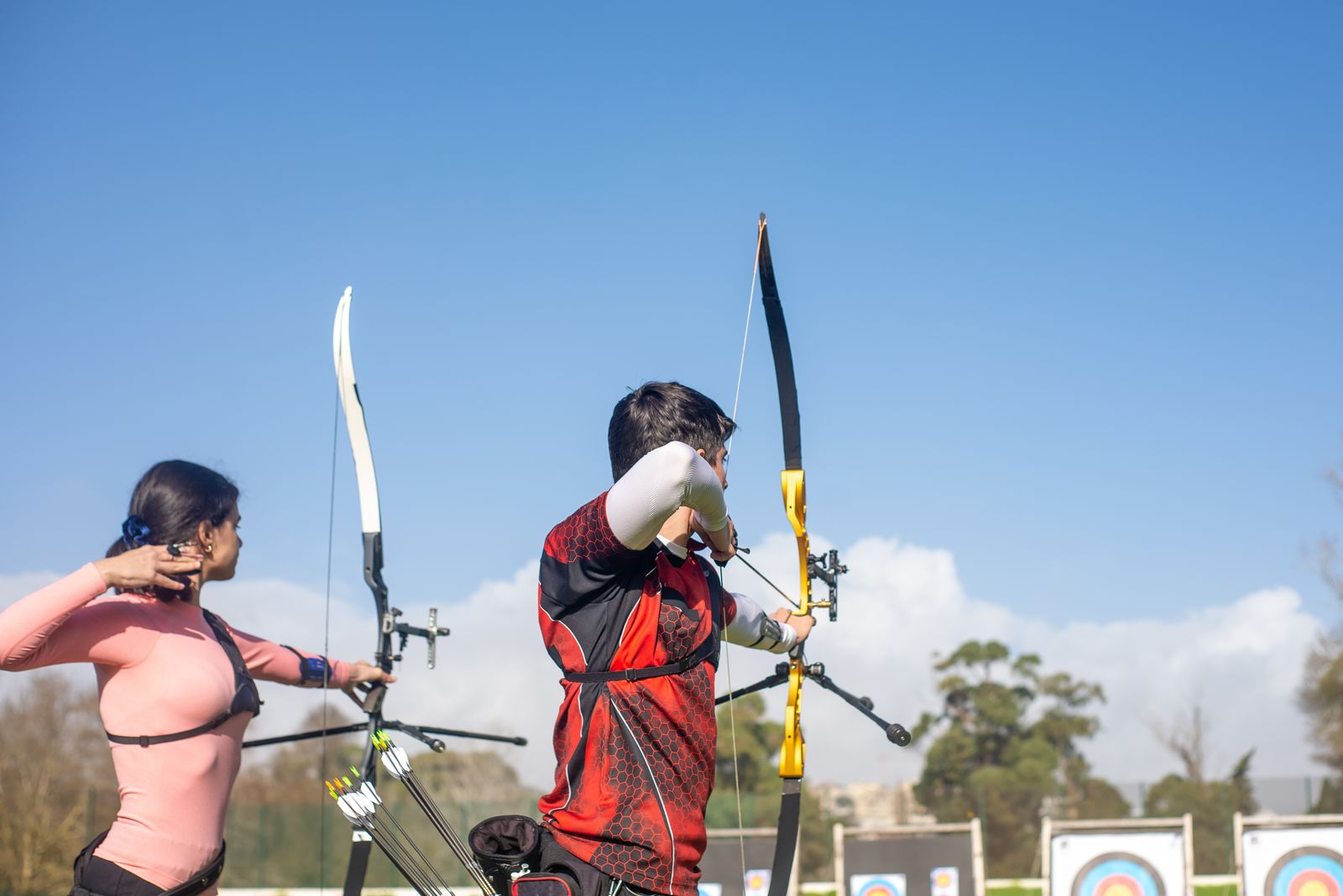
Specialty Insurance Data Report
The peer-reviewed injury record on archery, every figure sourced. The headline for anyone insuring a range: archery sends roughly 4,300 people to the emergency room a year, almost every one walks out the same day, and the rate per participant sits below golf, tennis, and bowling.
Every statistic below is written out with a numbered source. Full citations are listed under Sources and methodology.
Get a quote rated to archery's real risk profile in 24 hours. 50 states. No obligation.
01How often archery injuries send someone to the ER
The first thing an underwriter wants to know about any activity is simple: how often does someone get hurt badly enough to need a doctor. For archery, the honest answer is rarely, and the best evidence is federal injury surveillance rather than anyone's marketing.
- Between 2013 and 2022, US emergency departments treated an estimated 43,083 archery-related injuries, an average of about 4,308 a year nationwide.1
- That makes roughly 1 in every 670 sports and recreation ER injuries archery-related, a rounding error next to the mainstream sports.1
- A separate peer-reviewed analysis of ten years of the same federal data put the recreational archery injury rate at 4.4 per 10,000 participants age six and over, which is 0.44 per 1,000.2
- In that study, 99 percent of archery ER cases were treated and released, meaning almost nobody was hurt seriously enough to be admitted.2
Reference · Injury epidemiology
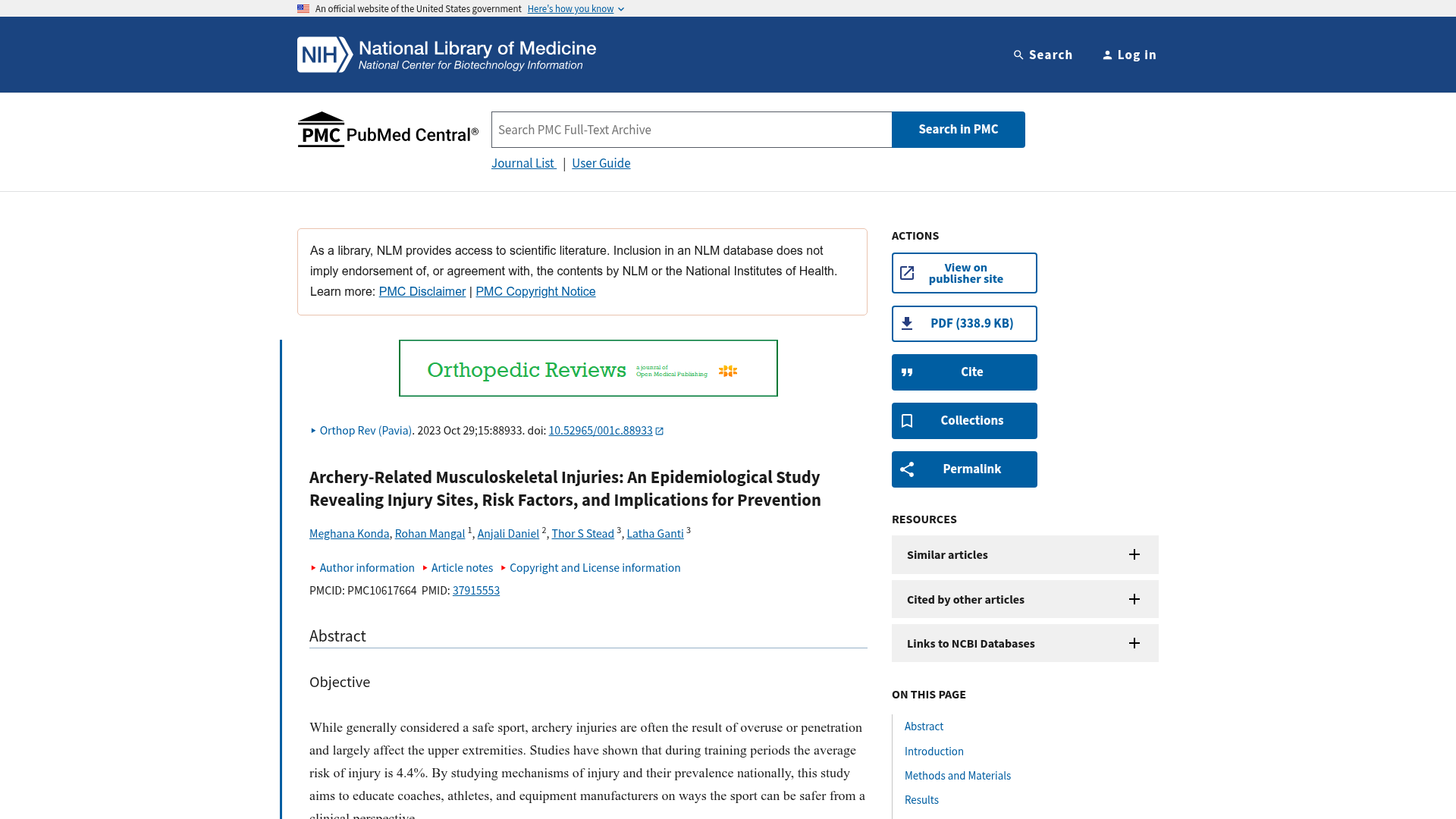
The peer-reviewed NEISS analysis behind the 43,083 figure: ten years of federal emergency-department data on archery injuries, published in Orthopedic Reviews.
Source 1
02What those injuries turn out to be
Frequency is only half of a risk picture. Severity is the half that decides whether a claim is a bandage or a lawsuit. Here archery's profile is unusually mild, and it is mild in a specific, verifiable way.
- Across the 2013 to 2022 data, zero archery ER visits required hospital admission. Every patient was treated and released.1
- The single most injured body part is the finger, at 66.2 percent of male injuries, followed by the hand at 17.1 percent.1
- The most common diagnosis is a laceration (58.1 percent of male injuries), with fractures a distant second at 12.7 percent.1
- Puncture wounds, the injury people picture when they hear "arrow," were under 5 percent.1
- The independent peer-reviewed study agrees on the pattern: lacerations led at 62 percent, and they "most often occurred through mishandling hunting arrows," not through shooting on a range.2
The archery injury is a cut finger, not a pierced chest.
Add the hand at 17.1 percent and more than 8 in 10 archery injuries are to the fingers or hand, the parts that handle arrows and broadheads. It is a nick-and-scrape sport, treated and released.
03Archery versus other sports: the case for safest
Operators and underwriters both want the head-to-head, so here it is, with one honest caveat: these are emergency-department counts, and participation and hours are not perfectly held constant across activities. Read the per-participant rate as the sturdier number and the raw counts as context.
- Using one internally consistent dataset (federal injury counts over survey participation), archery's rate was 0.65 per 1,000 participants, below golf at 1.29, fishing at 1.27, and tennis at 1.16.4
- The collision sports are in another league entirely: soccer 10.77, basketball 16.30, and football 23.92 per 1,000, which is 15 to 37 times archery's rate.4
- In CPSC's 2024 injury highlights, archery does not appear as a broken-out category at all, while basketball generated an estimated 385,777 ER visits, football 318,243, and trampolines 118,179.3
- The peer-reviewed conclusion is blunt: recreational archery is "a very safe sport, safer than popular field sports where people risk collisions or falls, such as soccer, basketball or baseball."2
| Activity | ER injuries per 1,000 participants | Relative to archery |
|---|---|---|
| Archery | 0.65 | Baseline |
| Bowling | 0.31 | Lower |
| Tennis | 1.16 | 1.8x |
| Fishing | 1.27 | 2.0x |
| Golf | 1.29 | 2.0x |
| Soccer | 10.77 | 16.6x |
| Basketball | 16.30 | 25.1x |
| Football | 23.92 | 36.8x |
One internally consistent dataset (injury counts divided by participation, same source and year for every sport).4 The National Safety Council cautions against ranking sports on raw counts because participation is unknown, which is why the peer-reviewed per-participant rate carries the argument.
Reference · Per-participant safety
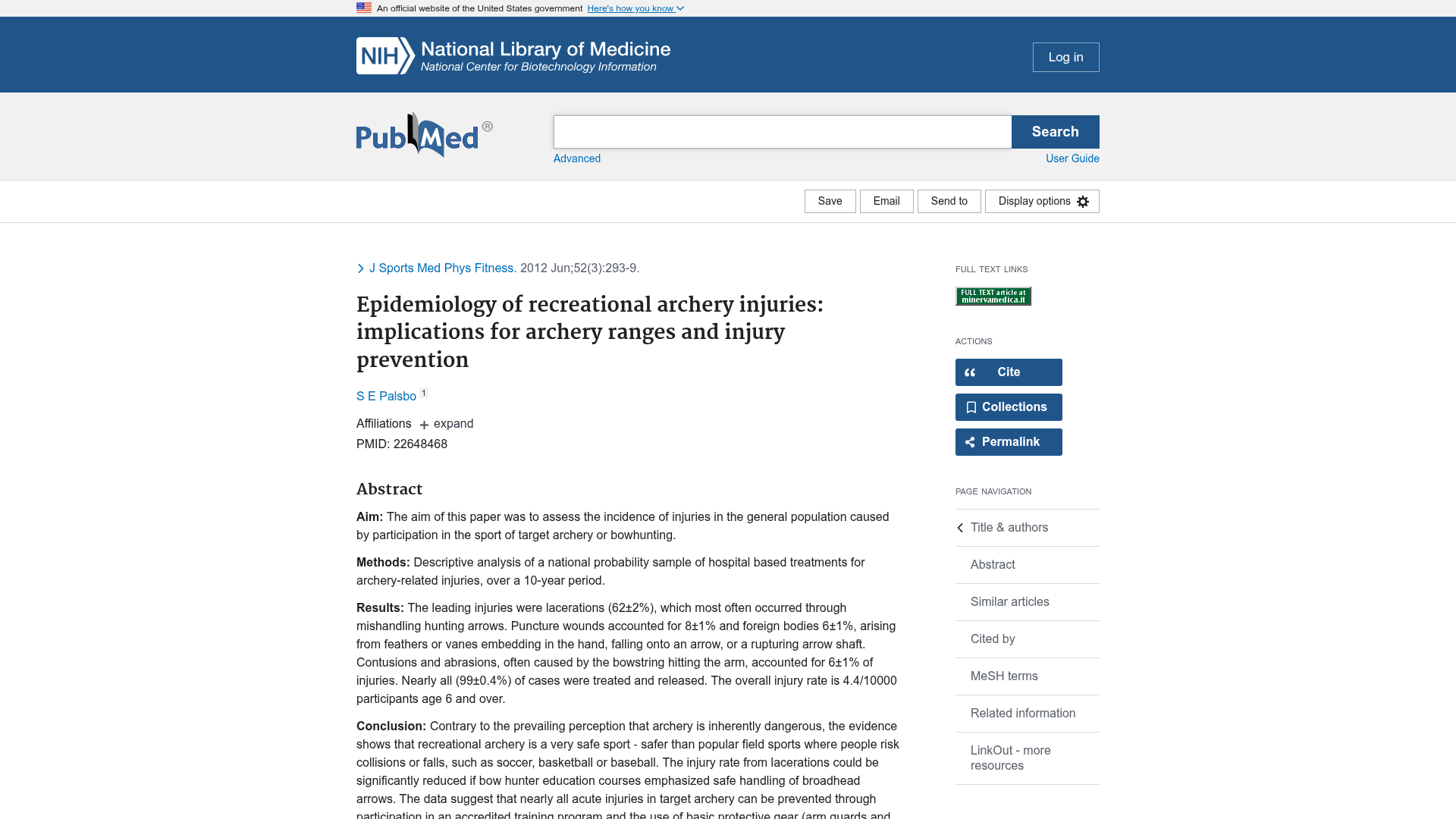
The peer-reviewed source for the safety conclusion, titled for range operators: "Epidemiology of recreational archery injuries: implications for archery ranges and injury prevention."
Source 2
04Why an archery range is even safer than the raw data suggests
This is the part that matters most for insuring a range, and the part the raw "archery" number hides. The federal injury code does not know the difference between a supervised firing line and a garage, and it never sees the worst bow injury of all.
- The code that captures "archery" injuries (NEISS product code 1235) sweeps in far more than ranges: backyard practice, equipment handling, and hunting gear all land in the same bucket.9
- Roughly half of archery-code hand and finger injuries involve a crossbow. A Duke analysis found 15,460 of 30,440 such injuries were crossbow-related, and 89 percent happened between August and December, during hunting season.5
- The peer-reviewed leading injury, the laceration, "most often occurred through mishandling hunting arrows," a garage-and-field event rather than a firing-line one.2
- The genuinely catastrophic bow-and-arrow injuries are not even coded as archery. Tree stand falls, a bowhunting hazard that never happens at a target range, ran at 48.0 per 100,000 male hunters a year, peaking at 61.0 per 100,000 for ages 25 to 34.6
Strip out the hunting mishaps and the at-home accidents and a supervised range's own exposure is lower still than the already-low headline number. The severe claim in the bow-and-arrow world is a hunter falling from a tree, and that risk lives outside your range entirely.
Reference · Methodology
The federal system behind every number here. NEISS is a national ER sample; its single "archery" code counts range, backyard, and hunting equipment injuries together, so it overstates range-specific risk.
Source 9
| Setting | Typical injury | Severity signal |
|---|---|---|
| Supervised target range | Finger or hand laceration | Treated and released; zero admissions in the national data1 |
| Backyard or equipment handling | Laceration, foreign body | Counted as "archery," but not a range event2 |
| Bowhunting, crossbow | Thumb or finger laceration, fracture, amputation | About 1,500 hand injuries a year, 89 percent in hunting season5 |
| Bowhunting, tree stand | Spinal and lower-limb trauma | 48 per 100,000 male hunters; frequently admitted6 |
05What the injury data means for insuring an archery range
A clean loss record is good news for your premium, but it does not remove the need for the right coverage. Two facts about who shoots and how they get hurt push directly on how an archery range policy should be built.
- Archery skews young. About 26 percent of US archery target shooters are under 18, roughly double the youth share in firearms target shooting, and participation is highest among 6 to 15 year olds.7
- The activity is large and organized. Roughly 19 million Americans age six and over did archery target shooting in 2021, and the National Archery in the Schools Program alone reports more than 19 million students since 2002 without a serious safety incident.78
- Injuries track participation: 82 percent of ER-treated archery injuries are male, with a male peak in the teens and a female peak in the thirties.1
Here is why that matters. The people getting hurt on a range are the people doing the shooting, and a standard general liability policy often excludes injuries to active participants. It is written for the bystander, not the archer on the line. That gap is exactly why a range needs participant injury coverage layered on top of general liability, and it is the same gap that quietly sinks other action-sports operators. We have written about how a general liability policy leaves participant claims uncovered and how a thin sub-limit can leave a venue paying a fraction of a real claim.
Archery is one of the cleanest risks I underwrite. The emergency-room record is mostly cut fingers, and the truly serious bow injuries happen in a tree stand, not on a range. But a clean loss record still gets paid out under the wrong policy. The claim that lands is a participant hurt on the line, and a general liability form written for spectators will not answer it.
Bobby Sharp, Action Sports Practice Lead, Specialty Insurance
Put the data together and the risk sorts into three clean tiers, which is roughly how it should sort in your policy too.
For a fuller picture of how projectile-sport risk translates into premium, see our numbers on airsoft injuries and eye-protection standards and our three-way paintball, airsoft, and GellyBall injury-rate comparison.
Send your dec page and we will show you, for free, where a generic policy leaves a participant claim uncovered.
Specialty Insurance writes archery range insurance in all 50 states, with a 24-hour quote turnaround and dedicated specialty underwriters who know the difference between a firing line and a gun range. Call (888) 673-7228.
06Frequently asked questions
Is archery a dangerous sport?
No. Federal data shows archery causes about 4,308 emergency-room visits a year in the US, with zero hospital admissions in the ten-year sample and a rate of 0.44 injuries per 1,000 participants. Peer-reviewed research calls recreational archery a very safe sport, safer than soccer, basketball, or baseball.
How many archery injuries happen each year in the United States?
US emergency departments treated an estimated 43,083 archery-related injuries between 2013 and 2022, an average of about 4,308 a year. That is roughly 1 in every 670 sports and recreation ER injuries, and it includes backyard and hunting equipment injuries, not just supervised ranges.
What is the most common archery injury?
A cut finger. Fingers account for 66.2 percent of male archery injuries and the hand for another 17.1 percent, so more than eight in ten injuries are to the fingers or hand. The most common diagnosis is a laceration at 58.1 percent, well ahead of fractures at 12.7 percent.
Is archery safer than other sports?
By the per-participant data, yes. Archery runs about 0.65 injuries per 1,000 participants, below golf, fishing, and tennis, and 15 to 37 times below soccer, basketball, and football. Emergency-department counts are not perfectly participation-controlled, but the peer-reviewed rate points the same way.
Does an archery range still need insurance if injuries are so rare?
Yes. A low injury rate lowers premium, but the injuries that do happen are to participants, and a standard general liability policy often excludes participant injuries. An archery range needs participant injury coverage on top of general liability, plus product liability for a pro shop and rental gear.
Are crossbow injuries the same as target archery injuries?
No, and it matters for underwriting. About half of archery-code hand injuries involve a crossbow, and 89 percent happen during hunting season, not on a target range. Crossbow and tree-stand injuries are hunting exposures that inflate the raw archery numbers but do not reflect a supervised range's actual risk.
Sources and methodology
- Konda M, Mangal R, Daniel A, Stead TS, Ganti L. "Archery-Related Musculoskeletal Injuries: An Epidemiological Study." Orthopedic Reviews. 2023;15:88933 (CPSC NEISS, 2013 to 2022): 43,083 injuries over ten years, about 4,308 a year, 1 in 670 sports ER injuries, all treated and released with no admissions, 82 percent male, finger 66.2 percent and hand 17.1 percent of male injuries, lacerations 58.1 percent and fractures 12.7 percent.
- Palsbo SE. "Epidemiology of recreational archery injuries: implications for archery ranges and injury prevention." J Sports Med Phys Fitness. 2012;52(3):293 to 299 (PMID 22648468): overall rate 4.4 per 10,000 participants age six and over, 99 percent treated and released, lacerations 62 percent most often from mishandling hunting arrows, and the conclusion that recreational archery is a very safe sport.
- US Consumer Product Safety Commission, NEISS Data Highlights, Calendar Year 2024: estimated 2024 ER-treated injuries by product group, including bicycles and accessories 454,008, basketball 385,777, football 318,243, trampolines 118,179, golf 72,026, and bowling 13,403. Archery is not a broken-out highlighted category.
- National Archery in the Schools Program / ArrowSport, "Is Archery a Safe Sport?" (hosted by the Maryland Department of Natural Resources): injuries per 1,000 participants (federal injury counts over survey participation, 2004), archery 0.65, bowling 0.31, tennis 1.16, fishing 1.27, golf 1.29, soccer 10.77, basketball 16.30, football 23.92. The report notes the National Safety Council discourages ranking sports on raw counts.
- Oleck NC, Pyfer BJ, Morris MX, Mithani SK. "Two Thumbs Down: A 10-Year Analysis of Crossbow-Related Hand and Digit Injuries in the United States." HAND. 2024;19(7):1102 to 1108 (CPSC NEISS product code 1235): of 30,440 archery-code hand and digit injuries, 15,460 involved a crossbow, with 89 percent occurring August to December, about 1,500 crossbow hand injuries a year.
- Terry J, Griffin R, Rue LW, McGwin G. "Epidemiology of tree stand-related injuries in the United States from 2000 to 2007." J Trauma. 2010;68(3) (CPSC NEISS with US Fish and Wildlife Service hunter estimates): tree stand injury rate 48.0 per 100,000 male hunters versus 24.7 for women, peaking at 61.0 per 100,000 among ages 25 to 34.
- US Fish and Wildlife Service, "Target Shooting in the United States: Participation, Demographics, and Relationship with Hunting and Fishing," February 2025 (2022 National Survey, data year 2021): an estimated 19 million archery target shooters age six and over (excluding hunting) versus 47 million firearms target shooters, with 26 percent of archery target shooters under 18 versus 13 percent for firearms, and the highest participation rate among ages 6 to 15.
- National Archery in the Schools Program (NASP), "To the Administrator Considering NASP": more than 19 million students have gone through the program since 2002 without a serious safety incident.
- US Consumer Product Safety Commission, National Electronic Injury Surveillance System (NEISS) injury data: methodology for the national ER-injury estimates used throughout, including the single archery product code (1235) that groups range, backyard, and hunting equipment injuries together.