

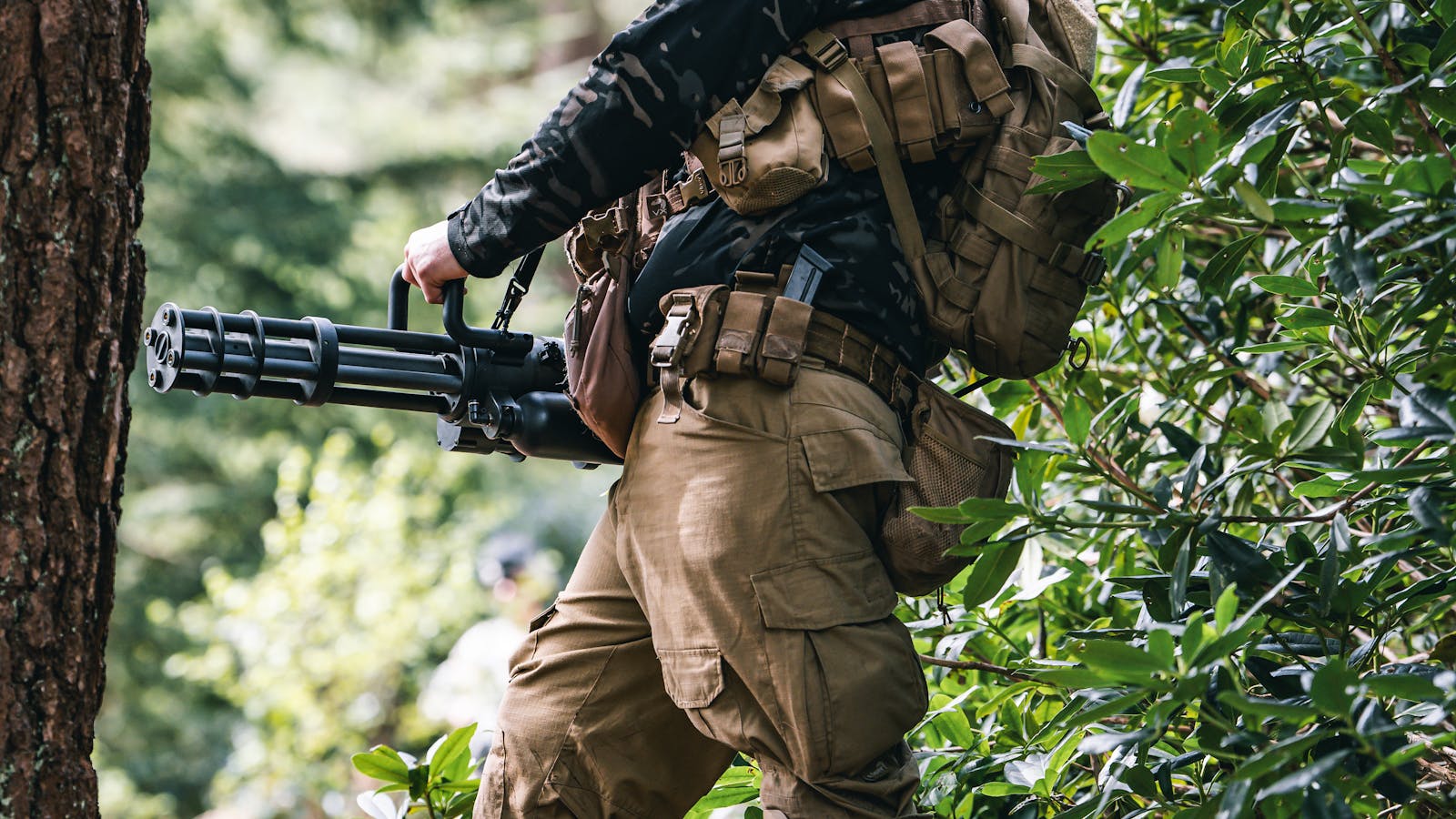
Does an airsoft field need insurance? Yes, and the question that decides your opening day is the one nobody asks first: who will write it. An airsoft field needs the same core program as any commercial venue that puts paying players in front of a projectile, plus one coverage a generalist policy quietly leaves out. The hard part is not deciding to buy it. The hard part is finding a carrier willing to quote the class at all.
Here is what an airsoft field must carry, what is worth adding as you grow, and why so few markets will say yes.
The coverage an airsoft field must carry
Four coverages form the floor for a commercial airsoft field. Three of them a generalist agent will recognize. The fourth is the one that decides whether your players are insured or just present.
| Coverage | What it protects | Why an airsoft field cannot skip it |
|---|---|---|
| General Liability | Third parties: the spectator hit by a stray BB, the parent who slips in your lobby, damage to a rented building | Every commercial lease and city-park agreement requires it. One million per occurrence and two million aggregate is the standard ask. |
| Participant Injury | The paying player who takes a BB to the eye, twists an ankle on the field, or is hurt during a game | The standard General Liability form excludes athletic and sports participants. Without this, the people who bought tickets are uncovered. |
| Property | Your rental fleet of automatic electric guns, chronograph, netting, barricades, structures, and pro-shop stock | One storm or one theft takes the assets you cannot run without. Scheduled at replacement cost, the carrier rebuilds the fleet. |
| Workers' Compensation | Your referees, chrono staff, and party hosts if they are hurt at work | Required in nearly every state once you hire your first paid employee. The threshold is set by your state. |
The coverage that traps new operators is Participant Injury, because it is the one a generic policy silently omits. A standard Commercial General Liability policy covers the third party who slips in your parking lot. It does not cover the player on your field, because the ISO form excludes injury to anyone "practicing for or participating in any sports or athletic contest or exhibition." On an airsoft field, every player is a participant. Without Participant Injury bolted onto your General Liability, the activity itself is uninsured.
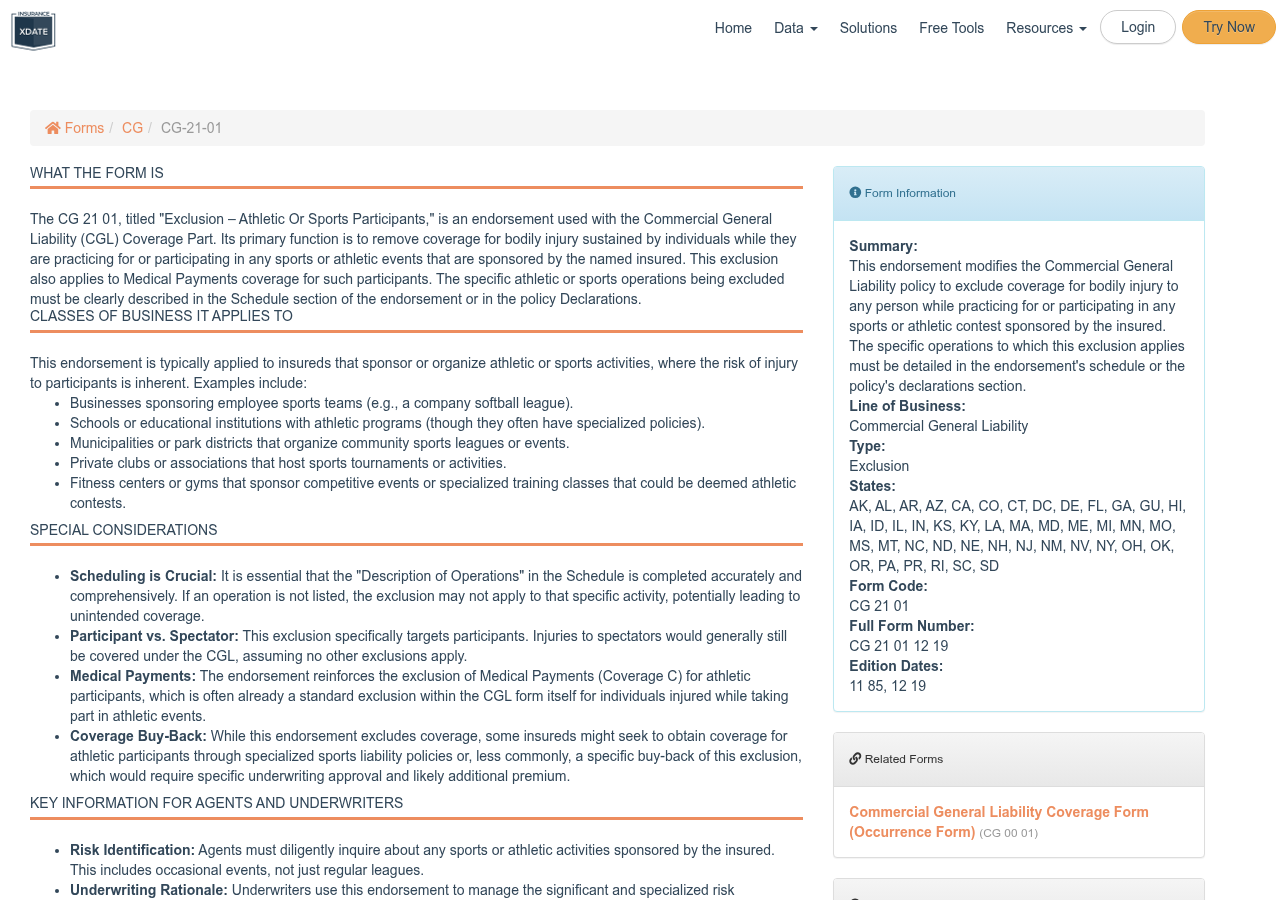
Source 1 of 2 · Standard ISO exclusion form
The standard ISO CG 21 01 endorsement removes coverage for athletic and sports participants. On an airsoft field that is every player, which is why Participant Injury, not a bigger General Liability limit, is what fills the gap.
That exclusion is not an edge case on an airsoft field. It is the default, and it is the first line a specialist reads when they review your policy.
When an operator tells me a generalist already covers the field, I ask one thing: does the policy name Participant Injury, or does it just say General Liability? On airsoft that is the whole game. The standard form excludes the player, so a General Liability policy on its own insures your parking lot and leaves the field uninsured. A two million dollar limit on the wrong form is still zero for the player who took a BB to the eye.
Bobby Sharp, Action Sports Practice Lead, Specialty Insurance
The fix is not a higher limit. It is the right form, bound from the first quote instead of discovered after a claim is denied.
The coverage most airsoft fields add as they grow
The four above are the floor. As the operation grows, three more coverages get added almost without exception, and a fourth is situational.
- Commercial Auto and Hired-and-Non-Owned Auto the moment a vehicle is in the business name, or staff drive their own cars for the business (supply runs, off-site events, bank deposits).
- Inland Marine if you take the operation mobile, transport a rental fleet between sites, or run pop-up games. Equipment in transit sits outside a standard property policy, a gap we break down in our piece on why your field's General Liability policy probably has gaps.
- Excess or Umbrella liability the first time a corporate booking, a school group, or a city-park tournament asks for limits above your primary General Liability.
- Event coverage is situational, for one-off off-site games or charity events that a venue will not host without a certificate naming them as additional insured.
None of these is day-one for most fields. They attach as the operation triggers each one, which is why a specialty broker reviews the program at renewal instead of selling a single static policy.
When airsoft insurance is required, and when it is optional
Almost no state's insurance code names airsoft fields and mandates General Liability. That surprises new operators, and it is the wrong place to look. The requirement lives in the contracts you sign, not the statute book.
- The lease. A commercial landlord requires tenant General Liability with the landlord named as additional insured, and many require the certificate of insurance before they hand over keys.
- The city park or public facility. A public-facility agreement universally requires General Liability with the municipality as additional insured, often at one million per occurrence and two million aggregate, before you can run a game on public land.
- The event or host venue. Corporate bookings, school field trips, and off-site games require a certificate naming the host as additional insured.
Workers' Compensation is the one genuine statutory requirement, and it kicks in by employee count: most states require it the moment you hire your first paid staff member, and your referees and party hosts count. The legal answer is that almost nothing is required by statute. The practical answer is that you cannot operate a commercial airsoft field without it, because the people you rent from and play on demand the certificate first. Our step-by-step on the airsoft certificate of insurance for city park bookings shows exactly how to produce one on deadline.
Why so few carriers will write an airsoft field
Here is the part operators learn the hard way. You can decide to buy the right program and still spend weeks being told no. Airsoft lands on most carriers' decline list before an underwriter reads a word of the application, for three reasons that stack.
First, the participant exposure is excluded by the standard form, so a generalist who writes restaurants and retail has no clean way to cover the only injury an airsoft field reliably produces. Second, the injury profile is severe. The American Academy of Ophthalmology reports that eye injuries from non-powder guns, the category that includes airsoft, BB, and pellet guns, have risen sharply, with air-gun-related hospital admissions up roughly 600 percent since 2010 and the average age of the injured patient dropping from 16 to 9. A meaningful share of those young patients still had reduced vision after treatment.
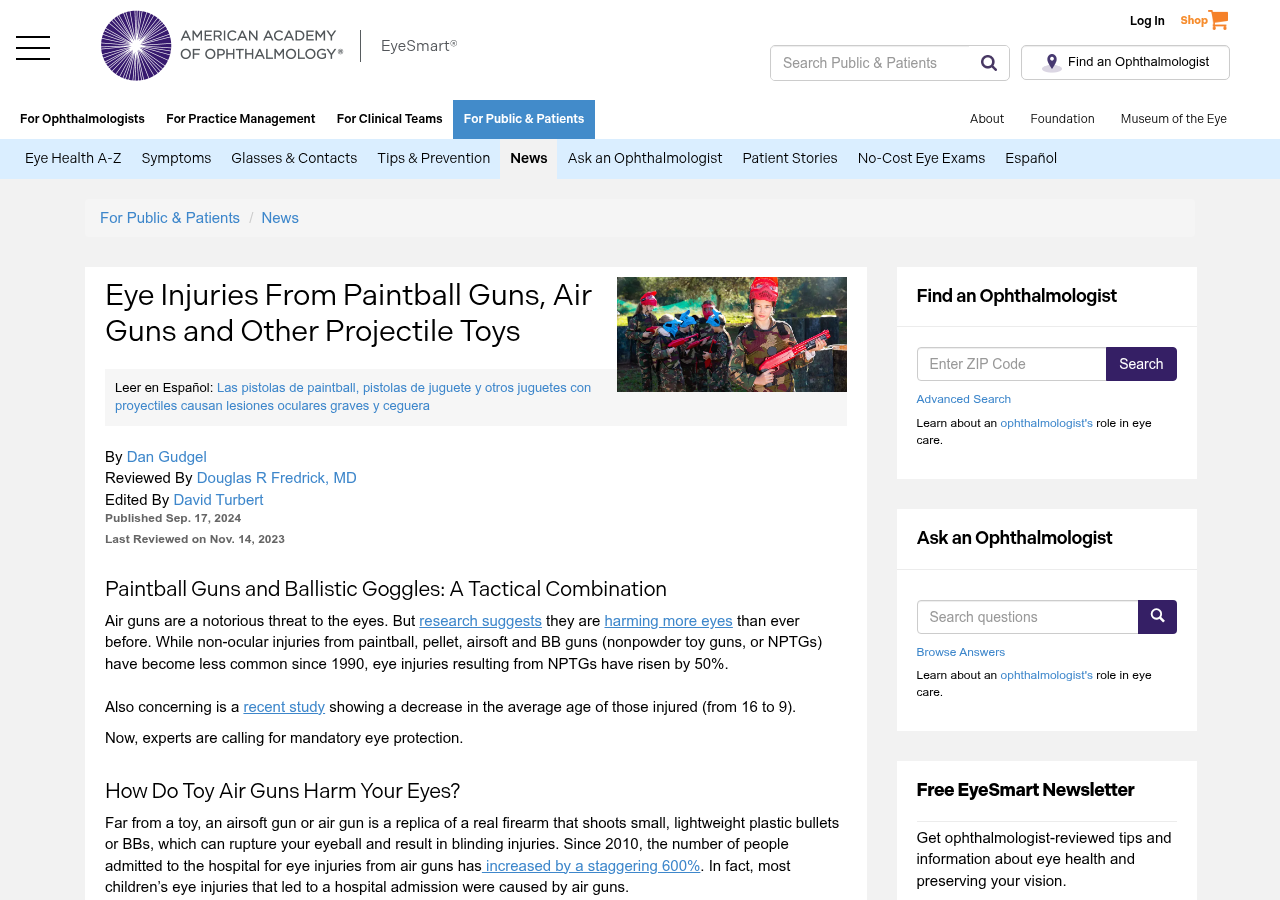
Source 2 of 2 · Clinical injury record
The American Academy of Ophthalmology documents the rise and severity of air-gun and airsoft eye injuries. That severity profile is exactly what a standard-market carrier underwrites against, and why most decline the class rather than price it.
Source: aao.org/eye-health/news/combating-eye-injuries-from-air-guns
Third, airsoft guns are replica firearms. Federal law treats them as look-alike firearms, and that classification alone is enough for many admitted carriers to file the whole class under "do not write." The result is that airsoft is usually placed through the specialty and excess-and-surplus market, the part of the industry built to price risks the standard admitted market will not touch. That is not a problem to solve. It is the door to use.
Airsoft is on most carriers' decline list before an underwriter reads the application. It is a replica-firearm, full-contact class, and the standard policy form excludes the injury it produces. That is not a reason you cannot get covered. It is the reason you call a market that writes the class on purpose, instead of a generalist who has to say no after wasting two weeks of your timeline.
Bobby Sharp, Action Sports Practice Lead, Specialty Insurance
The practical takeaway: do not start with the agent who writes your home and auto. Start with a broker who writes airsoft on purpose, because the difference between the two is the difference between a quote in 24 hours and a month of declinations. For the full picture of where a generalist misses an action-sports operation, our breakdown of the coverage gaps a generalist agent will miss covers the same ground from the buyer's side.
How to lower an airsoft field's premium
Once you find a market that writes the class, the controls you run decide your rate. Airsoft commonly carries a modest surcharge over a comparable paintball field, driven by dental and eye-injury exposure when fields allow mesh lower-face protection. We lay out that comparison in our airsoft versus paintball insurance breakdown. The levers that move the number down are the ones you can document:
- Mandatory sealed, impact-rated eye protection for everyone on the field. Many fields require goggles rated to ANSI Z87.1.
- An enforced muzzle-velocity cap, measured with a chronograph at check-in, with minimum engagement distances for higher-velocity guns.
- A chronograph log and signed safety briefings, kept on file. A field that can produce them at renewal prices below one that cannot.
- Property scheduled at replacement cost, so an under-valued rental fleet does not leave you underinsured after a loss.
A field that hands a clean file to its broker at renewal is the field that earns the best pricing the specialty market has to offer. For the actual numbers, what a real airsoft program runs and what moves it, see our 2026 airsoft insurance cost guide.
"Bobby Sharp and the team at Specialty Insurance had a fast turnaround, professional service, and answered every question I had as a brand-new operator. They wrote the policy I'd want defending me if a player ever filed a claim."
Talk to an airsoft specialty broker before you sign anything
The pattern that repeats most is the operator who signs the lease, then discovers the generalist agent cannot place an airsoft class and the certificate is due in 14 days. Specialty Insurance writes airsoft field insurance in all 50 states, builds Participant Injury into the program rather than leaving it out, and schedules your Property on what your field owns. Start the coverage step before the lease, not after, and your certificate is ready the day your landlord asks for it.
Frequently Asked Questions
Does an airsoft field legally need insurance?
No state insurance code specifically mandates General Liability for an airsoft field. The practical requirement comes from contracts: leases, city-park agreements, and event venues all require a certificate of insurance naming them as additional insured before you can operate. Workers' Compensation is the one statutory requirement, triggered once you hire your first paid employee.
What insurance does an airsoft field need to open?
At minimum, General Liability with Participant Injury, Property for your equipment, and Workers' Compensation once you have staff. Landlords and city parks typically require a certificate of insurance naming them as additional insured, often at one million per occurrence and two million aggregate, before you can run a game.
Why is General Liability alone not enough for an airsoft field?
The standard ISO General Liability form excludes injury to sports and athletic participants. On an airsoft field every player is a participant, so a General Liability policy without Participant Injury leaves the activity itself uninsured. Adding Participant Injury is what fills that gap.
Why won't most insurance companies cover an airsoft field?
Three reasons stack: the standard policy form excludes the participant injury an airsoft field produces, the eye and dental injury profile is severe, and airsoft guns are classified as replica firearms. Most admitted carriers decline the class, so airsoft is usually placed through the specialty and excess-and-surplus market built to price it.
How much does airsoft field insurance cost?
It varies by site, play format, limits, and loss history, and airsoft commonly carries a modest surcharge over a comparable paintball field because of the dental and eye-injury exposure. Enforcing sealed eye protection, a documented velocity cap, and a chronograph log is the most direct way to keep the rate down. See our airsoft versus paintball insurance breakdown for the comparison.
Sources
- ISO Commercial General Liability form CG 21 01, Exclusion of Athletic or Sports Participants: the standard endorsement that removes coverage for sports and athletic participants, the gap Participant Injury fills on an airsoft field.
- American Academy of Ophthalmology, "Eye Injuries From Paintball Guns, Air Guns and Other Projectile Toys": clinical record of the rise and severity of air-gun and airsoft eye injuries, the severity profile that drives the class onto carrier decline lists.
- Specialty Insurance, "The Action-Sports Coverage Gaps a Generalist Agent Will Miss": why a generalist General Liability policy leaves airsoft participants uninsured.
- Specialty Insurance, "Why Your Paintball Field's GL Policy Probably Has Gaps": how action-sports property and rental fleets get under-scheduled.
- Specialty Insurance, "Airsoft vs Paintball Insurance": the sport-versus-sport premium comparison and the surcharge drivers behind airsoft pricing.