

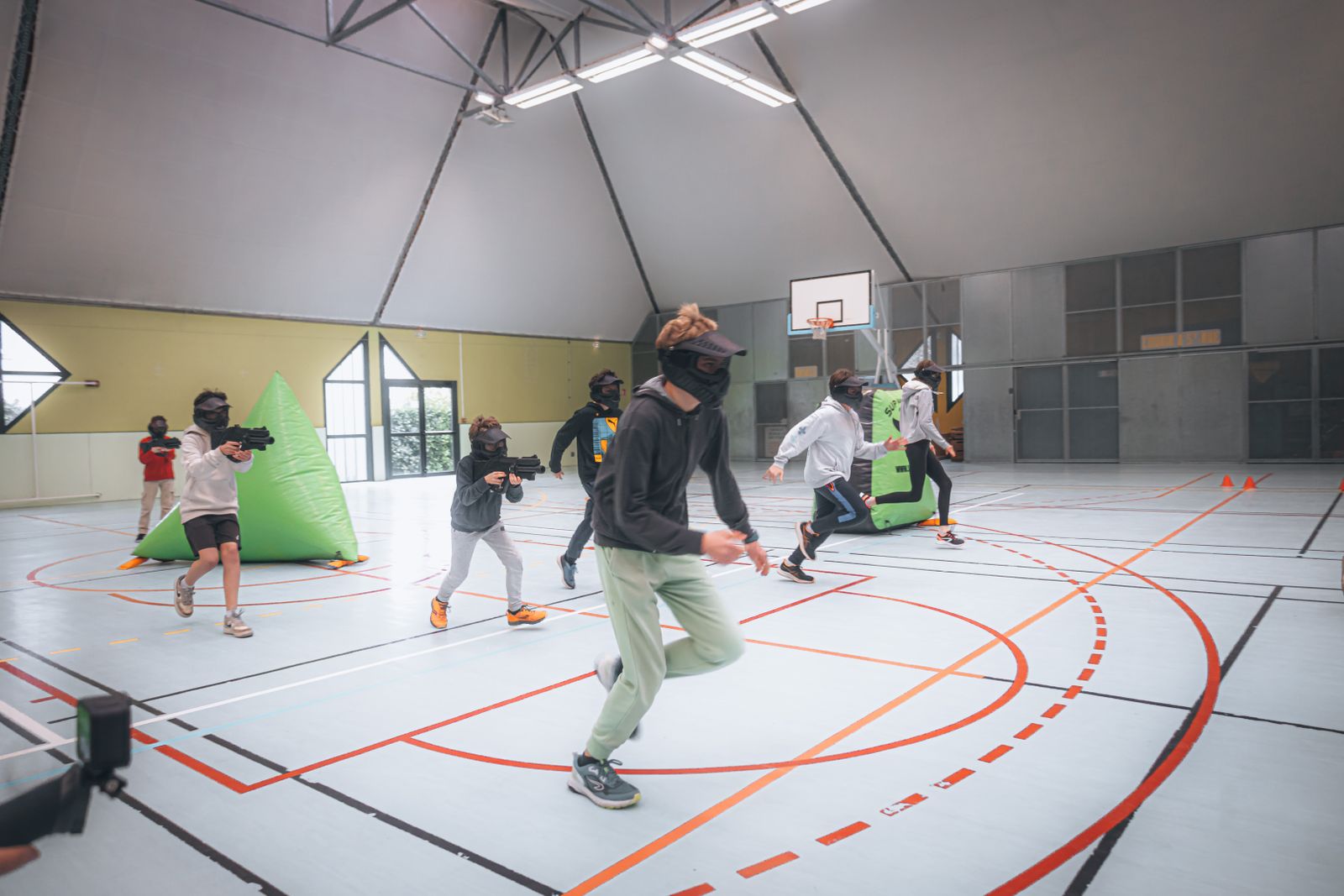
In three years gel blaster play has gone from a backyard novelty to a bookable business. The format that fires a soft hydrogel gellet instead of a paintball has become its own location-based-entertainment category, with industry coverage reporting one gel-blaster experience passing 80,000 players and a pipeline of dozens of additional venue installations (blooloop, gel-blaster industry coverage). The economics are the reason: cheap consumables, no cleanup, light gear, and an age range that starts where paintball will not take a customer.
That is the opportunity. The mistake most new operators make is treating it as a two-step plan: buy the blasters, book the parties. The insurance, the permits, and the certificate every park and school will ask for get sorted out last, which is the order that loses bookings. This is the launch sequence we walk new GellyBall and gel blaster operators through, mobile or venue, in the order that works.
Decide mobile or venue before you buy anything
The first decision sets the rest. A mobile GellyBall business brings the arena to the customer: inflatable bunkers, blasters, and eye protection loaded into a trailer, set up in a backyard, a park, a school gym, or a corporate lot. Startup cost is low, there is no lease, and the calendar is bookings, not foot traffic. A venue business runs a fixed arena, standalone or inside a family entertainment center, with a lease, walk-in traffic, and a build-out.
The two models do not need the same equipment, permits, or insurance. A mobile operator's biggest exposure is gear in transit and a fresh additional-insured certificate for every booking; a venue operator's is the building and the people walking into it. Most party startups go mobile first, prove demand, then add a venue. Pick the model now, because everything below branches on it. The mobile coverage and per-booking certificate workflow is covered end to end in gel blaster party rental insurance.
The GellyBall launch sequence at a glance
Six phases take a new GellyBall business from an idea to a paying first booking. Each one protects the next.
Step 1: Form the business and pull the permits a party operator triggers
Form the entity and register before you take a booking, because the booking, the bank account, the website, and every permit go in the business name. The U.S. Small Business Administration's guidance is the baseline: your business location determines the zoning laws, taxes, and regulations you will live under (SBA, "Pick your business location"), and the licenses and permits you need depend on your activities, your location, and the level of government involved (SBA, "Apply for licenses and permits").
Gel blasters are sold as brightly colored toy-style markers, so the federal look-alike-firearm marking concern that complicates airsoft is rarely the gating issue for a party operator. What gates your first booking is local. Many cities require a business license and, for a mobile operator, a vendor or itinerant-merchant permit. A city park almost always requires a special-event permit plus a certificate of insurance. A school requires a vendor agreement, a certificate, and sometimes a background check for staff working around minors. None is hard to get, but each takes time, and each is easier to pull before a parent has booked the party. If you are still sorting what a gel blaster actually is versus airsoft or an Orbeez gun, our explainer on what is a gel blaster draws the line.
Action this step: Form the LLC and register the business. Pull your local business license and any mobile-vendor permit your city requires. List the parks, schools, and venues you plan to serve, and request each one's event and insurance requirements in writing now, not the week of the booking.
Step 2: Buy the equipment that fits your model
GellyBall equipment is the reason the business model works. The blaster costs less per unit than a paintball marker. The ammunition is a hydrogel gellet that hydrates from water, costs a fraction of a paintball per round, bursts on contact, and leaves nothing to scrub off a wall, a jersey, or a customer's lawn. That single difference is why the format scales to ages a paintball field will not take and why it grew from a novelty into a recognized entertainment category.

Source 1 of 3 · The market you are entering
Industry coverage tracks gel blaster play moving from novelty to a location-based-entertainment category, with one experience passing 80,000 players and a pipeline of additional venue installations. The low consumable cost and no-cleanup gellet are what make the party model work.
A mobile starter kit is short: a fleet of blasters sized to your largest party, a supply of gellets, inflatable bunkers that pack flat and define the arena anywhere, light masks or goggles for every player, and a trailer or van to move it all. A venue adds a fixed arena footprint, netting or walls, flooring, and storage. Either way, the equipment fleet is real money once you scale, so plan to schedule it at replacement cost when you build the coverage program in Step 4. Size the blaster count to the largest group you intend to host, because a party you cannot fully equip is a refund.
Action this step: Build the fleet to your largest planned party size. Buy light eye protection for every player, not just a few spares. If you are mobile, buy the transport before the first booking, not after.
Step 3: Build the bookings engine
A party business lives and dies on bookings, so build the engine before you advertise. Three pieces do most of the work: an online booking page that shows your packages and takes a date, a deposit that locks the date and cuts no-shows, and a waiver signed by the parent or guardian at the time of booking rather than in the rush of a party that has already started.
Package the offer the way customers buy it. Birthday parties price per player or per hour, corporate and team events price per group, and community events and school field days price per session. A mobile operator adds a service radius and a travel fee, and confirms at booking that the site has a flat, suitable space to set up the arena. The waiver-at-booking discipline is not just tidy. It is the difference between a signed, considered release and a clipboard handed to a parent while ten children wait, and the considered one is the one that holds up if a claim is ever filed.
Action this step: Stand up an online booking page with deposits and a digital waiver collected at checkout. Write your packages around birthday, corporate, and school or community bookings. For mobile, set a service radius and a travel fee, and confirm setup space at the time of booking.
Step 4: Build the coverage program before your first booking
The booking is the trigger for coverage, not the party. The moment a park, a school, or a corporate client books you, they will ask for a certificate of insurance, and a specialty broker can turn that around fast where a generalist agent often cannot place the class at all. Bind the program first, in this order. For what the whole program costs, see our GellyBall insurance cost guide, and if you are coming from a paintball policy, is GellyBall insurance the same as paintball coverage explains why the wording has to change.
| Coverage | What it protects | When to bind it |
|---|---|---|
| General Liability + Participant Injury | Third parties (the trip in the parking lot) plus the players, who are mostly children | Before your first booking |
| Inland Marine + Commercial Auto | Gear in transit and the vehicle that hauls it | Before you transport equipment (mobile) |
| Property (scheduled) | A fixed arena, the fleet, and inventory | Before opening a venue |
| Workers' Compensation | Party hosts and referees you employ | When you hire your first paid employee |
General Liability with Participant Injury. This is the core, and it is where new operators get hurt. A standard General Liability policy covers the third party who trips in the parking lot. It does not cover the player who gets hurt during the game, because the ISO Commercial General Liability form excludes injury to anyone "practicing for or participating in any sports or athletic contest or exhibition." At a GellyBall party, the players are the participants, and they are mostly children. Without Participant Injury added to your General Liability, the activity itself is uninsured.
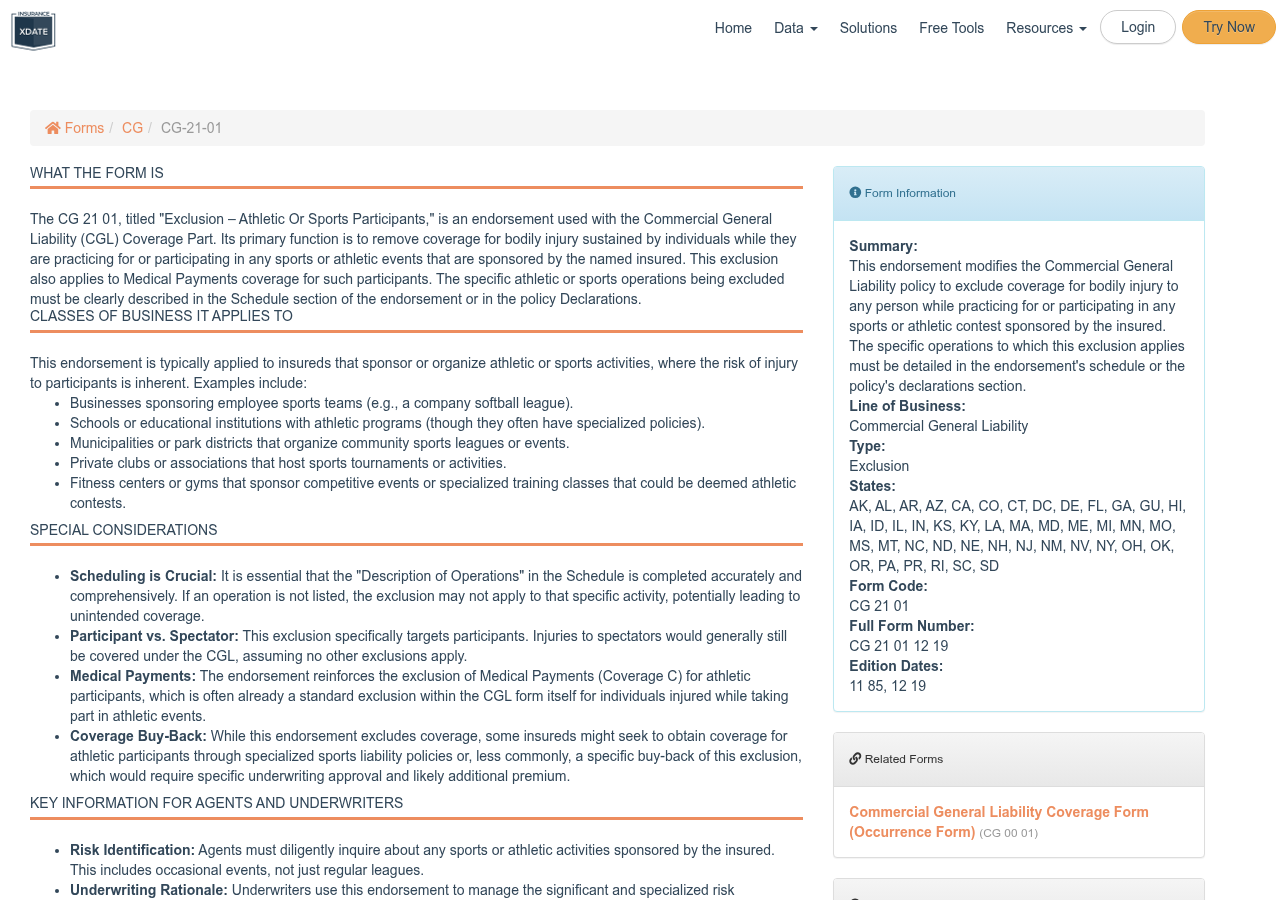
Source 2 of 3 · The participant exclusion
The standard ISO CG 21 01 endorsement removes coverage for athletic and sports participants. At a GellyBall party, that is every child on the field. Participant Injury is the coverage that fills the gap a generalist policy leaves open.
That exclusion is not an edge case for a party operator. It is the default on a generic policy, and it is the first line a specialist reads.
A GellyBall operator shows me a two million dollar liability limit and assumes the kids at the party are covered. With the participant exclusion attached, that limit covers the parking lot, not the players, and the players are the whole business. On a mobile operation I check one more thing in the same breath, which is whether the gear is covered once it leaves the building, because a fixed-location property policy stops at the property line and your arena spends every weekend at someone else's address.
Bobby Sharp, Action Sports Practice Lead, Specialty Insurance
Inland Marine and Commercial Auto, for the mobile operator. Your fleet of blasters, your inflatable bunkers, and your eye protection live in a trailer and spend most weekends at a customer's address. A fixed-location property policy does not follow them. Inland Marine covers the equipment in transit and off-site, and Commercial Auto covers the vehicle that hauls it. Equipment in transit is a real theft target; the National Insurance Crime Bureau tracks cargo and equipment theft as a persistent and rising exposure (NICB, Cargo Theft), and a trailer of gear in a hotel lot overnight is exactly the kind of target it describes.
Property and Workers' Compensation, when they apply. A venue operator schedules the fixed arena, the fleet, and the inventory under Property coverage at replacement cost. Any operator who hires a paid party host or referee usually needs Workers' Compensation from the first employee; the threshold is set by your state, and the U.S. Department of Labor's Office of Workers' Compensation Programs maintains the directory of state offices that publish it.
One pricing trap is specific to this class. A carrier unfamiliar with GellyBall will reach for the nearest class it knows and write the activity as "paintball-type activity," which prices a soft gellet like a paintball and leaves a policy describing a high-impact sport over a room of five-year-olds. We cover that classification fix in full in our GellyBall insurance guide, and we walk through how the participant exclusion guts a generic policy in why a paintball field's GL policy probably has gaps.
Step 5: Get the certificate of insurance every venue, park, and school will ask for
The certificate of insurance is the document that wins bookings. A city park, a school, a family entertainment center, and most homeowners associations will not let you set up until they hold a certificate naming them as additional insured at the limits their contract requires. For a mobile operator this is not a one-time task: it is a different certificate, with a different named party, for almost every venue you serve.
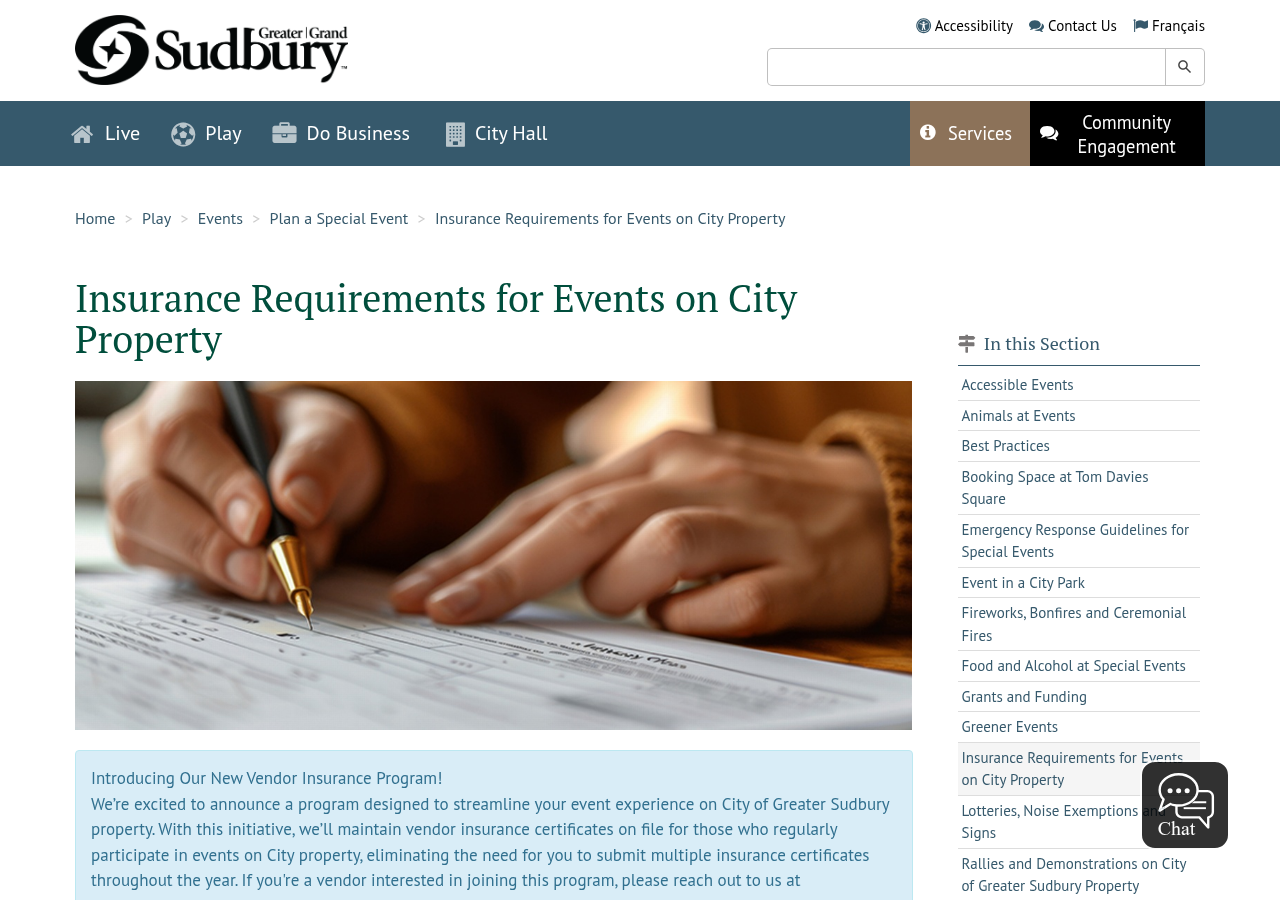
Source 3 of 3 · What a venue asks for before you set up
Municipalities and venues publish event insurance requirements like this one, requiring a certificate of insurance with the property owner named as additional insured at set limits before an event runs on their property. A party operator meets a version of this at almost every booking.
Source: greatersudbury.ca/events/insurance-requirements-for-events-on-city-property
The most common booking-day delay is an operator who bound coverage but did not request the certificate with the right additional-insured language, then lost a day waiting for a correction while the booking slipped. A generalist agent who cannot place the GellyBall class cannot issue a clean certificate for it either.
Action this step: Ask your broker to issue certificates fast, with each venue named exactly as its contract requires. Keep a template ready so a new booking does not mean redoing the paperwork from scratch.
The first-booking document kit
Bind the coverage, then build the file that protects it. Six things in one place from your first booking:
- The certificate of insurance with the venue, park, or school named as additional insured.
- Signed participant waivers, collected at booking, with a parent or guardian signature for every minor.
- An incident report template with a witness-statement section.
- A posted age and eye-protection policy: a stated minimum age and mandatory eye protection for every player.
- The signed application and the carrier's binder.
- A per-booking setup and safety checklist: arena boundaries, a first-aid kit, and an emergency plan.
A year from now, this file is the difference between a clean claim defense and a paid claim. The operators who hand us a complete file at first renewal get the biggest premium drop.
"Bobby Sharp and the team at Specialty Insurance had a fast turnaround, professional service, and answered every question I had as a brand-new operator. They wrote the policy I'd want defending me if a player ever filed a claim."
What earns that kind of renewal is not luck. It is the file you start building at your first booking.
Year one is the file that decides year two. The GellyBall operators who hand me clean waivers signed at booking, a certificate log, and an age and eye-protection policy at renewal get the best pricing. The ones reconstructing it after a claim are fighting uphill, and they never saw the rate increase coming.
Bobby Sharp, Action Sports Practice Lead, Specialty Insurance
The five mistakes that cost new GellyBall operators the most
After onboarding new party operators, the same five patterns repeat.
- Taking bookings before binding coverage. The park or school asks for a certificate, the generalist agent cannot produce one for the class, and the booking goes to someone who can.
- Buying General Liability alone. The generic quote excludes athletic participants. At a GellyBall party the participants are the children playing, so the policy covers everyone except the only people on the field.
- Letting the policy call you a paintball operation. The wrong class means a higher premium and a description that does not match a party for five-year-olds, which is a problem nobody wants to litigate after a claim.
- Forgetting the gear leaves the building. A fixed-location property policy does not follow your trailer to a backyard. Without Inland Marine, a theft or an accident in transit is on you.
- Collecting waivers on the driveway. A release signed in the rush of a started party is the one a plaintiff's lawyer picks apart. Collect it at booking, considered and signed.
Talk to a GellyBall specialty broker before your first booking
The pattern that repeats most is the operator who comes to us after a generalist agent could not place the class, with a booking already on the calendar and a park waiting on a certificate. We resolve it every week, and it is faster and cheaper to start in the right order. Specialty Insurance writes GellyBall insurance in all 50 states and prices it on its own risk, not as paintball. Get the coverage priced while the business is still a plan, and your certificate is ready the day a customer asks. For the buyer's view of where a generalist misses an operation like this, our guide to the coverage gaps a generalist agent will miss covers the same ground.
Frequently Asked Questions
Do you need a license to start a GellyBall party business?
Usually yes. Most cities require a business license, and a mobile operator often needs a vendor or itinerant-merchant permit on top of it. City parks typically require a special-event or vendor permit, and both parks and schools require a certificate of insurance naming them as additional insured before you can run a party on their property. Confirm each venue's requirements in writing before you take the booking.
How much does it cost to start a GellyBall business?
GellyBall is one of the lower-cost action-sports formats to launch, because the gellet ammunition costs a fraction of a paintball per round and the blasters cost less per unit than paintball markers. A mobile operation needs blasters, gellets, inflatable bunkers, eye protection, and transport, with no lease. A venue operation adds a fixed arena and a build-out, which is the larger cost. Your exact budget depends on the model you choose and the largest party size you want to host.
What insurance does a GellyBall or gel blaster business need?
At minimum, General Liability with Participant Injury, which covers both third parties and the players. A mobile operator adds Inland Marine for gear in transit and Commercial Auto for the vehicle that hauls it. A venue operator adds Property coverage for the fixed arena and fleet. Workers' Compensation is usually required once you hire your first paid party host or referee.
Do GellyBall players need participant injury coverage if they are just kids?
Yes, and the fact that they are children makes it more important, not less. A standard General Liability policy carries the ISO CG 21 01 exclusion for athletic or sports participants, which strips coverage for injuries to the people playing. At a GellyBall party the participants are the children, so without Participant Injury named on the policy, the only people the business exists to entertain are the only people not covered.
Do parks and schools require a certificate of insurance for a GellyBall party?
Almost always. A city park, a school, a family entertainment center, and most corporate venues require a certificate of insurance naming them as additional insured, at set limits, before you can set up. For a mobile operator this means a fresh certificate for nearly every booking, which is why issuing certificates fast is part of the broker's job, not an afterthought.
Sources
- blooloop, gel-blaster industry coverage: location-based-entertainment growth, player milestones, and venue installation pipeline for gel blaster experiences.
- U.S. Small Business Administration, "Pick your business location" and "Apply for licenses and permits": federal small-business guidance that location determines zoning and that permits depend on activity, location, and government level.
- ISO Commercial General Liability form CG 21 01, Exclusion: Athletic Or Sports Participants: the standard endorsement that removes coverage for sports and athletic participants.
- National Insurance Crime Bureau, Cargo Theft: industry record of cargo and equipment theft as a persistent and rising exposure for goods in transit.
- City of Greater Sudbury, Insurance Requirements for Events on City Property: a representative municipal certificate-of-insurance and additional-insured requirement for events on public property.
- U.S. Department of Labor, Office of Workers' Compensation Programs: directory of state workers' compensation offices that set the employee threshold for required coverage.
- Specialty Insurance, GellyBall Insurance: Why It Should Not Be Priced Like Paintball.
- Specialty Insurance, Why Your Paintball Field's GL Policy Probably Has Gaps.