

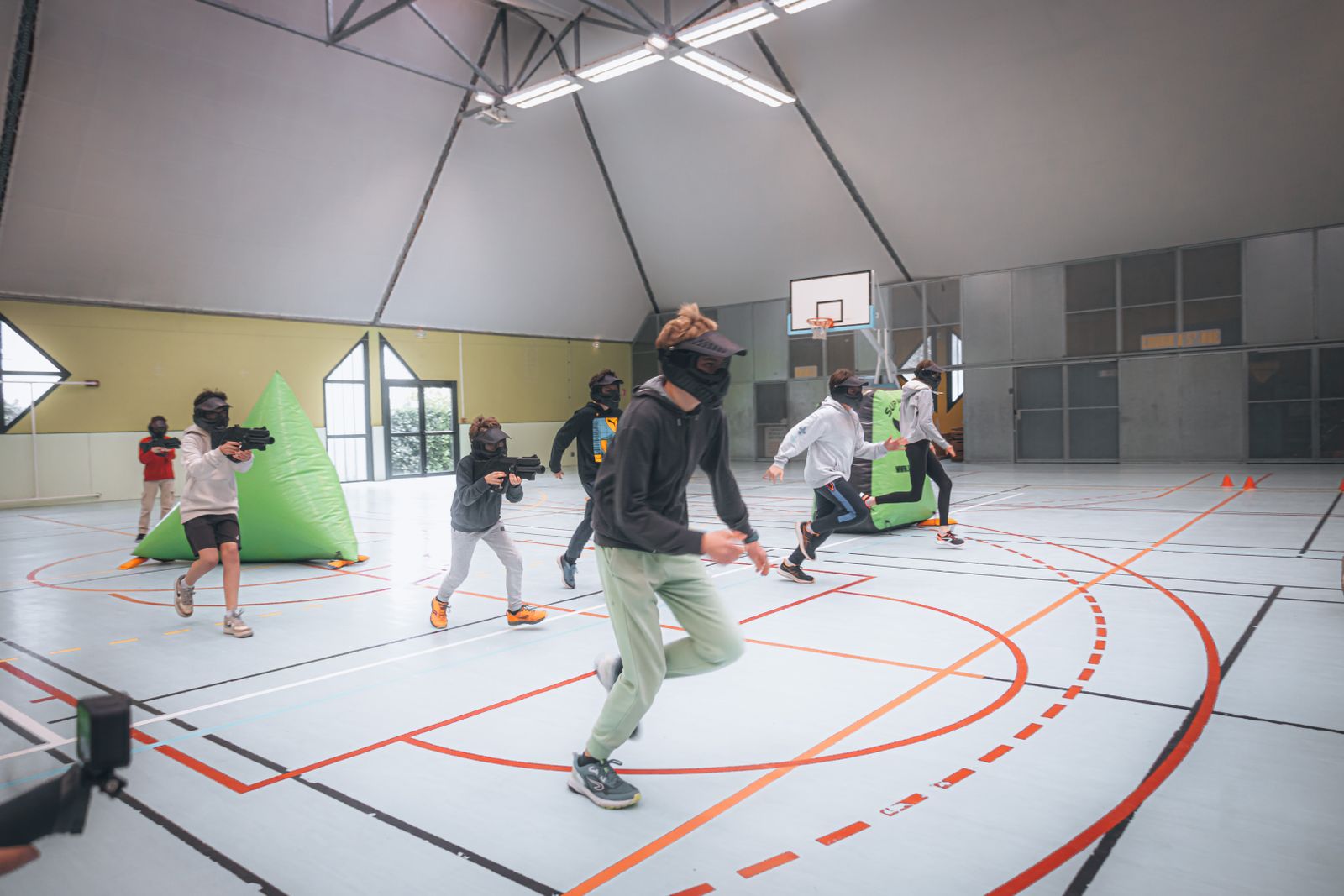
Every gel blaster party operator who calls me starts with the same email open in front of them. A venue, usually a city parks department or an event hall, has asked for a certificate of insurance naming them as additional insured, and the party is on Saturday. The deposit is in, the blasters are paid for, and the operator is discovering that the question was never whether the business needs insurance. It was how soon a venue would ask for proof.
So yes, a gel blaster party rental needs insurance, and it needs it before the first paid booking rather than the first venue request. Almost no statute forces the issue. Two other things do: the contracts you sign, because the places you set up demand a certificate before you arrive, and the exposure you carry, because the standard liability policy a generalist sells excludes the one injury a projectile game reliably produces. Here is what to carry, what venues will ask to see, and where the gap hides. If you are still standing up the operation, our guide to how to start a GellyBall party business covers the full launch sequence.
What insurance a gel blaster party rental needs
A mobile party operation runs lighter than a fixed arena, but the program is built from the same pieces, plus one the mobile model makes essential. Those pieces overlap with a paintball policy but are not identical, a distinction we unpack in is GellyBall insurance the same as paintball coverage.
| Coverage | What it protects | Why a party rental cannot skip it |
|---|---|---|
| General Liability | Third parties and property: the grandparent who trips over a bunker anchor, the gouged gym floor, the host's broken window | It is the coverage every venue contract names, and one million per occurrence with two million aggregate is the standard ask. |
| Participant Injury | The players themselves: a gellet to an unprotected eye, a mid-game collision between two sprinting kids | The standard General Liability form excludes athletic and sports participants. Without this, the people you were hired to entertain are uncovered. |
| Inland Marine | Blasters, inflatable bunkers, eye protection, and bins while they travel and while they sit at a venue | Equipment in transit sits outside a standard property policy, and the whole business fits in one stealable trailer. |
| Commercial Auto / Hired and Non-Owned Auto | The van or trailer that moves the operation, and staff cars used for the business | A personal auto policy can deny a claim the moment the trip is business use. |
| Workers' Compensation | Party hosts and helpers hurt while working | Required in nearly every state once you hire your first paid employee; the threshold is set by your state. |
The piece that traps party operators is Participant Injury, because it is the piece a generic policy silently omits. A standard General Liability form carries the ISO CG 21 01 exclusion for athletic or sports participants, and every child holding a blaster at your booking is a participant. The policy that responds when you dent the venue's wall pays nothing for the player who gets hurt unless Participant Injury is named on it. We walk through how that exclusion guts a generic policy in why your field's General Liability policy probably has gaps, and the mobile version of the same problem is worse, because the equipment that earns the revenue is rolling down the highway, a gap our piece on Inland Marine for action sports breaks down.
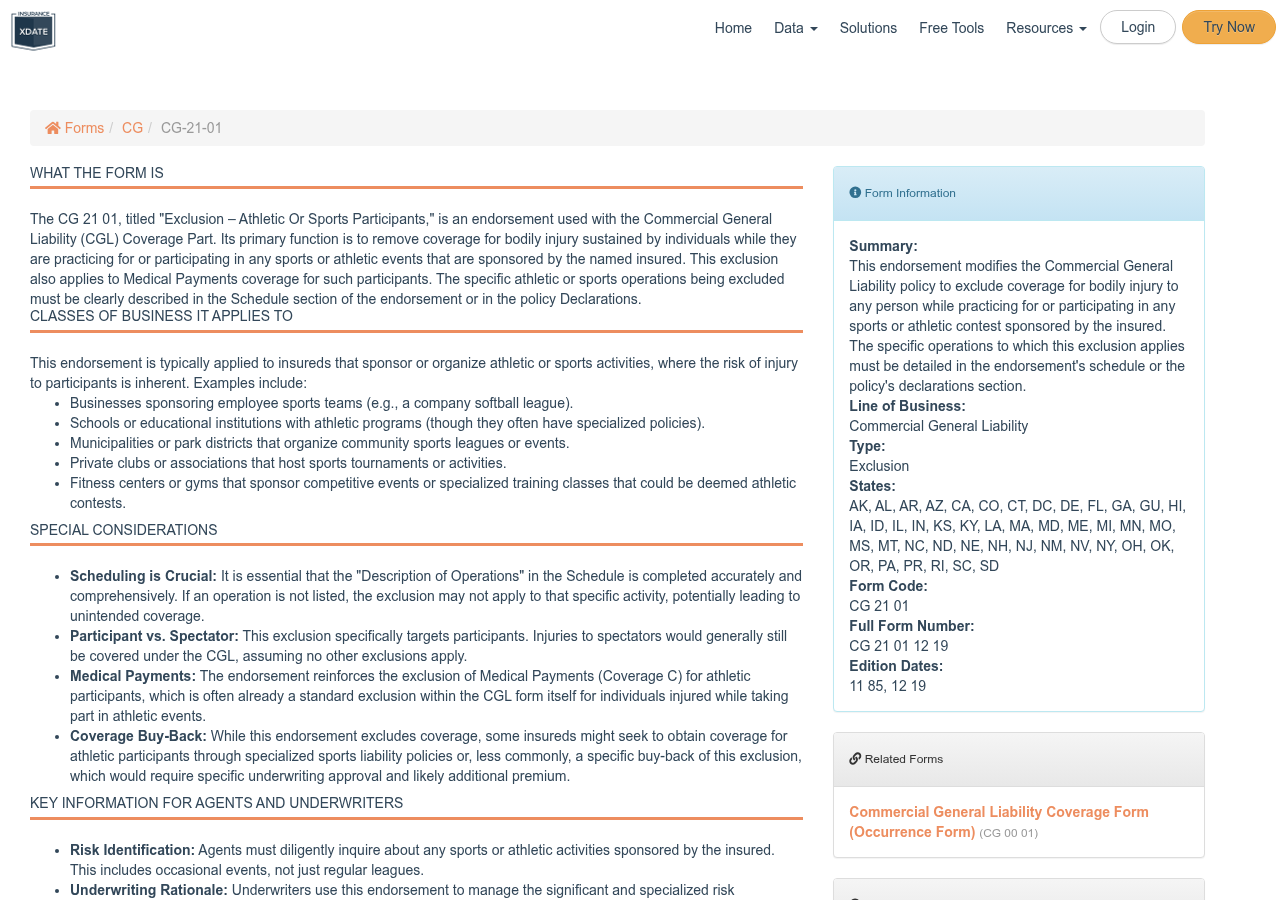
Source 1 of 3 · Standard ISO exclusion form
The ISO CG 21 01 endorsement removes coverage for athletic and sports participants from a standard General Liability policy. At a gel blaster party that is every player on the lawn, which is why Participant Injury, not a bigger liability limit, is what protects the kids you were hired to entertain.
That distinction is invisible on a certificate and easy to miss on a quote, which is why the review has to happen on the policy form rather than the price.
When a party rental operator sends me the policy a generalist wrote, I read two lines before anything else: the participant wording and the equipment schedule. Most of the time the policy would pay for a dented fence and nothing for the player who got hurt, and the blasters that earn the revenue are not scheduled at all. The limit on the front page is not the program. Those two lines inside it are.
Bobby Sharp, Action Sports Practice Lead, Specialty Insurance
Neither line takes more than a short review to fix at quote time. At claim time, the same two lines are the difference between a covered loss and a personal one.
When insurance is required: the venue certificate
No state insurance code names gel blaster party rentals and mandates General Liability. The requirement lives in the bookings, and for a mobile operation nearly every booking is a venue someone else owns.
- The city park or recreation facility. A facility-use permit requires General Liability with the municipality named as additional insured, commonly at one million per occurrence and two million aggregate, and the certificate is due before the permit issues.
- The school, church, or event hall. Same pattern: the booking confirms when the certificate arrives, and the venue's own insurer is usually the one insisting on it.
- The family entertainment center or arena hosting your format. Venues that host outside vendors require a certificate from every one of them, because your operation is a risk their policy did not price.
- The backyard birthday. Nobody asks for a certificate, which is the trap. The host's homeowners policy covers the host, and it routinely excludes business activities run on the property. In the one venue where no contract checks your coverage, your own policy is the only one in play.
Two terms on that paperwork are worth keeping straight. The certificate holder is simply the party the certificate is addressed to; it proves coverage exists. An additional insured is written into your policy's protection, so a claim arising from your party at their facility lands on your coverage first. Venues ask for additional insured status because it moves your risk off their policy, and a municipal permit desk will not trade the form for anything less.
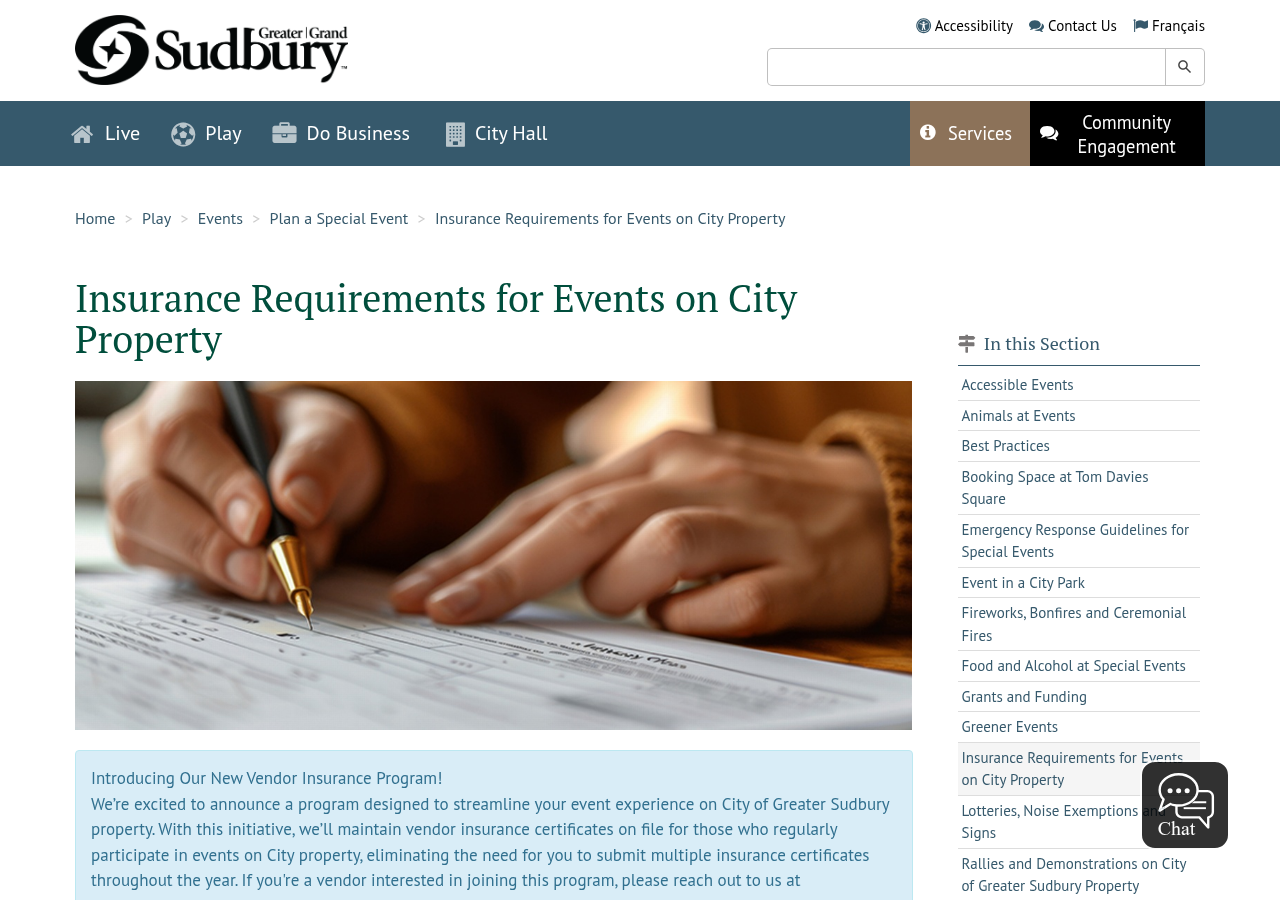
Source 2 of 3 · Representative municipal requirement
A representative municipal requirements page for events on city property: commercial General Liability, the municipality named as additional insured, and the certificate filed before the event. Park and recreation departments across North America run the same checklist, and a mobile party operator meets it on nearly every public-space booking.
Source: greatersudbury.ca/plan-a-special-event/insurance-requirements
The certificate itself costs nothing once the right policy is in place. What costs operators bookings is the timeline: a generalist agent quoting an unfamiliar class cannot issue same-week paper, and the venue's deadline does not move.
The injury exposure venues are guarding against
A gel blaster fires a soft, water-filled bead, the equipment is marketed for ages 5 and up, and the whole pitch of the format is that it does not hurt. The published record says the eye is the exception. A multicenter case series in Ophthalmology documented 19 patients with gel pellet eye injuries across six centers, including hyphema in 12 eyes and surgical procedures in 7, with pellets measured at no less than 200 to 300 feet per second (Lin et al., summarized in the American Academy of Ophthalmology's EyeNet, May 2023). The researchers' recommendation is paintball-style eye protection for players and for anyone standing nearby, which at a birthday party includes the row of parents holding phones.

Source 3 of 3 · Peer-reviewed clinical record
The Ophthalmology case series behind gel blaster safety rules: 19 patients across six centers, hyphema in 12 eyes, surgical procedures in 7. It is the severity profile an underwriter prices, and the reason a party rental's eye-protection rule belongs in writing.
Source: aao.org/eyenet/risk-of-ocular-trauma-from-gel-pellets
For the operator, that record sets the house rule: party-grade equipment, an enforced eye-protection policy for everyone inside the play boundary, and both written down. For the policy, it explains the venue's caution and points at the gap the certificate never closes.
The certificate gets the booking, and operators read it as proof that everyone is protected. It is not. The certificate proves the venue is protected. Whether the eight-year-old holding your blaster has any coverage at all depends on whether Participant Injury is named on your policy, and that is the page nobody at the permit desk asks to see.
Bobby Sharp, Action Sports Practice Lead, Specialty Insurance
A party rental that injures a guest at a booked venue is also a party rental whose next renewal depends on what the file shows: the waiver the parent signed, the eye-protection rule on the booking confirmation, the staffer running the game. Carriers price what you can prove.
What it costs, and how to keep the premium down
Written correctly, a low-velocity gel blaster party operation is rated on the low-impact gel class, not the paintball class, and that classification moves the premium more than any discount will. The mispricing pattern, and the fix, is the subject of our GellyBall insurance guide. For the full pricing band a mobile party business lands in, see our GellyBall insurance cost guide. Beyond the class, the levers that bring the number down are the ones you can document:
- An enforced eye-protection rule for players and anyone inside the play area, matched to the published research rather than the toy packaging.
- Party-grade equipment only, with the fleet's velocity stated in your booking terms and no hobby-grade blasters mixed into the rental bins.
- Signed waivers with parental consent for minors, collected at booking and kept on file.
- Equipment scheduled at replacement cost and stored locked between bookings, so one trailer theft is a claim instead of a closure.
- Staffed games with stated supervision ratios, so the carrier underwrites a run program rather than a box of blasters left on a lawn.
A new mobile operator rarely needs all five on day one, but every one of them shows up in the renewal conversation, and the operators who walk in with the file documented get the better number. Most of the operators asking this question are weeks from their first booking, and at that stage the speed of the broker matters as much as the premium. Here is what one new operator told us.
"Bobby Sharp and the team at Specialty Insurance had a fast turnaround, professional service, and answered every question I had as a brand-new operator. They wrote the policy I'd want defending me if a player ever filed a claim."
Grimnir Tactical LLC
Verified customer review
Get covered before the venue asks
The pattern that repeats most is the operator with a Saturday party and a Tuesday certificate request, calling an agent who has never quoted the class. Specialty Insurance writes GellyBall and gel blaster insurance in all 50 states, builds Participant Injury into the program rather than leaving it out, and issues the additional-insured certificate the moment coverage binds. Get the policy in place before the bookings stack up, and the venue email becomes a formality instead of a fire drill.
Frequently Asked Questions
Is insurance legally required to run a gel blaster party rental business?
No state statute specifically requires liability insurance for a gel blaster party rental. The requirement is contractual: city parks, schools, and event venues demand a certificate of insurance naming them as additional insured before you can set up. Workers' Compensation is the one statutory coverage, required in most states once you hire your first paid employee.
What insurance do venues require for a gel blaster party?
Most venues require General Liability, commonly at one million dollars per occurrence and two million aggregate, with the venue named as additional insured. The certificate of insurance proving it is due before event day, and municipal facilities usually require it before the use permit issues.
Does homeowners insurance cover a backyard gel blaster party?
Not for the operator. The host's homeowners policy covers the host's own premises liability and routinely excludes business activities run on the property. The rental operator's own General Liability responds for third-party injuries and property damage, and Participant Injury coverage responds for the players themselves.
Does General Liability cover a child injured while playing?
On a standard form, no. The ISO CG 21 01 exclusion removes coverage for athletic and sports participants, and every player in a gel blaster game is a participant. Participant Injury must be added as named coverage for the players themselves to be protected.
How much does gel blaster party rental insurance cost?
It varies by fleet size, booking volume, and the velocity of the equipment you run. Written correctly, a low-velocity party operation is rated on the low-impact gel class rather than the paintball class, and that classification moves the premium more than any discount. A documented eye-protection rule and signed waivers are the fastest levers on the rate.
Sources
- ISO Commercial General Liability form CG 21 01, Exclusion: Athletic Or Sports Participants. insurancexdate.com
- City of Greater Sudbury. "Insurance Requirements for Events on City Property." greatersudbury.ca
- Shaw J. "Risk of Ocular Trauma From Gel Pellets." EyeNet Magazine, American Academy of Ophthalmology, May 2023, summarizing Lin et al., Ophthalmology. aao.org
- Specialty Insurance. GellyBall Insurance: Why It Should Not Be Priced Like Paintball
- Specialty Insurance. Inland Marine Insurance for Action Sports