

Specialty Insurance Data Report
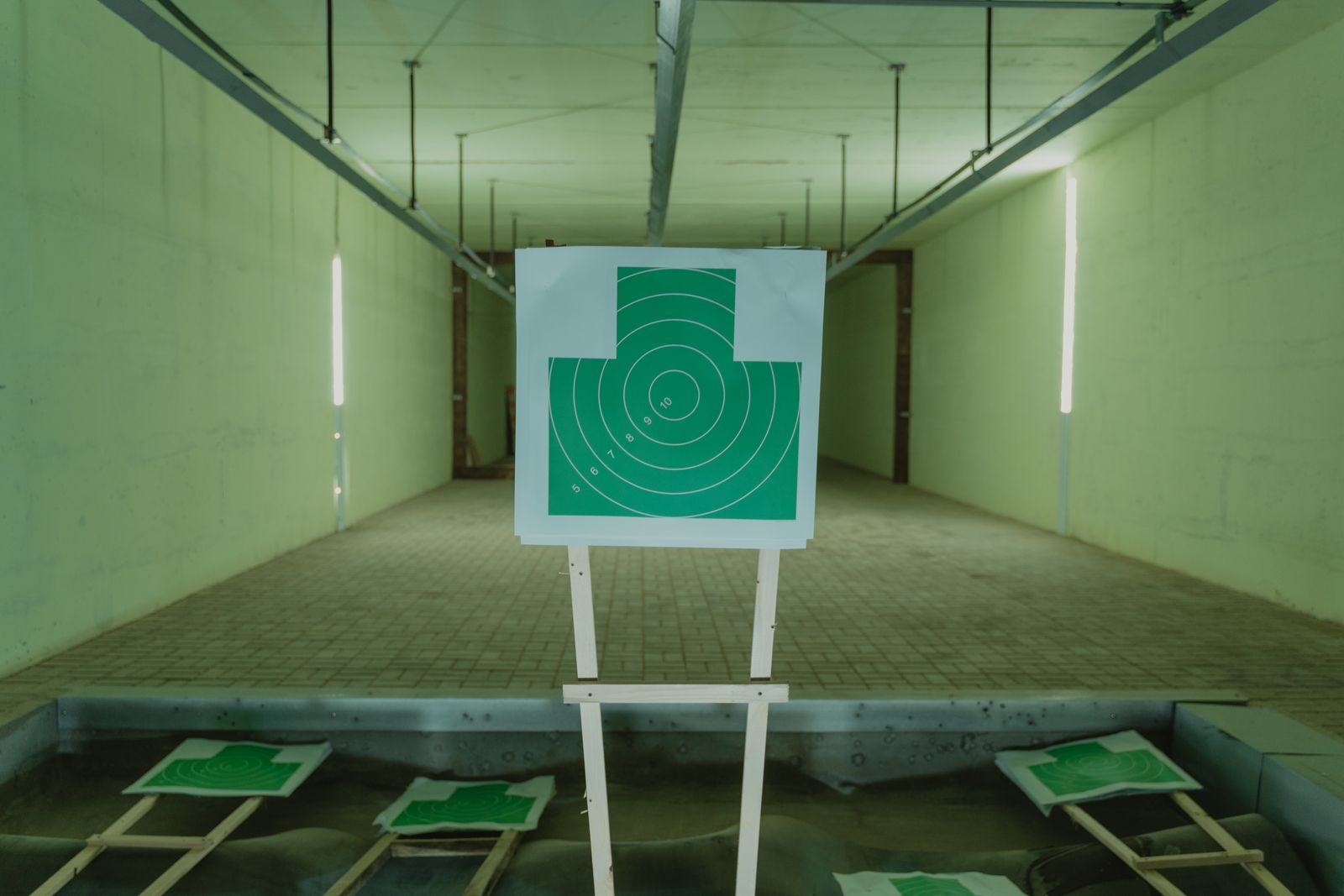
At a shooting range, the injury that ends up in a claim file is rarely the one operators brace for. The federal data points at two exposures almost nobody insures against on purpose, lead and noise, that reach staff, shooters, and even their families. Every figure below is sourced.
Every statistic below is written out with a numbered source. Full citations appear under Sources and methodology at the end.
Get a multi-line quote in 24 hours. 50 states. Send us your dec page and we will show you the coverage gaps for free.
01The gun range risk map: three hazards, one you can see
A gun range stacks three different injury exposures, and they do not carry equal weight in a claim file. One is acute and visible, an accidental or negligent discharge. Two are chronic and invisible, lead and noise. The public dataset is thin on the first and deep on the other two, which is the opposite of how most operators picture their risk.
There is no national injury-rate dataset specific to shooting-range discharges, so this report follows the data that does exist: the occupational lead and noise record that NIOSH, CDC, and OSHA have tracked for decades. For the discharge scenario on its own, see our companion piece on gun range insurance after an unintentional discharge incident.
| Hazard | Who it reaches | What the record shows |
|---|---|---|
| Accidental or negligent discharge | Shooters, staff, bystanders | Acute and serious, but no range-specific national injury rate exists |
| Airborne and surface lead | Staff, shooters, and families through take-home dust | Deeply documented; elevated blood lead across dozens of studies |
| Impulse noise | Staff and shooters | 140 to 175 dB per shot, above the level that causes instant, permanent damage |
The rest of this report walks the two hazards the data can measure, then translates them into the coverages that respond.
02Lead: the exposure that defines an indoor range
Every time a lead bullet or a lead-containing primer fires, it aerosolizes lead into the air the shooter and the range officer breathe. That is the single most documented hazard in the category, and it starts with how many places it happens.
- There are 16,000 to 18,000 indoor firing ranges in the United States, collectively employing tens of thousands of workers.1
- Those ranges serve roughly 1 million law-enforcement officers who train on them and about 19 million active target shooters, all potentially exposed to lead.1
- A 1975 federal study of nine indoor ranges found that all nine exceeded the air-lead guideline in force at the time of 200 micrograms per cubic meter.4
- In one law-enforcement training case, mean airborne lead above 2,000 micrograms per cubic meter was cut by 94 to 97 percent with better ventilation, to 60 to 120 micrograms per cubic meter, and still sat above the federal limit.4
- At a civilian indoor range, airborne lead near the firing line measured roughly seven times the occupational limit, and air lead tracked closely with workers' blood lead.5
- Even where full-shift air stayed within the limit, short bursts during nightly range cleaning spiked to 54 and 64 micrograms per cubic meter, above the 50-microgram ceiling.1
Reference · Lead surveillance
CDC Morbidity and Mortality Weekly Report, "Indoor Firing Ranges and Elevated Blood Lead Levels, United States, 2002 to 2013," the backbone dataset for range lead exposure among employees, customers, and families.
Source 1
03How high do blood lead levels climb?
Airborne lead is only the input. The output shows up in blood, and the readings on range workers and instructors are not subtle.
- In a review of 36 shooter studies across 15 countries, every one reported at least one blood lead level above 2 micrograms per deciliter, against a US adult average near 1.2.4
- About half of those studies documented levels above 20 (18 studies), above 30 (17 studies), and even above 40 micrograms per deciliter (15 studies).4
- After a session of indoor firearms training, 52 percent of instructors landed in the 20 to 39 microgram band and another 35 percent reached 40 to 59, a sharp jump from their pre-training readings.4
- In one cohort of firearms instructors and officers, 24 percent carried blood lead above 60 micrograms per deciliter, the exact level at which federal rules force a general-industry worker off the job.4
- In a 2024 study of civilian range staff, the average worker's blood lead was 39.8 micrograms per deciliter, with shooting coaches highest at 52.9, safety managers at 24.9, and sales staff at 16.5, and every worker measured above 10.5
- During the renovation of a single range, 46 of 98 workers tested (47 percent) had elevated blood lead, and one worker reached 153 micrograms per deciliter, roughly 15 times the level of concern.1
Reference · Occupational health
NIOSH Alert 2009-136, "Preventing Occupational Exposure to Lead and Noise at Indoor Firing Ranges," which documents lead and noise exposure among officers, students, and range staff.
Source 10
04Who gets poisoned, and how the lead gets home
This is not a shooters-only problem. Federal and state surveillance shows where range lead lands, and it reaches well past the firing line.
- About 95 percent of all elevated adult blood lead reported in the United States is work-related, and among the rest, shooting firearms is the single most common non-occupational source.6
- Over an 11-year window, 2,056 people in the police-protection and recreation categories that include firing ranges were logged with elevated blood lead, and another 2,673 were poisoned by non-work target shooting.1
- In North Carolina surveillance, shooting firearms accounted for 70 percent of non-occupational adult lead cases.7
- In a 2023 Michigan report, a firearms hobby, an indoor range, casting, or reloading was the top non-work source at 44.5 percent, ahead of home remodeling and every other cause.8
- Across two decades of Alaska surveillance, the leading non-occupational source of adult lead poisoning was shooting at indoor ranges.9
- Take-home lead reached families: three children and two adult relatives of just four range workers tested with elevated blood lead, and their homes, carpets, and vehicles needed lead abatement.1
Around 95 percent of reported adult elevated blood lead is occupational.
Among the non-occupational share, shooting firearms is the number-one source, which is why range staff, not just customers, sit at the center of the exposure.
Reference · NIOSH
CDC and NIOSH note that many firing range facilities lack the environmental and occupational controls needed to protect shooters and range personnel from airborne lead and noise.
Source 10
Get a 24-hour coverage review that reads your exposure the way an underwriter does.
05Noise: the other injury no one sees coming
Lead is the slow hazard. Noise is the instant one. A single unsuppressed round can do permanent damage before anyone thinks to reach for hearing protection.
- The peak sound level of gunfire runs 140 to 175 decibels, above the threshold at which one impulse can cause permanent hearing loss.11
- Most recreational firearms, excluding the smallest calibers and air rifles, produce 150 to 165 decibels at the muzzle.11
- Federal workplace rules cap noise at a 90 A-weighted-decibel average over an 8-hour day, a level one lane of live fire exceeds instantly.12
- Because the damage is cumulative and usually painless, hearing loss tends to surface as a workers compensation or participant claim years after the exposure, when the paper trail is hardest to defend.
06What the OSHA lead standard means for your policy
The same federal rules that protect range workers define the compliance exposure an underwriter reads before pricing your policy. The OSHA lead standard is not optional guidance; it is a set of duties that turn straight into coverage questions.
- The standard caps a worker's average airborne lead at 50 micrograms per cubic meter over an 8-hour shift.2
- Cross the 30-microgram action level and the employer owes exposure monitoring and medical surveillance, including blood lead testing.2
- A blood lead level at or above 5 micrograms per deciliter is considered elevated, and at 60 the employer must remove a general-industry worker from the job.32
- The recommended engineering fix is a dedicated push-pull ventilation system that moves lead downrange to a filtered exhaust behind the bullet trap; federal investigators have faulted ranges for falling below the minimum downrange airflow.31
For an operator, each of those duties is a coverage line. Lead and noise reach your employees, so they live on workers compensation, and when lead migrates into soil or water they can trigger pollution or environmental liability. A negligent discharge or a bystander injury lands on general liability and participant injury coverage. Your ventilation plant, HEPA systems, and bullet traps sit on commercial property, and a mobile or traveling range component pulls in inland marine. The full gun range insurance program is built to stack those together rather than sell them one at a time.
That is also why a single price tag for gun range insurance does not exist. It is a multi-line risk, quoted per operation. For scale, here is where Specialty Insurance places comparable recreation and entertainment venues on our own underwriting desk.
| Comparable venue and coverage | Typical annual premium |
|---|---|
| Single-line general liability, recreation venue | $500 to $1,500 |
| Adding participant or accident-medical coverage | +$250 to $500 |
| Multi-activity family entertainment center | $2,500 to $6,000 |
| Large multi-hazard venue (amusement or water park tier) | $25,000 to $150,000 |
These are Specialty Insurance underwriting-desk ranges for comparable action-sports and entertainment venues, not gun-range quotes. Because a gun range stacks general liability, property, workers compensation with a lead and noise exposure, and participant injury, it is a multi-line risk quoted per operation and sits toward the upper, multi-line end rather than the single-line entry point.
07Indoor vs outdoor: two different risk maps
Where the range sits changes which hazard dominates and which coverage does the heavy lifting. The lead does not disappear outdoors; it just moves from the air into the ground.
| Factor | Indoor range | Outdoor range |
|---|---|---|
| Airborne lead | High; enclosed air concentrates lead, so ventilation is the primary control | Lower in air, but lead accumulates in soil, berms, and backstops |
| Environmental exposure | Filter changes and lead-dust waste handling | Soil and groundwater contamination, with EPA best-practice cleanup expected |
| Noise | Amplified by enclosed walls | Dissipates, still above the damage threshold at the line |
| Coverage under most stress | Workers compensation and property (ventilation) | Pollution or environmental liability and property (land) |
The outdoor lead story is a documented cleanup obligation, not a theoretical one. Federal environmental guidance treats spent lead at outdoor ranges as a managed contaminant, which is why the coverage question shifts from breathing air to protecting land. We break the two settings down further in how indoor and outdoor gun range coverage differ.
Reference · Outdoor ranges
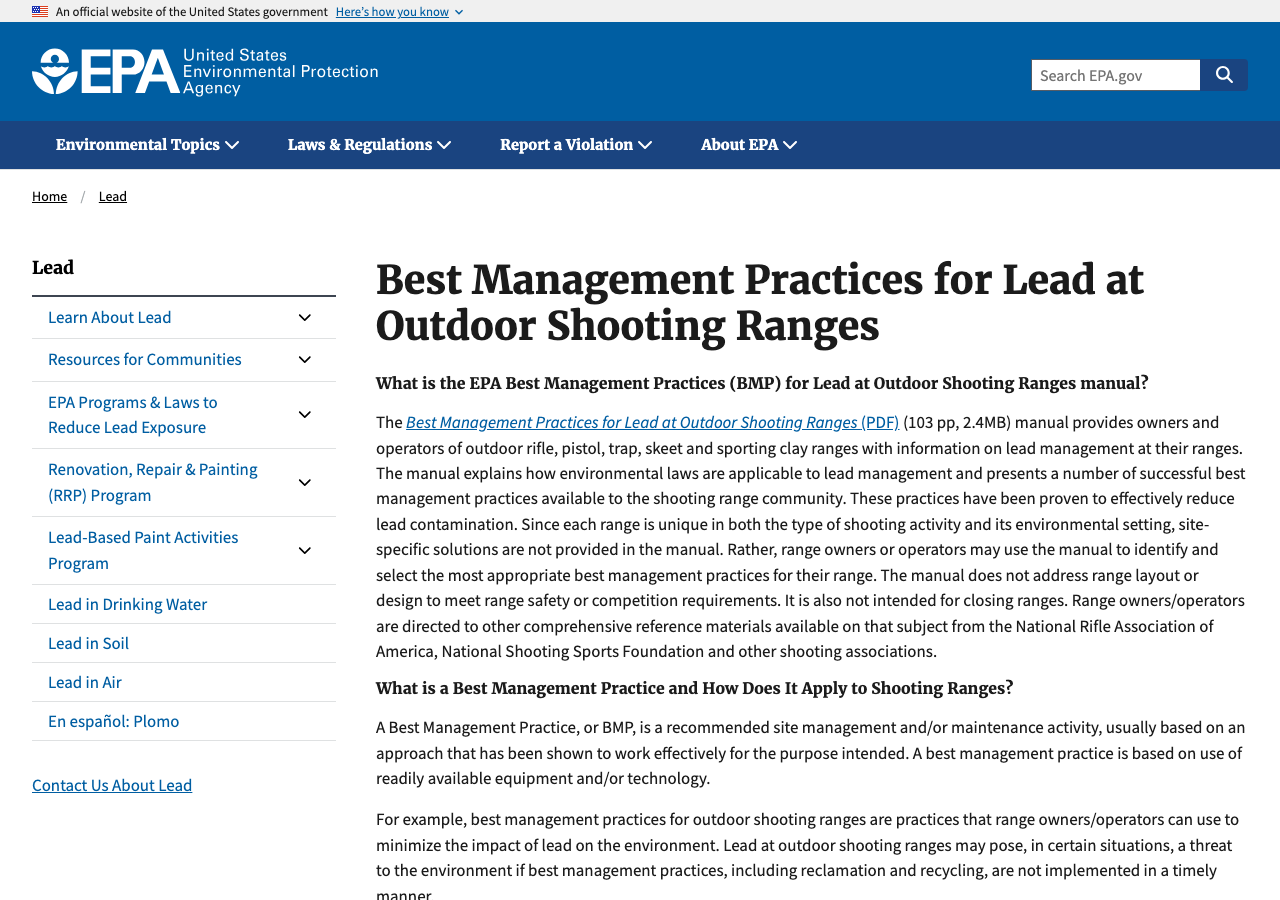
The EPA's "Best Management Practices for Lead at Outdoor Shooting Ranges" manual sets the environmental-lead expectations that shape an outdoor range's pollution exposure.
Source 13
08What the data says about insuring a gun range
Rank the three exposures by how reliably they turn into a claim and a premium, and the order is the opposite of the one most operators expect. The bullet downrange makes the headline. The lead and noise make the loss run.
Operators buy a gun range policy braced for the round that goes where it should not. The claims that recur are quieter than that: a range officer's blood lead, an instructor's hearing, a family member who tested high. The lead and noise record is why we underwrite a range as an occupational-health risk first and a firearms risk second, and why the ventilation and monitoring you can document move your premium more than anything else.
Bobby Sharp, Action Sports Practice Lead, Specialty Insurance
For an operator, the takeaway is not to fear the range; it is to insure the exposure the data names. A range that meters its air, tests its people, documents its ventilation, and enforces hearing protection is a cleaner risk and a cheaper one. That same file is what keeps a lead or hearing claim from turning into an uncovered surprise, the way an underinsured entertainment venue discovers its gaps only after a loss.
Get a 24-hour quote rated to your real exposure, lead and noise included. 50 states.
Specialty Insurance writes gun range coverage in all 50 states, with specialty underwriters who read lead and noise the way OSHA and NIOSH do. Call us at (888) 673-7228 or send your current dec page and we will show you the gaps for free.
09Frequently asked questions
Is lead exposure really the biggest insurance risk at a gun range?
By the data, yes. Range-specific discharge injuries have no national rate, but lead exposure is documented across dozens of studies and federal surveillance. It reaches employees, shooters, and families, and it drives workers compensation, pollution, and take-home liability, which is why underwriters treat it as the primary exposure.
What blood lead level is considered dangerous for range workers?
A blood lead level at or above 5 micrograms per deciliter is considered elevated. At 60 micrograms per deciliter, federal rules require a general-industry employer to remove the worker from lead exposure. Studies have found range instructors and coaches averaging well into the 40s and 50s, far above both marks.
How loud is a gunshot compared with safe noise limits?
Gunfire peaks at 140 to 175 decibels, and most recreational firearms hit 150 to 165 decibels at the muzzle. The federal workplace noise limit is a 90 A-weighted-decibel average over 8 hours, and the threshold for instant permanent damage is 140 decibels, so a single unsuppressed shot clears it.
Does workers compensation cover lead poisoning and hearing loss at a range?
Occupational lead poisoning and noise-induced hearing loss are generally treated as work-related conditions, which places them on workers compensation rather than general liability. Because both are cumulative, documented monitoring and hearing protection are what make these claims defensible, and what keep premiums in check.
How much does gun range insurance cost?
There is no single figure, because a range is a multi-line risk quoted per operation. For scale, Specialty Insurance places comparable recreation venues from roughly $500 to $1,500 for single-line general liability, with participant coverage adding $250 to $500, and multi-activity venues running higher. A gun range sits at the multi-line end because it stacks liability, property, workers compensation, and participant injury.
Do indoor and outdoor gun ranges need different coverage?
Yes. Indoor ranges concentrate airborne lead and noise, so ventilation, workers compensation, and property carry the load. Outdoor ranges move the lead into soil and berms, which shifts the emphasis toward pollution or environmental liability and land-based property exposure.
Sources and methodology
- CDC Morbidity and Mortality Weekly Report, "Indoor Firing Ranges and Elevated Blood Lead Levels, United States, 2002 to 2013," April 25, 2014: 16,000 to 18,000 indoor ranges, tens of thousands of workers, roughly 1 million officers and 19 million target shooters, 2,056 and 2,673 elevated blood lead cases, 47 percent of renovation workers elevated with one at 153 micrograms per deciliter, task-based air at 54 and 64 micrograms per cubic meter, and take-home lead to families.
- OSHA Lead Standard, 29 CFR 1910.1025: permissible exposure limit of 50 micrograms per cubic meter, action level of 30 micrograms per cubic meter, and medical removal at a blood lead level of 60 micrograms per 100 grams of whole blood for general industry.
- OSHA, "Protecting Workers from Lead Hazards at Indoor Firing Ranges" (Fact Sheet 3772): NIOSH estimate of 16,000 to 18,000 indoor ranges, blood lead at or above 5 micrograms per deciliter considered elevated, and recommended push-pull ventilation controls.
- Laidlaw et al., "Lead exposure at firing ranges, a review," Environmental Health, 2017 (NIH PMC): all 36 reviewed studies reported shooter blood lead above 2 micrograms per deciliter, 18, 17, and 15 studies above 20, 30, and 40 respectively, instructors at 52 percent and 35 percent after training, 24 percent of a cohort above 60, uncontrolled training air above 2,000 micrograms per cubic meter, and a 1975 study of nine ranges all exceeding 200.
- Park et al., "Occupational Lead Exposure Among Civilian Indoor Shooting Range Workers," Journal of Korean Medical Science, 2024: mean worker blood lead of 39.8 micrograms per deciliter, shooting coaches at 52.9, safety managers at 24.9, and sales staff at 16.5, every worker above 10, and airborne lead near the firing line about seven times the occupational limit.
- CDC Morbidity and Mortality Weekly Report, "Adult Blood Lead Epidemiology and Surveillance, United States, 2008 to 2009," 2011: about 95 percent of reported adult elevated blood lead is work-related, and shooting firearms is the most common non-occupational source.
- North Carolina Division of Public Health, Adult Blood Lead Surveillance Summary, 2017: shooting firearms accounted for 70 percent of non-occupational adult lead cases.
- Michigan State University and MDHHS, Adult Blood Lead Epidemiology and Surveillance Annual Report, 2023: a firearms hobby, indoor range use, casting, or reloading was the top non-work source of adult lead exposure at 44.5 percent.
- Alaska Division of Public Health, Section of Epidemiology Bulletin, 2016: the leading non-occupational source of adult lead poisoning in Alaska was shooting at indoor firing ranges.
- NIOSH Alert, "Preventing Occupational Exposure to Lead and Noise at Indoor Firing Ranges," DHHS (NIOSH) Publication No. 2009-136, April 2009: thousands of range employees, more than a million law-enforcement officers, and 20 million target shooters potentially exposed to lead and noise at indoor ranges.
- Meinke et al., firearm noise and hearing loss, Seminars in Hearing, 2017 (NIH PMC): peak firearm sound levels of 140 to 175 decibels, with most recreational firearms at 150 to 165 decibels.
- OSHA Occupational Noise Exposure standard, 29 CFR 1910.95, Table G-16: permissible noise exposure of 90 A-weighted decibels averaged over an 8-hour day.
- US EPA, "Best Management Practices for Lead at Outdoor Shooting Ranges": environmental-lead management expectations for outdoor rifle, pistol, trap, skeet, and sporting-clay ranges.