

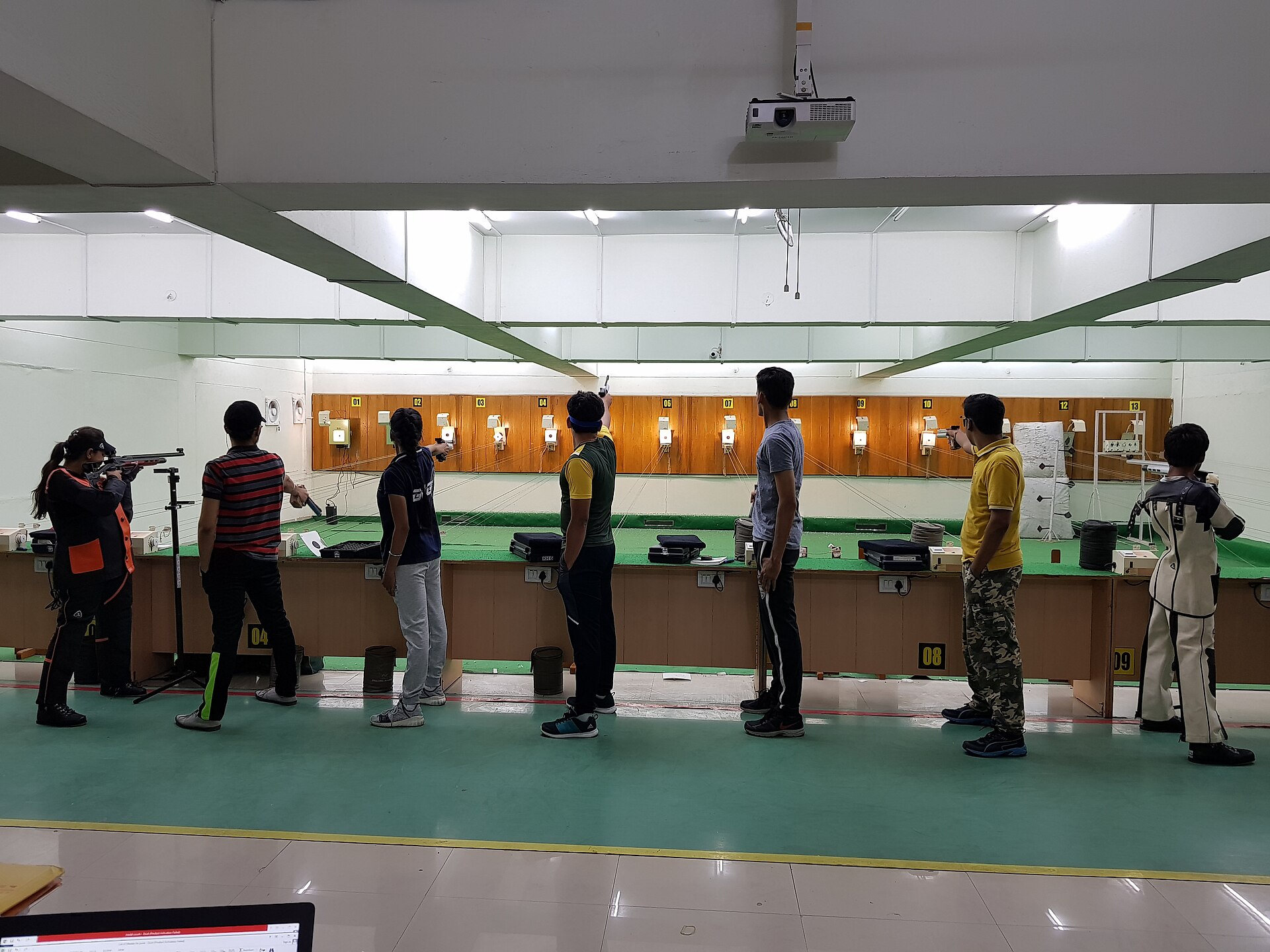
Operators pick indoor or outdoor for comfort and revenue. For your insurance, the decision comes down to a different question: which set of catastrophic exposures you are buying against. An indoor range's biggest underwriting problem is the air your staff and customers breathe. An outdoor range's is the ground under the backstop and the rounds that leave the property. Those are not the same policy, and not the same premium.
To a generalist agent they read as one line item, gun range insurance. To an underwriter who prices the class, indoor and outdoor are two risk profiles that happen to share a name. Here is where they split, and what it does to your premium.
TL;DR: one class to a generalist, two risk classes to an underwriter
The coverages carry the same names on both policies. What differs is which exposure is most likely to produce a large claim, and which standard exclusion is most likely to leave you paying for it.
| Factor | Indoor range | Outdoor range |
|---|---|---|
| Setting | Enclosed, climate-controlled building | Open-air lanes with earthen backstops |
| Signature exposure | Airborne lead and ventilation failure | Stray rounds and soil-lead contamination |
| Building and contents value | High: structure, ventilation plant, bullet traps, retail | Lower structures, high land and backstop engineering |
| Lead exposure type | Occupational: employees and shooters inhale it | Environmental: spent lead in soil and berms |
| Regulator in the file | OSHA and NIOSH (lead and noise) | EPA (RCRA and CERCLA cleanup liability) |
| Coverage most likely to gap | Pollution and workers health, plus property | Pollution and environmental, plus errant-round liability |
| Typical annual premium | Upper half of the $5,000 to $25,000 band | Wide variance across the $5,000 to $25,000 band |
What each range does to your risk, head to head
Indoor: the exposure is in the air
An indoor range is an enclosed building where people fire lead ammunition for hours. The Occupational Safety and Health Administration treats that as a lead workplace. Its lead standard, 29 CFR 1910.1025, caps airborne lead at 50 micrograms per cubic meter over an 8-hour shift and sets an action level at 30 micrograms that triggers monitoring and controls. OSHA is direct about the source: shooting firearms with lead bullets or lead-containing primer creates airborne lead in the gun smoke, and a building's standard HVAC system may not adequately remove those particles from the range (OSHA, Protecting Workers from Lead Hazards at Indoor Firing Ranges, 2018). NIOSH estimates there are 16,000 to 18,000 indoor firing ranges in the country, and notes that many lack the environmental and occupational controls that keep lead and noise in check.
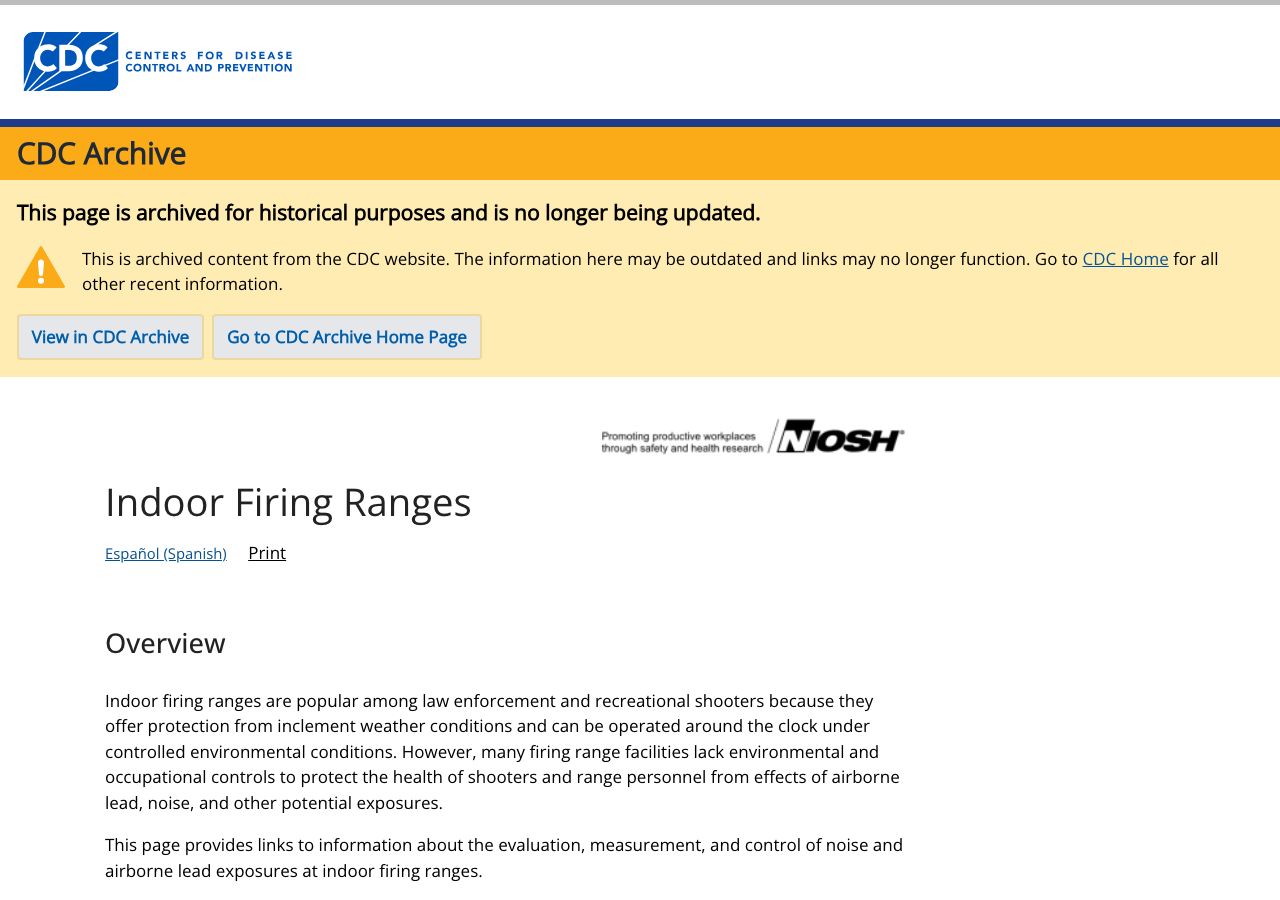
Federal occupational-health guidance · Indoor side
NIOSH notes that many indoor firing ranges lack the environmental and occupational controls needed to protect shooters and range personnel from airborne lead and noise. That is the exposure an indoor range's coverage has to answer for.
Lead is only half of it. A gunshot in an enclosed space is loud impulse noise. Most firearms produce peaks of 150 to 165 decibels, above the 140 decibel peak OSHA says impulse noise should not exceed, and employee hearing loss is a recognized occupational claim. Add the value of the building, the ventilation plant, the bullet traps, and the retail counter, and the indoor operator is insuring a high-value structure plus a health exposure most policies were never written for.
Outdoor: the exposure is in the ground and past the berm
An outdoor range trades the enclosed building for land, backstops, and open sky. The lead does not go into the air, it goes into the soil. The Environmental Protection Agency estimates roughly 160 million pounds of lead a year ends up in the environment at ranges, and its guidance, Best Management Practices for Lead at Outdoor Shooting Ranges, warns that abandoned spent lead can be a solid or hazardous waste under RCRA, and that responsible parties can be held liable for cleanup costs and natural resource damages under CERCLA. That liability can attach to a past owner long after a range closes.
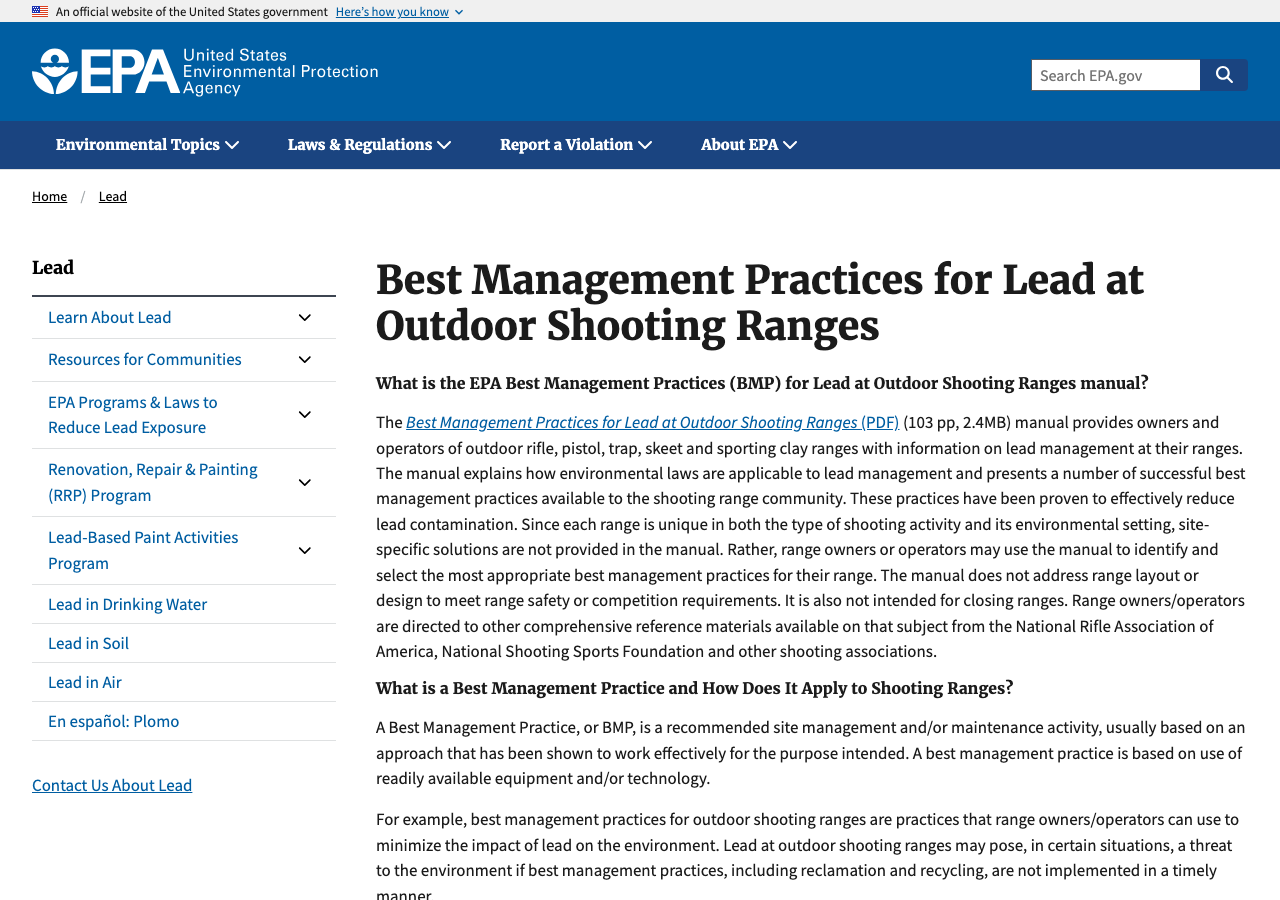
Federal environmental guidance · Outdoor side
The EPA manual explains how environmental laws apply to spent lead at outdoor rifle, pistol, trap, skeet, and sporting clay ranges. It is the exposure a base general liability policy excludes, which is why outdoor ranges carry a separate environmental question.
Source: epa.gov/lead/best-management-practices-lead-outdoor-shooting-ranges
The other outdoor exposure leaves the property. A round that clears the backstop is a stray-round claim. In December 2025, neighbors of an Alabama range filed suit alleging bullets struck their homes, with one household alleging bullet holes inches from a child's bedroom window (WAFF 48). No verdict has been entered, but the allegation is the exact scenario an outdoor liability underwriter prices: surface danger zone, berm height, and baffling. Engineered backstops, side berms, and overhead baffles are what keep that exposure, and the premium, in check.
Where the coverage splits, line by line
Both ranges start with commercial general liability. The divergence is in what general liability does not do, and each setting exposes a different gap.
General liability and the participant gap
A general liability policy covers injury to third parties, a slip in the lobby or a bystander in the parking lot. It often does not cover the person on the firing line. Many policies carry the ISO athletic or sports participants exclusion, CG 21 01, under which the insurance does not apply to bodily injury to any person while practicing for or participating in any sports or athletic contest or exhibition that you sponsor, and the same endorsement cuts off medical payments for those participants. Firearms-specific exclusions are common too, and the Insurance Information Institute notes standard liability policies will not cover "expected or intended injury."

Standard ISO exclusion form · Both settings
The ISO CG 21 01 endorsement removes liability coverage for people participating in a sponsored activity. Carriers apply the same logic to a range, which is why the shooter on the line needs participant accident coverage, not just general liability.
The fix is participant accident coverage, an accident-medical benefit that pays for injuries to shooters and students that the liability policy pushes out. It is the same mechanism that protects action-sports venues, and it is the line generalist quotes leave off. A waiver does not replace it. South Carolina courts will enforce a well-drafted release, as in McCune v. Myrtle Beach Indoor Shooting Range, where the state Court of Appeals held a signed waiver "neither ambiguous nor overbroad" and barred the claim (the injury there came from a paintball game the range hosted, not live fire, though the release principle is the same). The same releases carve out gross negligence, which is where the uninsured exposure lives. Our breakdown of participant injury versus general liability walks the full mechanism.
Property, and whether a BOP is enough
A common question is whether a range needs a businessowners policy if it already has general liability. General liability covers harm to other people. It does not cover your own building, your contents, or the income you lose if a fire or a citation shuts you down. A businessowners policy bundles property and business interruption with liability, which is why it suits many small businesses. Gun ranges are rarely a clean fit for a packaged BOP, so the property and liability are more often written on a specialty program. The indoor operator has more building and equipment value at stake, since the ventilation system alone is a major asset, so property coverage weighs heavier indoors than at a bare-land outdoor range.
Pollution, and the exposures nobody quotes
Here is the exposure both settings share and standard general liability excludes: lead as a pollutant. The commercial general liability form excludes bodily injury and property damage arising from the discharge, dispersal, or migration of pollutants, and lead, airborne indoors or in the soil outdoors, fits that definition. Indoor ranges carry the occupational-health and workers compensation side of it. Outdoor ranges carry the environmental-cleanup side. Neither is covered by a base general liability policy. Employee lead exposure and hearing loss sit in workers compensation and employer's liability, and an umbrella or excess policy sits above your primary limits so a single large lead or noise claim does not reach your business assets.
When an operator sends me a gun range on a generic small-business policy, the building and the liability are usually there. The lead, the participant injuries, and the environmental cleanup are usually not. The policy was written for the sign out front, not for what happens on the line.
Bobby Sharp, Action Sports Practice Lead, Specialty Insurance
The premium difference, and what moves it
In the ranges Specialty Insurance quotes, a gun range general liability and participant accident program generally runs $5,000 to $25,000 a year. That is a wide band, because the two settings, and the exposures inside them, pull the number in different directions.
Indoor ranges tend to sit in the upper half. You are insuring a high-value enclosed building, a ventilation and filtration system, bullet traps, and an airborne-lead exposure carriers watch closely. Outdoor ranges vary more widely across the band, driven by acreage, backstop and baffle engineering, the surface danger zone, and the environmental-lead reserve. Most operators land somewhere in the middle, in the low to mid five figures, and the deciding factor is rarely indoor versus outdoor by itself.
The premium does not move on indoor versus outdoor by itself. It moves on the building value you are insuring, the ventilation you can document, and the lead-reclamation program you can show the carrier. Two ranges at the same revenue can sit $10,000 apart on that alone.
Bobby Sharp, Action Sports Practice Lead, Specialty Insurance
What moves your number down is documentation: air-monitoring records and a range-grade ventilation system indoors, a written lead-reclamation program outdoors, enforced eye and ear protection, and a clean loss history. Carriers price the range they can see in your file, not the one you describe on the phone.
Operators tell us the same thing once the right policy is in place: the value is a broker who knows the class and stays with the account as it grows.
"Specialty Insurance has been an incredible foundation for our business. They are personal, professional, and easy to work with."
Ballahack Airsoft LLC
Verified customer review
When to pick which, and the mistakes operators make choosing
Choose indoor for year-round revenue and climate control, and budget for the ventilation and lead-monitoring program that come with it. Choose outdoor for lower build cost, and budget for the land controls and environmental exposure. Either way, the coverage build is what decides whether you are insured or just paying premiums. The recurring mistakes:
- Buying a generic BOP off a comparison site. It rates the range like a retail store, misses the participant and pollution exposures, and looks cheap right up until a claim.
- No participant accident coverage. The general liability policy excludes the shooter on the line, and a signed waiver does not fill that gap.
- Ignoring the pollution exclusion. Indoor lead-air and outdoor soil-lead are both excluded from base general liability, and neither shows up until an OSHA citation or a cleanup order arrives.
- Not naming every operation. Retail firearm sales, gunsmithing, training classes, and the range each carry their own exposure. If the policy only says "range," the rest can be denied.
These are the errors a specialist catches that a generalist writes into the policy. We cover the broader version in our guide to the coverage gaps a generalist agent will miss.
Talk to a specialty broker about your range
Tell the carrier exactly what you run, indoor or outdoor, the calibers on the line, retail, training, and any mobile operation, before the policy binds. Specialty Insurance writes ranges in all 50 states, shops multiple carriers, and prices the participant, property, and pollution exposures a packaged small-business policy leaves off. Send your current declarations page and we will show you where the gaps are.
Frequently Asked Questions
Is indoor or outdoor gun range insurance more expensive?
It depends on the build and the land, not just the setting. In the ranges Specialty Insurance quotes, a gun range general liability and participant accident program generally runs $5,000 to $25,000 a year. Indoor ranges often sit in the upper half because they insure a high-value enclosed building, a ventilation system, and airborne-lead controls. Outdoor ranges vary more widely, driven by acreage, backstop engineering, and environmental lead exposure. Most operators land in the low to mid five figures.
Do I need a BOP if I already have general liability for my gun range?
General liability alone covers injury and damage you cause to other people. It does not cover your own building, your contents, or the income you lose if you close after a loss. A businessowners policy bundles property and business interruption with liability, but many high-hazard classes like gun ranges do not fit a standard packaged BOP and are written on a specialty program instead. The point is to insure the building and contents, whether that sits in a BOP or a monoline property policy.
Does gun range general liability cover a customer who gets hurt on the firing line?
Often not on its own. Many liability policies carry an athletic or sports participants exclusion (ISO CG 21 01) or a firearms exclusion that removes coverage for injuries to the people taking part in the activity. The fix is participant accident coverage, an accident-medical benefit that pays for injuries to shooters and students that the liability policy pushes out.
Is gun range insurance the same as golf driving range insurance?
No, they are different insurance classes. In our experience a golf driving range prices around $3,500 to $7,500 a year and underwrites a struck-by-ball and premises exposure. A gun range prices around $5,000 to $25,000 and underwrites firearms, airborne or soil lead, and noise. A generalist who quotes one like the other will misprice the risk.
Can a hearing loss claim from the range be covered, and where does umbrella fit?
Hearing loss is a recognized occupational exposure at ranges, where most firearms produce 150 to 165 decibel peaks. Employee hearing loss is a workers compensation and employer's liability matter, while a customer claim runs through liability. An umbrella or excess policy sits above those primary limits, so a single large noise or lead claim does not exhaust your coverage and reach your business assets.
Do I need special coverage to transport firearms, cash, or run a mobile range?
Yes, and it is separate from your general liability. Vehicles used to move firearms, ammunition, or cash need commercial auto, and high-value property in transit needs inland marine. Operators who run an armored or mobile unit, or who carry large cash deposits, should schedule those exposures rather than assume the range policy follows the vehicle.
Sources
- OSHA. Lead, 29 CFR 1910.1025 (permissible exposure limit and action level). osha.gov
- OSHA. Protecting Workers from Lead Hazards at Indoor Firing Ranges, FactSheet FS-3772, 2018. osha.gov
- NIOSH. Preventing Occupational Exposures to Lead and Noise at Indoor Firing Ranges, DHHS (NIOSH) Publication No. 2009-136. archive.cdc.gov
- OSHA. Occupational Noise Exposure, 29 CFR 1910.95. osha.gov
- NIOSH-authored research on firearm noise and noise-induced hearing loss (peak levels of 150 to 165 dB). ncbi.nlm.nih.gov
- EPA Region 2. Best Management Practices for Lead at Outdoor Shooting Ranges, EPA-902-B-01-001 (revised June 2005). epa.gov
- Insurance Information Institute. Understanding Businessowners Policies (BOP). iii.org
- Insurance Information Institute. Background on Gun Liability. iii.org
- ISO Form CG 21 01, Exclusion: Athletic or Sports Participants (form reference). insurancexdate.com
- McCune v. Myrtle Beach Indoor Shooting Range, Inc., 364 S.C. 242, 612 S.E.2d 462 (S.C. Ct. App. 2005). law.justia.com
- WAFF 48. Lawrence County residents file lawsuit against shooting range, December 2025 (filed allegations, no verdict). waff.com