

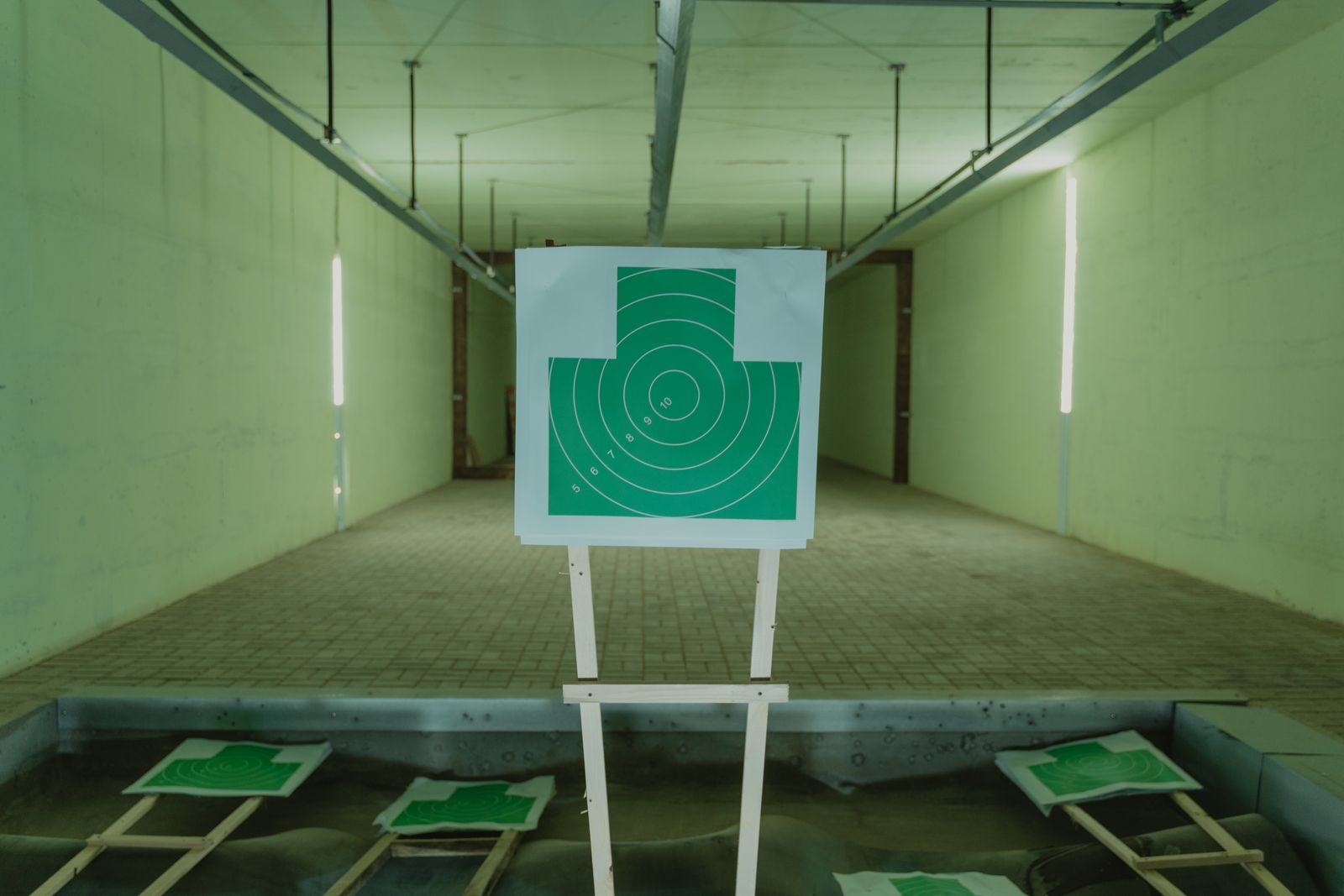
Gun Range Insurance After an Unintentional Discharge Incident
The discharge is over in a second. The claim is not.
An unintentional discharge on your firing line lasts a fraction of a second. A round goes off before the line is hot, or a customer sweeps the muzzle and touches the trigger, or a striker drops on a chambered round during a malfunction clearance. The bang is over before anyone finishes flinching. What follows can run for two years.
Three different people can be hurt by that one round, and each one lands on a different part of your insurance program. A customer in the next stall is a third party. A customer standing on the line, actively shooting, may be treated as a participant, and that word does a lot of quiet work in a policy. A range safety officer or counter employee is neither, because an injured employee is a workers' compensation matter, not a liability one. One discharge, three possible claimants, three different coverages that either respond or do not.
The reason this article exists is that most range owners find out which of those coverages they really have on the day of the incident, not the day they bought the policy. If a discharge has already happened at your range, the steps below are in order of urgency. If one has not, this is the coverage review to run before it does.
Why one incident changes your insurance overnight
Before the discharge, your general liability policy was a line item. After it, the exact wording of that policy is the difference between the carrier paying the claim and you paying it. The place that difference usually lives is the participant exclusion.
Many generalist agents write a gun range on a standard commercial general liability form and attach an athletic or sports participant exclusion without flagging what it does. The ISO endorsement CG 21 01, "Exclusion: Athletic Or Sports Participants," removes bodily injury to any person while that person is practicing for or taking part in a sports or athletic contest or exhibition the insured sponsors. On organized shooting, and on any range that leans into competition, that language can be read to reach the customer who is actively on the line. When it does, the person most likely to be hurt by an unintentional discharge, the shooter, is the exact person the policy has carved out.
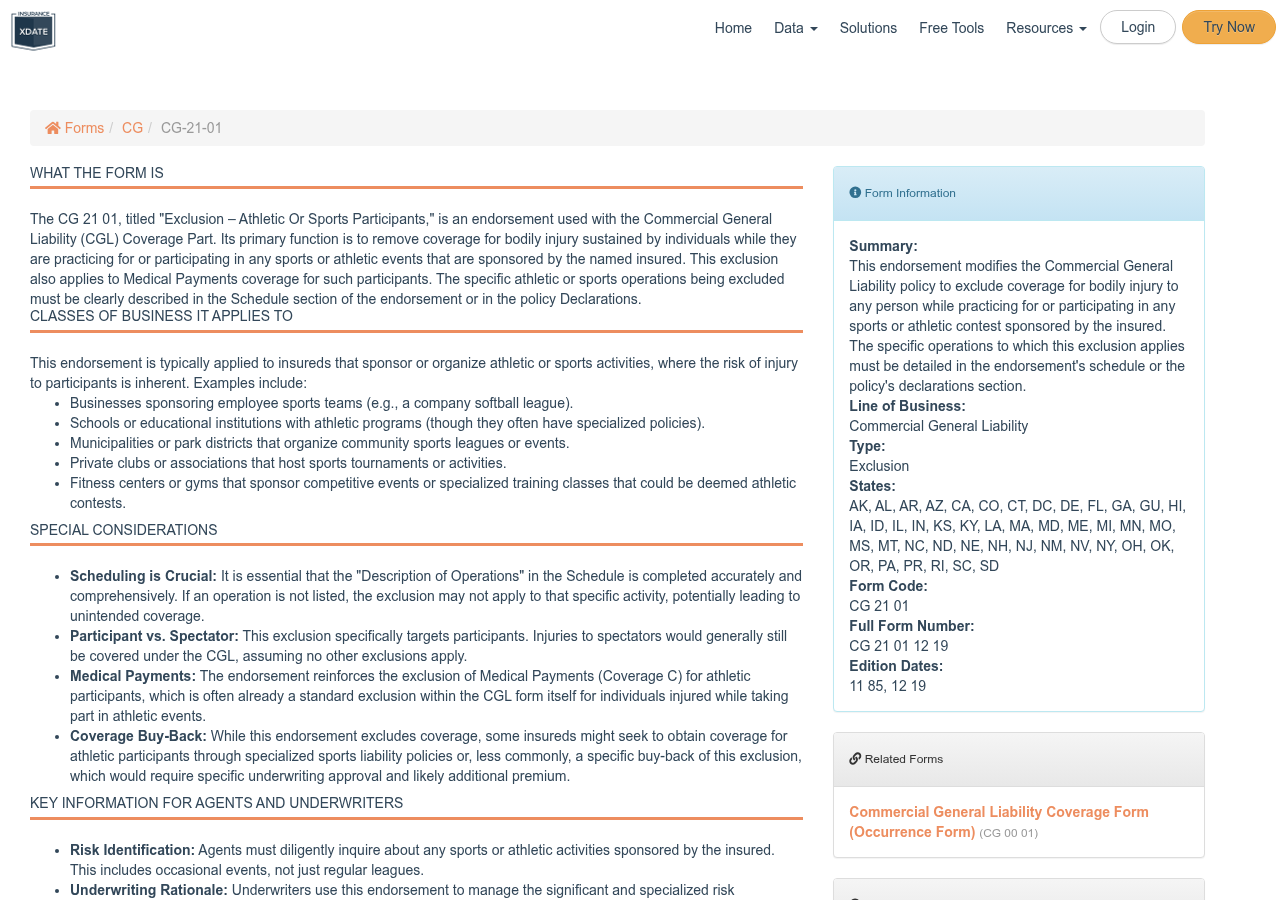
Source 1 of 2 · Standard ISO exclusion form
ISO form CG 21 01, "Exclusion: Athletic Or Sports Participants." This is the endorsement that can strip injury to the active shooter out of a range's general liability. A discharge claim by a participant is the moment the exclusion is read, and it is far too late to change the policy then.
The coverage that fills the gap is participant liability, sometimes written alongside participant accident coverage. It is built for exactly the scenario the participant exclusion removes: a customer hurt while taking part in the activity you host. The broader mechanics of this gap, and why a large headline liability limit can still pay the injured participant nothing, are in our breakdown of participant injury versus general liability.
On a range policy I read the exclusions before the coverages, and the participant exclusion is the first line I check. It is the line a generalist agent skips. It is also the line that decides whether the shooter who got hurt is insured or whether the owner has been paying premiums for a policy that steps aside on its most likely claim.
Bobby Sharp, Action Sports Practice Lead, Specialty Insurance
What to do in the first 72 hours
The first three days after a discharge decide how the claim resolves more than almost anything you do later. Work in this order.
- Get medical attention and secure the range. Care for the injured person first, then stop the line, clear and bench firearms, and preserve the lane exactly as it is until you have documented it.
- Preserve the evidence before it disappears. Pull and back up the range camera footage, save the lane log and sign-in record, and secure the signed waiver and range-rules acknowledgment for everyone involved. Camera systems overwrite on a loop, so this is a same-day task, not a next-week one.
- Write a same-day incident report. Time, lane, staff on duty, what was observed, and the names and contact details of witnesses. Dated and specific beats detailed and reconstructed weeks later.
- Notify your carrier or broker immediately. Report the incident even if no one has threatened to sue. Late notice is one of the few things that can jeopardize an otherwise valid claim, and early notice puts a claims advocate on your side while the facts are fresh.
- Do not admit liability or discuss fault. Be human with the injured person, but route every coverage and fault question to your carrier. What you say in the first hour can follow the file for two years.
The venues that hand a claims team a clean, dated file on day one get faster, cleaner outcomes. The ones reconstructing what happened after a demand letter arrives are fighting uphill. Our full walkthrough on how to handle an injury claim at your venue covers the documentation discipline in detail.
The single best predictor of how a range discharge claim resolves is whether the owner can hand me dated footage, the lane log, and the signed release on day one. The range that has that file gets a defensible claim. The range rebuilding it from memory three weeks later is negotiating from behind before the first call.
Bobby Sharp, Action Sports Practice Lead, Specialty Insurance
That file is only half of it. The other half is a broker who knows the range class and can put a claims advocate to work the moment you call, rather than a generalist meeting your exposure for the first time under pressure. Operators tend to feel that difference most on the day a claim lands, which is the day the wording they never read starts to matter.
"Bobby Sharp and the team at Specialty Insurance had a fast turnaround, professional service, and answered every question I had as a brand-new operator. They wrote the policy I'd want defending me if a player ever filed a claim."
Grimnir Tactical LLC
Verified customer review
How carriers re-underwrite a range after a discharge claim
Once a discharge claim is on your loss run, it becomes part of every renewal conversation for the next several years. Underwriters do not just look at the dollar amount. They look at whether the range had documented safety protocols, what the range safety officer to shooter ratio was, whether the incident report and footage existed, and whether the range rules were posted and acknowledged. A single incident with a clean file and a corrected procedure reads very differently from a single incident with no documentation behind it.
That underwriting judgment is also where the premium lands. Insuring a gun range for the participant and firearms exposure a discharge claim implicates typically runs from $5,000 to $25,000 a year, with the middle of that band, around $15,000, closest to a single-location indoor range at standard limits. That reflects what Specialty Insurance sees across its own book, not a published rate card, and where a range sits inside it is mostly a question of loss history and documentation. A fresh discharge claim on the loss run is what pushes a renewal toward the top of the range, or off the program entirely if the file is thin and the procedure never changed. The report you write on day one is part of the premium you pay next year.
The coverage to put in place now
An unintentional discharge touches more than one policy, which is why a range needs a program rather than a single form. Here is how each part of a discharge exposure maps to the coverage that answers it, and the gap left when a range runs on bare general liability alone.
| Exposure from a discharge | Coverage that responds | The gap if you only carry bare GL |
|---|---|---|
| Customer hurt on the line by another shooter | Participant liability / participant accident | The participant exclusion (CG 21 01) can leave the shooter uncovered |
| Bystander or spectator hurt | General liability (third-party bodily injury) | Covered, provided firearms use is not separately excluded |
| Range safety officer or employee hurt | Workers' compensation | General liability excludes employee injury outright |
| Building, ventilation, bullet trap damage | Commercial property (a BOP or package) | General liability carries no property coverage at all |
| Lead dust exposure and cleanup | Environmental / pollution | The total pollution exclusion commonly treats lead as a pollutant |
| Hosting a 3-gun match or competition | Special event / spectator liability | Open-range policies often do not contemplate an event |
| Transporting firearms, cash, or a mobile unit | Commercial auto + inland marine | Neither the building policy nor GL follows property in transit |
Two rows in that table are where owners are most often surprised. The first is the business owners policy question. A general liability policy on its own carries no property coverage, so it will not pay to repair a shot-up ventilation baffle or bullet trap. A business owners policy bundles property and general liability together, which is why owners ask whether a BOP replaces the need for separate coverage. For a firing range the answer is usually no on two counts: a range is a higher-hazard class that many BOP markets will not write, and even where one is available, a standard BOP does not add the participant liability that the discharge claim turns on. A range generally needs a package or monoline program that layers property, participant liability, and the rest onto the general liability base.
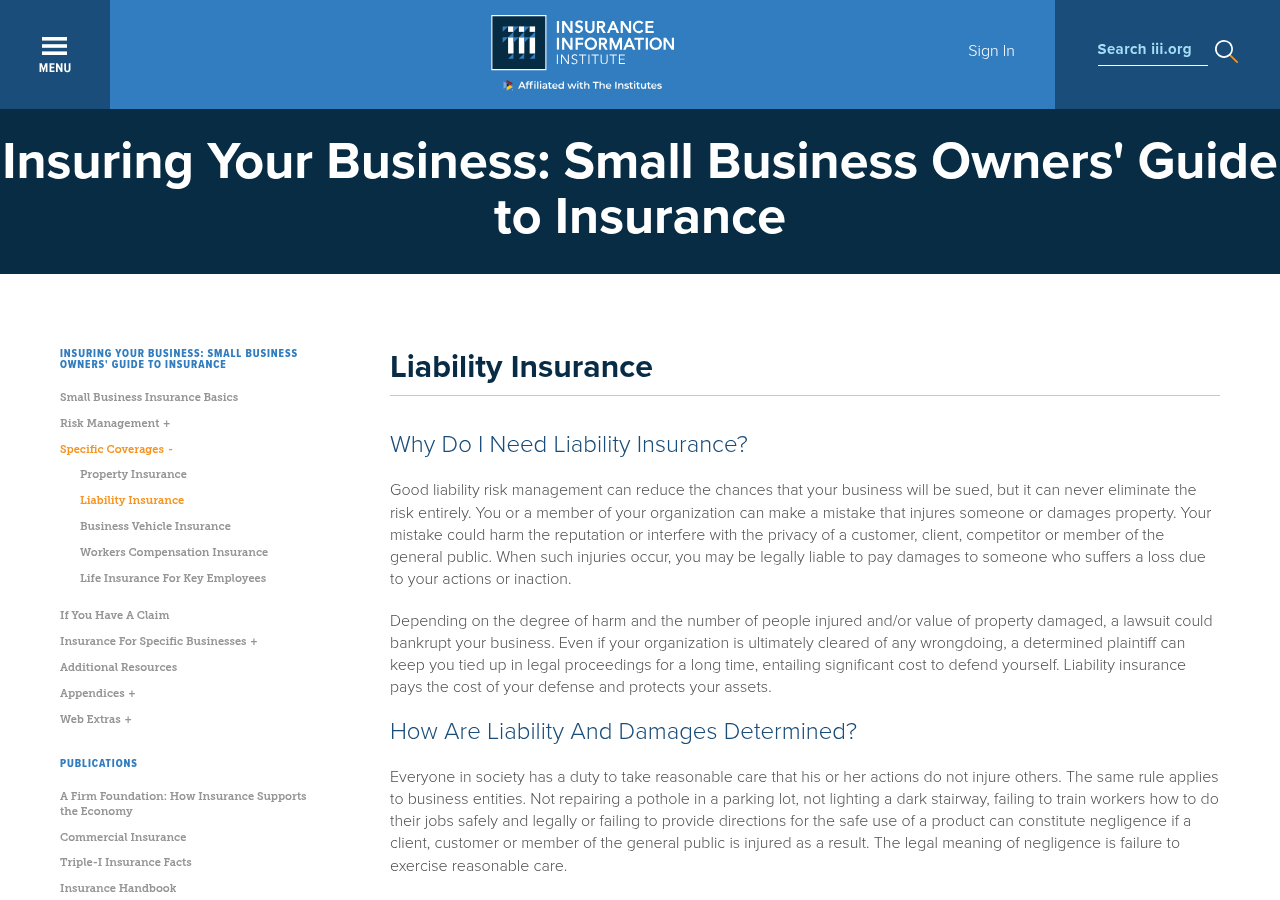
Source 2 of 2 · Consumer insurance reference
The Insurance Information Institute's small-business liability guide sets out what general liability does and does not include. It is the plain-language basis for the point that a liability policy is not a property policy, and that bundling the two, as a business owners policy does, is a separate decision from adding participant coverage.
The second surprise is lead. An indoor range is a lead-exposure site, enough of one that NIOSH publishes dedicated guidance on preventing occupational lead and noise exposure at indoor firing ranges, and OSHA regulates airborne lead under its lead standard, 29 CFR 1910.1025, at a permissible exposure limit of 50 micrograms per cubic meter of air over an eight-hour shift and an action level of 30 micrograms. When a lead exposure or cleanup claim arrives, the standard total pollution exclusion commonly treats lead as a pollutant and steps aside, so lead usually sits in its own environmental or pollution coverage rather than under general liability. Outcomes vary by state and policy wording, but lead is the exposure most likely to be missing from a range program entirely, and because it moves slower than a discharge it is easy to leave unaddressed until a claim surfaces it.
The remaining rows follow the same logic. An employee injury is workers' compensation, because general liability excludes injury to your own staff, which is the whole reason a range safety officer hurt by a negligent discharge is a different claim than a customer hurt by the same round. A 3-gun match brings competitors, spectators, and higher round counts for a defined event, so it usually needs special event or spectator liability, not the open-range policy. And moving firearms, ammunition, or cash, or running a mobile or armored unit, adds an auto and a transit exposure that belong on commercial auto and inland marine, not the building's property policy. Every one of these gaps traces back to the same habits we collect in the insurance mistakes that cost action-sports operators a claim.
Talk to a specialty broker before your renewal
A gun range is not a class a generalist market writes well. The participant exclusion, the firearms exposure, the lead standard, and the event and transit pieces are each a place a standard policy quietly leaves a hole, and a discharge claim is what finds all of them at once. A specialty broker reads the range as its own risk, closes the participant gap on purpose, and builds the property, workers' compensation, environmental, and excess layers around it so no single incident falls between two policies. Our gun range insurance page lays out the full program, and excess and umbrella coverage is the layer that sits on top of it for the severe claim.
Frequently Asked Questions
Does my gun range's general liability cover a customer hurt by another shooter's unintentional discharge?
Not always. A generalist general liability policy often carries a participant or athletic-participant exclusion (the ISO CG 21 01 form is the standard example) that removes injury to the person actively shooting. If a customer on the line is hurt by another shooter's unintentional discharge, that exclusion can leave the injured shooter with no coverage. The fix is a policy written with participant liability or participant accident coverage, not bare general liability.
Do I need a business owners policy (BOP) if I already have general liability for my gun range?
They cover different things. A business owners policy bundles property and general liability, and usually business interruption, into one package for small, lower-hazard businesses. General liability alone carries no property coverage. Many gun ranges do not fit a standard BOP because a firing range is a higher-hazard class, so a range typically needs a package or monoline program that adds property, participant liability, and the other range-specific coverages a BOP would not include.
Is a range safety officer injured by a negligent discharge a workers' comp claim or a liability claim?
A range safety officer or any employee hurt on the job is a workers' compensation claim. General liability excludes injury to your own employees, so the liability policy will not respond. A customer or bystander hurt by the same discharge is a third-party liability matter. One incident can produce both a workers' comp claim and a liability claim at the same time, which is why a range needs both coverages in force.
Does gun range insurance cover lead dust exposure and cleanup?
Usually not under general liability. Indoor ranges generate airborne lead, which OSHA regulates under its lead standard, 29 CFR 1910.1025, with a permissible exposure limit of 50 micrograms per cubic meter of air over an eight-hour shift and an action level of 30 micrograms. The standard total pollution exclusion on a general liability policy treats lead as a pollutant, so lead-related bodily injury and cleanup claims are commonly excluded. Covering that exposure takes a separate environmental or pollution policy.
Do I need special event coverage to host a 3-gun competition at my range?
Usually yes. A 3-gun match brings organized competitors, spectators, staff, and higher round counts onto the range for a defined event, which is a different exposure than day-to-day lane rental. Carriers often want special event or spectator liability in place for the match, confirmation that competitor waivers are signed, and notice of the event before it happens. Hosting a competition on a policy written only for open-range use can leave the event uncovered.
Do I need special insurance to transport firearms or cash, or to run a mobile or armored range unit?
Yes. Firearms, ammunition, and cash in transit are not covered by your range's general liability. Vehicles you own and drive for the business need commercial auto, and the property inside them, including transported firearms and inventory, is covered by inland marine rather than the building's property policy. A mobile or armored unit adds an auto exposure and a transit exposure at once, so both commercial auto and inland marine belong on the program.
Sources
- ISO Commercial General Liability form CG 21 01, "Exclusion: Athletic Or Sports Participants." insurancexdate.com
- U.S. Occupational Safety and Health Administration, Lead standard, 29 CFR 1910.1025 (permissible exposure limit 50 ug/m3, action level 30 ug/m3). osha.gov
- NIOSH, Preventing Occupational Exposures to Lead and Noise at Indoor Firing Ranges, DHHS (NIOSH) Publication No. 2009-136. cdc.gov/niosh
- Insurance Information Institute, Small Business Owners Guide to Insurance: Liability Insurance. iii.org
- Specialty Insurance. Participant Injury vs General Liability
- Specialty Insurance. How to Handle an Injury Claim at Your Action-Sports Venue
- Specialty Insurance. The Insurance Mistakes That Cost Action-Sports Operators a Claim