

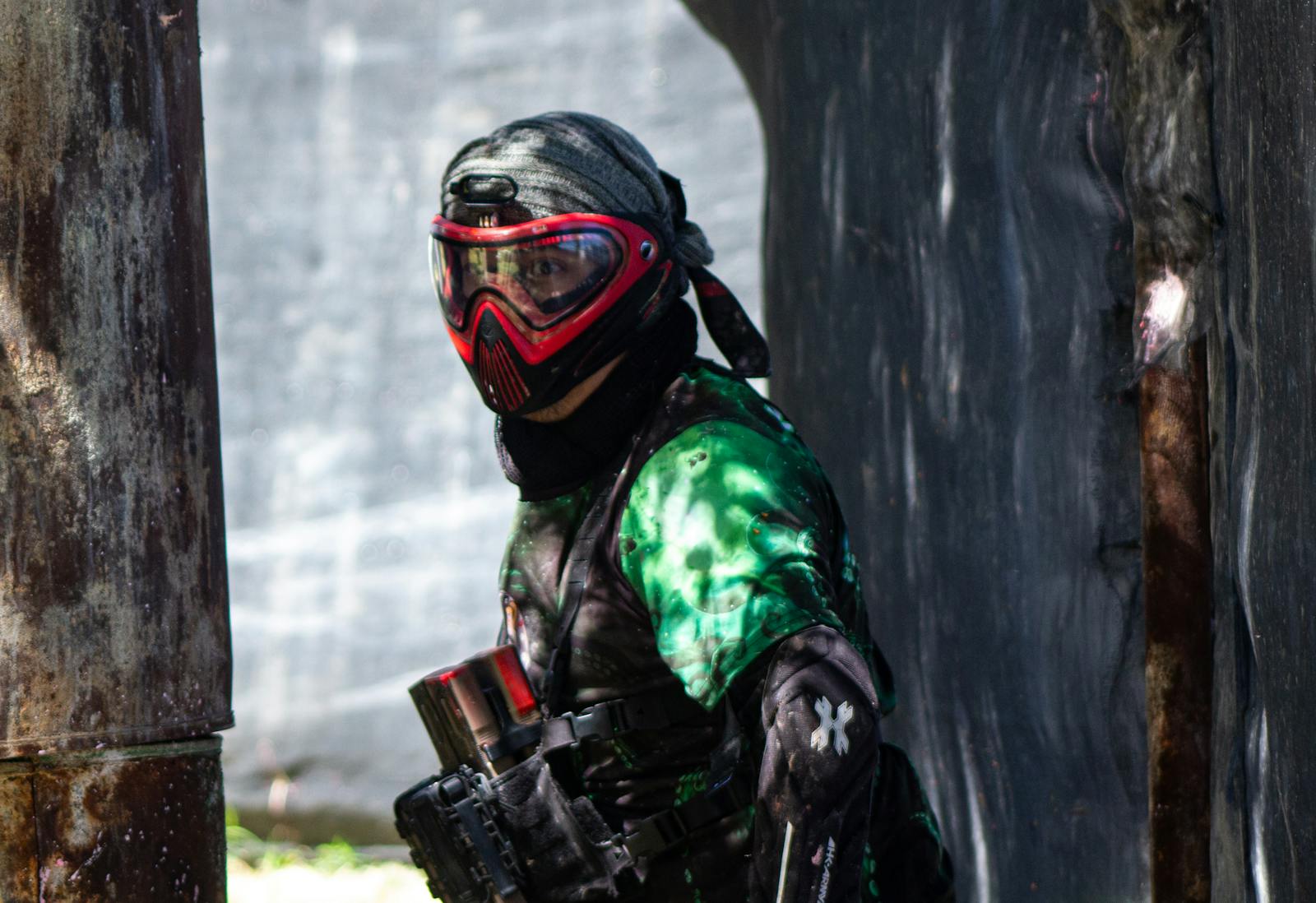
Five patterns drive almost every paintball lawsuit we defend
Five patterns drive almost every paintball lawsuit we defend. None of them are "a player got shot." Every one of them is a moment when the safety system broke down: a lifted mask, an unswept walkway, a spectator who wandered too close, a rental marker that chronographed hot, a mobile setup booked on a sidewalk.
I write paintball insurance through Specialty Insurance, and I see the same loss runs cross my desk every quarter. The fields that get sued aren't the ones with more players. They're the ones missing one or two documents at the moment a claim is filed. This guide is the version of "what to watch for" I'd hand a paintball field operator who just got served, or who wants to never be served.
Pattern 1: Lifted-mask eye injuries
This is the single most expensive claim pattern in the book, and the one with the longest tail.
The clinical record on paintball eye injuries is unambiguous. In the foundational pediatric paper, David Listman documented that emergency-department-treated paintball eye injuries more than doubled from 545 in 1998 to over 1,200 in 2000, with more than 40% of those injuries occurring in pediatric players, and 43% of patients had best-corrected vision at follow-up of 20/200 or worse (Listman, Pediatrics, January 2004). The injury catalog the paper cites reads like a paintball field's nightmare: hyphemas, retinal detachments, cataracts, corneal abrasions, vitreous hemorrhages, commotio retina. The mechanism in nearly every documented case is the same: eye protection was removed, displaced, or never worn.
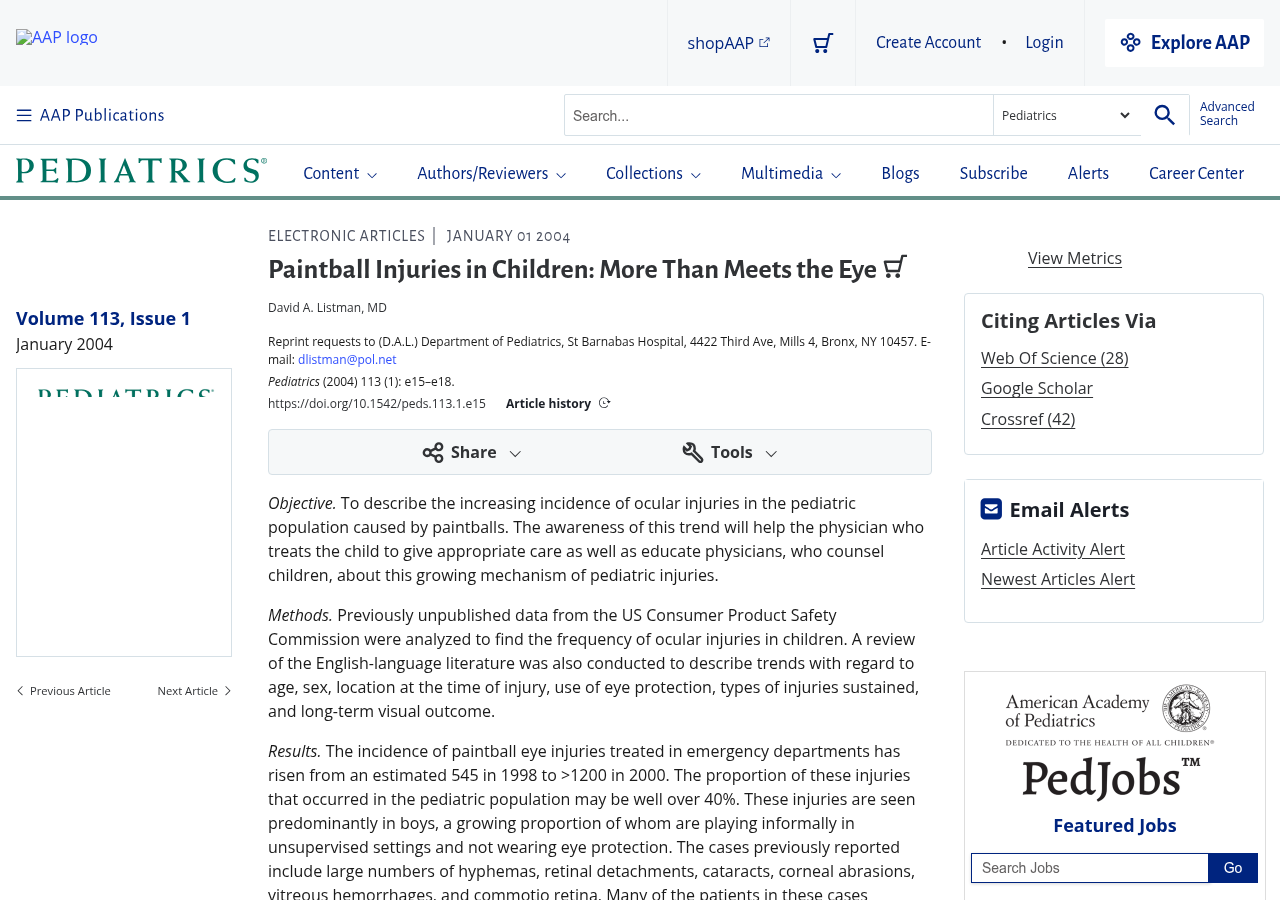
Source 1 of 4 · Peer-reviewed clinical record
American Academy of Pediatrics journal article documenting 545 paintball eye injuries in 1998 rising to over 1,200 in 2000, with 43% of patients having follow-up vision of 20/200 or worse.
The financial tail on these claims is just as documented. Maine personal-injury firm Hardy Wolf & Downing publicly reports a recovery of $850,000 in cash with a structured settlement paying out over $4 million over the victim's lifetime for a 13-year-old who received severe burns from paintball equipment during a game (Hardy Wolf & Downing, case writeup). For another paintball case with a documented financial outcome, see the $42,000 out-of-pocket settlement we cover in our own field-coverage gaps writeup.

Source 2 of 4 · Named-settlement record
Hardy Wolf & Downing case writeup documenting an $850,000 cash recovery with a structured settlement paying over $4 million over the victim's lifetime, for a 13-year-old burned by paintball equipment during a game.
Source: hardywolf.com
The defense is documentation, not luck. The fields that close these claims at summary judgment all have the same three artifacts: a signed waiver matching state requirements, a chronograph log dated to the incident showing the marker was at or below 285 fps, and an incident report logged within 24 hours. The fields that lose them are missing one of the three.
The lifted-mask claim is the one that ends with a structured settlement. Not because the mask was defective. Because nobody can produce the chronograph log.
Bobby Sharp, Paintball Practice Lead, Specialty Insurance
Pattern 2: Slip-and-fall on the course
Most paintball lawsuits do not come from being shot. They come from a player tripping over a bunker, slipping on indoor turf, falling off a tower, or twisting an ankle in a hole that was never filled. The case files we defend most often are slip-and-fall, not goggle-strike.
This is consistent with the broader recreation-venue record. CPSC's National Electronic Injury Surveillance System (NEISS) tracks consumer-product-related injuries treated in US emergency departments, and the published data for paintball-and-equivalent recreation runs heavily on sprains, fractures, lacerations, and contusions, not penetrating eye trauma (CPSC NEISS On-Line Query System). The fastest way to stop a slip-and-fall claim from becoming a lawsuit is to log the incident within 24 hours and document the course walkthrough with photographs from the same play day.
Source 3 of 4 · Federal injury surveillance dataset
CPSC National Electronic Injury Surveillance System (NEISS) on-line query interface, the federal dataset of consumer-product-related ER-treated injuries used by carriers and academic researchers to model recreation-venue claim frequency.
Source: cpsc.gov/cgibin/neissquery
Pattern 3: Parking-lot and spectator claims
The third pattern lives off the field entirely. A spectator's car gets hit by a stray marker. A child runs across a parking lot without a mask. A friend who came to watch sits on a bench inside the 300-foot perimeter and gets struck by a deflected paintball.
The carrier-published spec on this is consistent across the industry: at least 20 feet of netting wherever spectators are within 300 feet of an active field. The fields that have a spectator claim are nearly always the ones that drop netting on the side closest to the parking lot because nobody plays that direction. That is the side the deflected ball travels.
Pattern 4: Equipment-failure claims
This is where the lifted-mask claim turns into something stranger. A rental mask cracks under impact. A chronograph reads 280 fps post-tournament when the marker was firing at 320 mid-game. A CO₂ tank overpressurizes during a refill.
Equipment-failure claims are governed by a stack of ASTM standards your underwriter knows by number. Mask compliance is set by ASTM F1776. Paintball performance is governed by ASTM F1979. Netting standards are F2278. Low-impact youth-paintball operation is F3100. The combination of these standards is why a paintball-specific carrier will write product liability into your policy package and a generalist will not.
The defense on equipment-failure claims is a logged replacement cycle. The rental fleet gets photographed at start of season, the chronograph gets calibrated and logged, the CO₂ tanks have their hydrostatic test dates on file. Every field we write that has an equipment-failure claim and wins has those three logs handy.
Pattern 5: Off-premise and mobile claims
The last pattern is the one that kills mobile and party-rental fields most often. A trailer is booked for a birthday party. The host's backyard has a chain-link fence on three sides. Setup happens in a public-accessible space. A paintball deflects off a tree and hits a neighbor watering her lawn.
Most General Liability policies for paintball fields are premises-only by default, meaning coverage stops at the gate. Mobile, off-site, and event coverage are separate extensions that have to be specifically endorsed. A mobile operator who books a corporate event under a premises-only policy is unprotected at the moment a participant gets hit at the venue. This was the heart of the Reddit mobile-paintball thread operators have flagged for years: the insurance their generalist agent quoted on a "paintball field" doesn't cover the operator's actual business.
A real example: in McCune v. Myrtle Beach Indoor Shooting Range, 364 S.C. 242 (2005), a player rented a protective mask, signed the field's waiver, and was struck in the eye when she lifted the mask to wipe paint off the lens. The South Carolina Court of Appeals upheld the waiver and granted summary judgment for the field. That outcome depended entirely on the waiver being specific, voluntary, and properly executed. A mobile operator using a generic SMB waiver template, off-premise, with no participant-injury endorsement, does not get the same outcome.
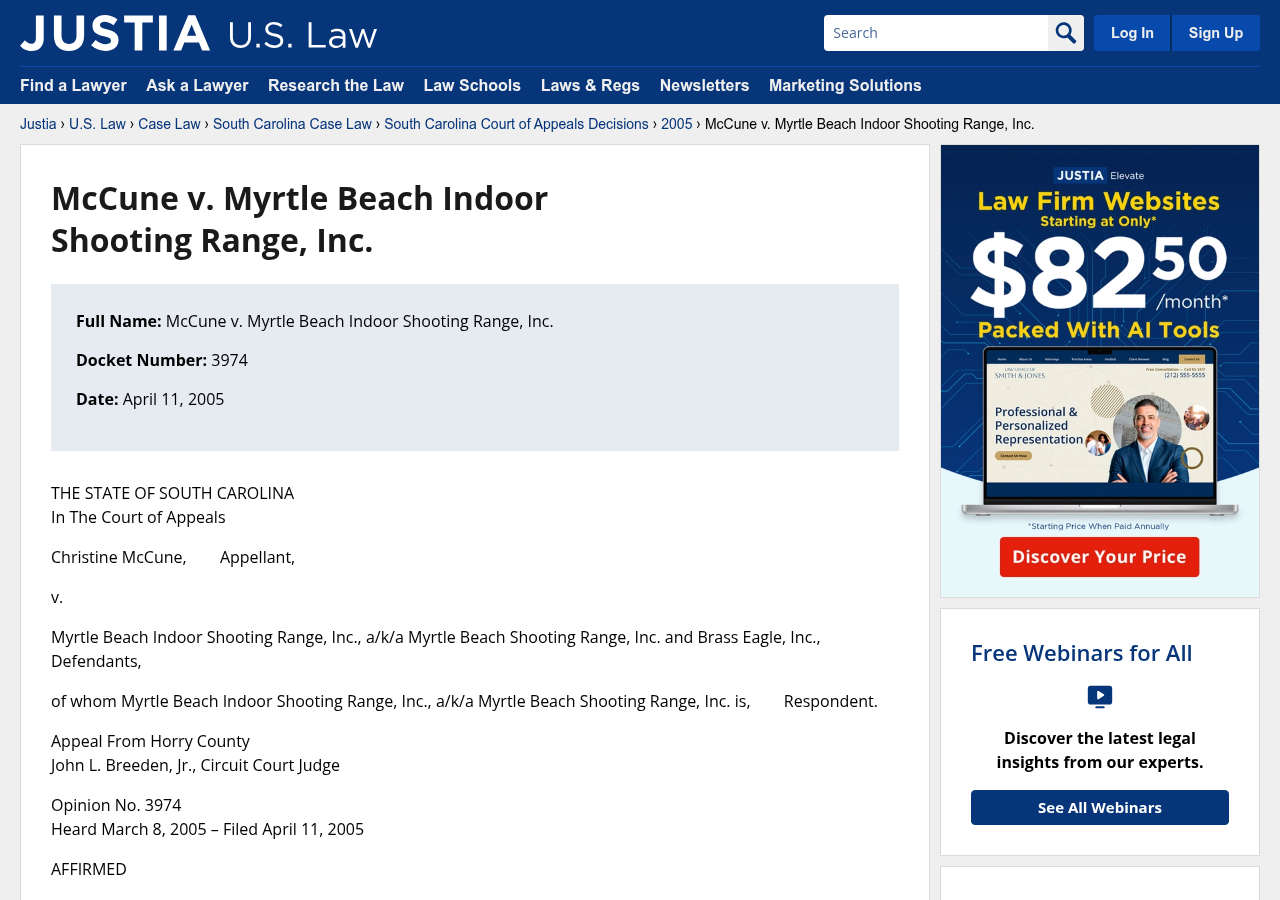
Source 4 of 4 · Named state appellate opinion
McCune v. Myrtle Beach Indoor Shooting Range, 364 S.C. 242 (2005), S.C. Court of Appeals decision on Justia. The court upheld the field's waiver and granted summary judgment for the defendant after a paintball player lifted her mask mid-game.
Source: law.justia.com/cases/south-carolina/court-of-appeals/2005/3974.html
Five patterns drive 80% of paintball lawsuits we defend. The fields that close those claims at summary judgment all share the same documentation habit. The fields that lose them are missing one of three pieces of paper.
Bobby Sharp, Paintball Practice Lead, Specialty Insurance
What changes after a paintball claim is filed
Every paintball operator who files a claim with us asks the same two follow-up questions: what happens to my premium, and will my carrier drop me. Both are answered by the loss-run report your next renewal underwriter will read.
The biggest renewal lever after a claim is what the operator did between the incident and the renewal date: the documentation closed, the procedure updated, the staff retrained. A paintball-specific carrier reads those updates as risk-improved and prices accordingly. A generalist carrier almost always just non-renews.
"Brandon Johnson worked with my insurance agent (David and Justin) and gave the correct and specific coverages you need for the airsoft and paintball industries. There is no other source out there that does what they do, and Bobby Sharp wrote the policy I should have had from day one."
Gel Tag San Diego LLC
Verified customer review
The 5 documents that close a paintball claim faster
When a claim comes in, the defense file is built in 48 hours or it isn't built at all. Every paintball field we write keeps these five documents within reach. If yours don't, build them this week.
- Signed waiver dated to the date of incident, with the participant's contact information and an emergency contact, drafted to match the assumption-of-risk requirements of your state.
- Chronograph log showing every marker tested at start of day, mid-day, and after any reported change in performance, with each entry timestamped and signed by the on-duty referee.
- Rental-equipment log showing the specific markers, masks, and tanks assigned to each player on the day of the incident, with the issue and return time and the staff member who signed them out.
- Incident report logged within 24 hours, with witness names, course location, weather conditions, and a description of the moment of injury. Photographs of the location, the player's gear after the incident, and any equipment involved.
- Photographic field-walk log dated to the morning of play, showing the course in its play-ready state.
A paintball-specific carrier reading those five documents at the moment a claim is filed almost always finds a defensible position. A generalist carrier reading nothing builds nothing.
Five claim patterns at a glance
| Pattern | Most common cause | Typical severity | Best defense document |
|---|---|---|---|
| Lifted-mask eye injury | Mask removed mid-game | $100K to $4M+ | Chronograph log + signed waiver |
| Slip-and-fall | Course hazard or wet indoor turf | $5K to $250K | Photographic field-walk + incident report |
| Parking-lot / spectator | Insufficient perimeter netting | $25K to $500K | 20-ft netting compliance + signage log |
| Equipment failure | Worn rental mask, hot marker, CO₂ tank | $50K to $2M | Replacement-cycle log + chrono calibration |
| Off-premise / mobile | Premises-only policy at booked event | $25K to $1M | Mobile / event endorsement on COI |
What the right paintball policy really does at a claim
The right paintball policy does three things at the moment a claim is filed.
It pays the right line first. A generalist GL policy treats every loss the same. A paintball-specific carrier maps the loss to the right coverage: participant injury for the lifted-mask case, GL for the spectator strike, property for the equipment damage, product liability for the marker-failure claim. That ordering matters because it preserves your aggregate.
It defends the file. Paintball-specific carriers maintain in-house claims teams who have defended these patterns dozens of times. They know to ask for the chronograph log. They know which states enforce waivers and which do not. They know whether an off-premise claim is covered by an endorsement or excluded by silence.
It survives the renewal. Loss-run reports follow you for five years. The carrier that pays a $475K claim cleanly and re-writes you the following year does more for your book than any policy that quoted $200 less in year one. Read more in our how to handle an action-sports claim guide and our breakdown of where most paintball GL policies have gaps.
Frequently Asked Questions
What is the most common paintball lawsuit?
Slip-and-fall on the course is the highest-frequency claim. Lifted-mask eye injuries are the highest-severity. Together they account for the majority of paintball field claims our book sees in a typical year.
How quickly do I need to report a paintball field incident to my insurance carrier?
Within 24 hours of the incident, even if no claim has been filed and no medical attention was sought. Late notice is the single most common reason a carrier challenges coverage on an otherwise valid claim.
Will one paintball claim cause my premium to spike?
A reported-but-unpaid claim usually moves the premium 0% to 5%. A paid claim under $25,000 usually moves it 10% to 25%. A six-figure paid claim almost always triggers a renewal conversation about deductible increases, loss-control updates, or carrier change.
Can my paintball field's carrier drop me after one claim?
Possibly, especially if the carrier is a generalist who underwrote the field as a small business and got blindsided by paintball-specific severity. Paintball-specific carriers usually renew after a single claim if loss-control improvements are documented before the renewal date.
Does my waiver protect me from a lawsuit?
A waiver does not stop a lawsuit from being filed. It usually ends a lawsuit at summary judgment when the waiver is specific, voluntary, properly signed, and matches the assumption-of-risk requirements of your state. Read more in our companion piece on whether paintball waivers hold up in court.
Sources
- Listman, David A. "Paintball Injuries in Children: More Than Meets the Eye." Pediatrics, Vol. 113, January 2004. publications.aap.org
- Hardy Wolf & Downing. Case writeup of $4.5M paintball burn settlement. hardywolf.com
- McCune v. Myrtle Beach Indoor Shooting Range, Inc., 364 S.C. 242 (2005). law.justia.com
- CPSC National Electronic Injury Surveillance System (NEISS) On-Line Query System. cpsc.gov/cgibin/neissquery
- Insurance Information Institute. Business Insurance Basics. iii.org
- Specialty Insurance. "Why Your Paintball Field's GL Policy Probably Has Gaps." specialtyinsurancesc.com/paintball-gl-gaps/
- Specialty Insurance. "How to Handle an Action-Sports Claim." specialtyinsurancesc.com/how-to-handle-a-claim/