

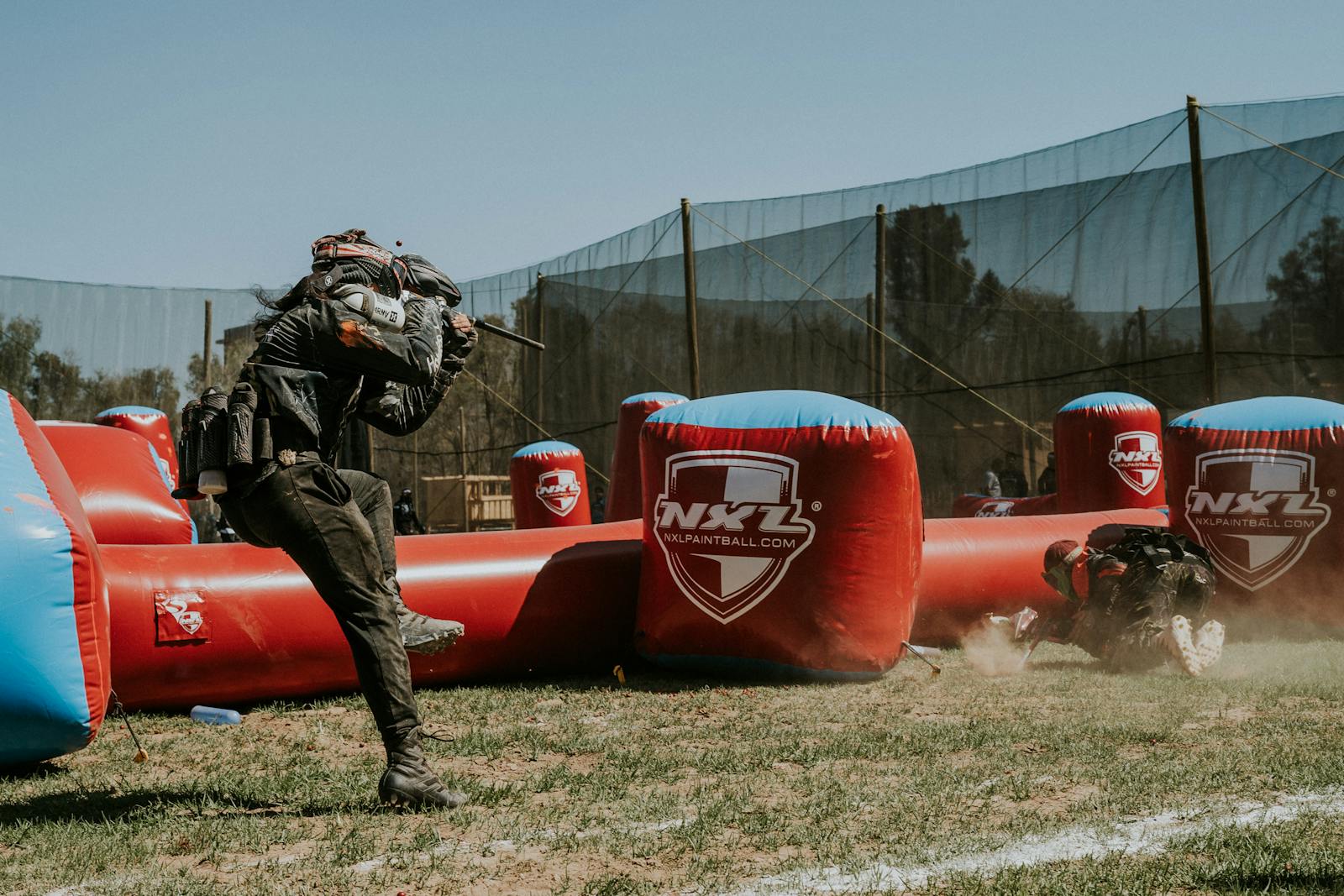
Short answer: sometimes yes, sometimes no, and 2025 narrowed it
The honest answer to do paintball waivers hold up in court? is sometimes yes, sometimes no. The split depends on three things: the wording of the waiver, the law of the state where the injury happened, and whether the field's conduct crossed from ordinary negligence into gross negligence or violation of a statutory duty.
The 2025 California Supreme Court decision in Whitehead v. City of Oakland just narrowed the answer further for any paintball field operating on or near public-agency property. I'll walk through that ruling, the four older paintball-and-recreation cases that frame the rest of the picture, and the six elements every paintball waiver needs to have a realistic chance of summary judgment when a player sues.
What "holds up in court" really means
Operators ask this question expecting a yes or no. The honest answer is structural. A waiver almost never stops a lawsuit from being filed. It can stop a lawsuit from being paid, by giving the field's defense counsel a clean basis for summary judgment.
That's the moment most paintball field litigation ends: the field files a motion for summary judgment citing the signed waiver, the plaintiff has to produce something more than an injury to keep the case alive, and the court either grants the motion (case ends, field wins) or denies it (case proceeds to trial, field's insurance starts paying defense in earnest).
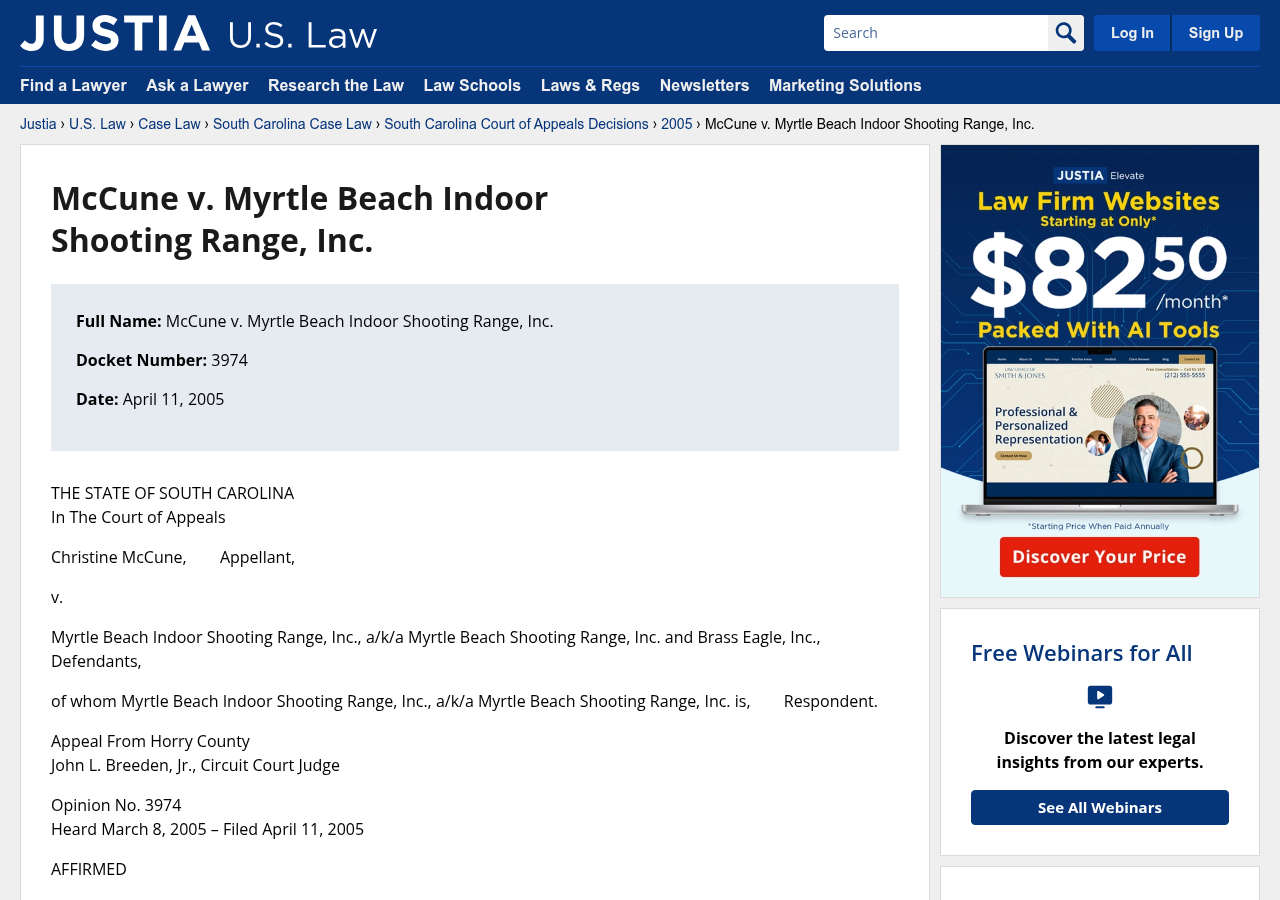
The case the entire paintball industry knows by name is McCune v. Myrtle Beach Indoor Shooting Range, 364 S.C. 242 (2005). A player rented a mask, signed the field's waiver, and was struck in the eye when she lifted the mask to wipe paint off the lens. The South Carolina Court of Appeals upheld the waiver and granted summary judgment for the field. Result: case over.
Source 1 of 4 · Anchoring paintball waiver precedent
McCune v. Myrtle Beach Indoor Shooting Range, Inc., 364 S.C. 242 (S.C. Ct. App. 2005), on Justia. Waiver upheld; summary judgment granted for the field after a mask-lift incident.
Source: law.justia.com/cases/south-carolina/court-of-appeals/2005/3974.html
McCune still anchors the analysis nationally. But it is a single state-appellate decision from 2005. The 20 years since have produced a longer list of cases narrowing waiver enforceability, including a Supreme Court of California ruling published in 2025.
The 2025 California ruling that just changed the analysis
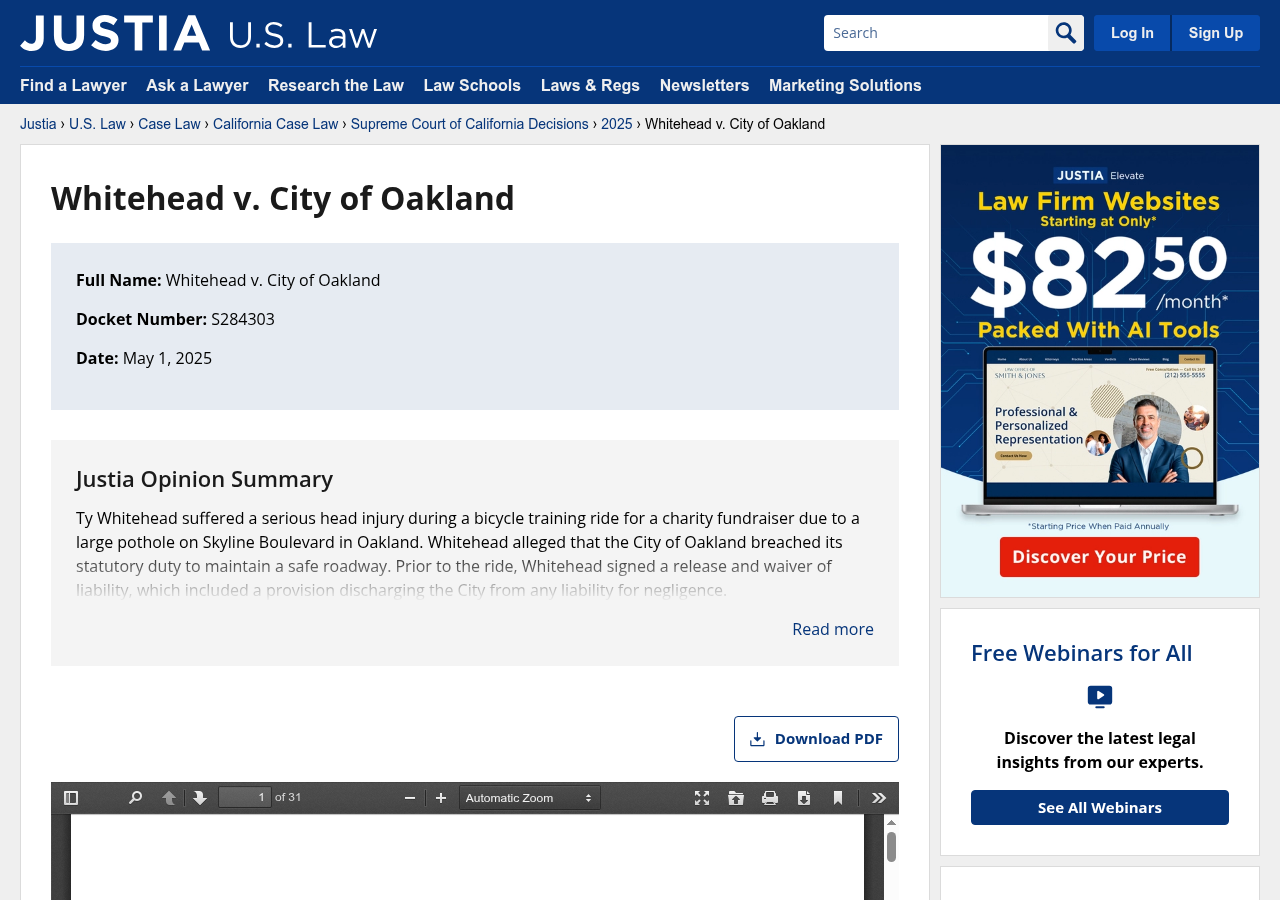
In Whitehead v. City of Oakland (S284303, 2025), the California Supreme Court held that a release-of-liability waiver between a recreational-event participant and an event organizer cannot shield a public agency from liability for breach of a statutory duty under Government Code § 835, even where the participant signed the waiver before the activity began. Plaintiff Ty Whitehead suffered a serious head injury during a charity bicycle ride after his front wheel struck a pothole on a public road; the City of Oakland argued the pre-ride waiver discharged it from liability, and the court rejected that argument as void under California Civil Code § 1668.
Source 2 of 4 · 2025 California Supreme Court ruling
Whitehead v. City of Oakland (S284303, 2025) on Justia. Supreme Court of California holds that pre-event liability waivers cannot release public agencies from statutory dangerous-condition duty under Gov. Code § 835.
Source: law.justia.com/cases/california/supreme-court/2025/s284303.html
The California Special Districts Association's commentary on the decision is the clearest summary for field operators: a public-agency defendant in California now cannot rely on a pre-event waiver to defeat a dangerous condition claim, even where the underlying activity is voluntary and the participant assumed the risks of the sport itself (CSDA, July 28, 2025).
Source 3 of 4 · Public-agency-side legal commentary
CSDA July 28, 2025 commentary by Morgan Leskody titled "Public Agencies Cannot Use Waivers to Shield from 'Dangerous Condition' Liability." Practical implications for any field operating on or near public land.
What does this mean for paintball operators? Three things.
- If you operate a paintball field on land leased from a public agency (a city park, a county parks-and-rec lease, a school district facility), the agency's exposure to a participant-injury claim just got bigger. They'll pass that exposure to you in the form of a more demanding COI and additional-insured requirement at lease renewal.
- If you partner with a public agency to run a tournament or charity event, your event waiver does not extend the agency's protection. Both you and the agency need underlying insurance, and the agency will require it.
- Private commercial paintball fields outside the public-agency context still rely on the pre-2025 case law. Whitehead does not erase McCune. It does flag the trend: courts are getting more willing to find narrow grounds to void a waiver, and operators should not treat the waiver as a substitute for coverage.
Defense-side commentary on the ruling reinforces the same point. Tyson & Mendes' analysis confirmed that Whitehead leaves liability waivers enforceable for ordinary negligence in private cycling and recreation events, but cabined the exception to statutory duties and gross negligence (Tyson & Mendes, August 2025).
Source 4 of 4 · Defense-counsel-side analysis
Tyson & Mendes August 2025 analysis of Whitehead, written for the defense bar. Confirms that recreational waivers remain enforceable for ordinary negligence in private events, with the new statutory-duty carve-out for public agencies.
The waiver is the first line of defense, not the only line. The field that treats it as the only line is the field that buys a $200-cheaper policy and then writes a $475,000 check out of pocket when the waiver doesn't hold.
Bobby Sharp, Paintball Practice Lead, Specialty Insurance
When paintball waivers don't hold up
Five fact patterns void or weaken paintball waivers across most US jurisdictions. These are the patterns plaintiff's counsel looks for first.
1. Gross negligence or recklessness
Even in states that broadly enforce recreational waivers, the waiver cannot release a defendant from liability for gross negligence or willful conduct. This rule is near-universal across US case law. Reiff Law Firm's 2024 paintball-waiver analysis lays out the same five void grounds plaintiff's counsel uses to attack a paintball release: gross negligence, public-policy violations, confusing or hidden waiver language, fraud in execution, and intentional acts (Reiff Law Firm, July 2024, updated February 2025).
2. Public policy bars (state-specific)
A handful of states refuse to enforce recreational waivers altogether on public-policy grounds, particularly when minors are involved. New York General Obligations Law § 5-326 voids waivers for places of amusement charging a fee. The Wisconsin Supreme Court's decision in Atkins v. Swimwest Family Fitness Center (2005) voided a fitness-center waiver as ambiguous and against public policy. A paintball field operating in either state should treat its waiver as a soft layer of protection, not a hard one.
3. Hidden or confusing language
Courts have voided paintball waivers where the release language was buried in dense paragraphs, printed in fine type below an unrelated section, or paired with conflicting provisions. The defense bar's published rule of thumb: the waiver paragraph should be conspicuous (bold, separate, signed on its own line), in plain language, and not contradicted by anything else in the document.
4. Minors
A waiver signed by a parent on behalf of a minor child is unenforceable in many states. Where it is enforceable, the enforceability is often narrower than for adult-signed waivers. A paintball field that runs youth-paintball or low-impact F3100 leagues needs a minor's release drafted to the law of the state, often with parent-signature plus age-of-majority-acknowledgment language, and reviewed locally.
5. The new public-agency category (post-Whitehead, in California)
After Whitehead, a paintball event held on or for a public-agency property in California cannot rely on a pre-event waiver to shield the agency from a "dangerous condition" claim under Government Code § 835.
The grid is shorthand. Before any operator relies on it for an actual summary-judgment motion, the waiver template has to be reviewed by counsel admitted in the operating state, and the policy paying defense costs has to be the right one. Operators who get both right tend to describe the experience the same way.
"Bobby Sharp and the team at Specialty Insurance had a fast turnaround, professional service, and answered every question I had as a brand-new operator. They wrote the policy I'd want defending me if a player ever filed a claim."
Grimnir Tactical LLC
Verified customer review
That is the difference between a generalist policy and a paintball-specific one. The waiver review, the coverage scoping, and the claims-advocacy contact all live in the same binder, and the carrier knows the recreational-waiver case law without having to be educated on it during a live claim.
The six elements every paintball waiver should have
If your waiver is missing any of these, it is more likely to be voided than enforced.
- A specific assumption-of-risk paragraph naming the paintball hazards by category: high-velocity projectile impact, eye injury, hearing exposure, slips and falls on the course, equipment failure, weather conditions, and the conduct of other players.
- A conspicuous release-of-liability paragraph in bold or boxed type, separated from surrounding paragraphs, with a dedicated signature line beneath it.
- A gross-negligence carve-out clause acknowledging that the release does not apply to grossly negligent or willful conduct.
- A minor's release section if your field hosts youth play, with parent-signature, age-of-majority acknowledgment, and language reviewed to the state of operation.
- A choice-of-law and forum-selection clause identifying the state whose law governs and the venue where disputes are heard.
- A signature block dated to the date of play, with the participant's printed name, address, and emergency contact information.
A waiver that hits all six is your strongest realistic defense at the summary-judgment stage. A waiver missing one or two is the case the plaintiff's counsel takes through discovery and to trial.
Why a waiver is not insurance
The waiver does not pay the medical bills, the lost-wages claim, the loss-of-consortium claim, the defense costs, or the settlement. Participant injury insurance pays those. The waiver's job is to give your insurer's defense counsel the strongest possible argument that the case ends at summary judgment.
The two work together. Specialty Insurance writes a paintball-specific participant injury form that pays the player whether or not the waiver is enforced, and pays the defense costs whether or not the case ends at summary judgment. The waiver is the first defensive line. The insurance is the line that pays. Read more in our breakdown of where most paintball GL policies have gaps, our companion piece on common paintball field claims, and our guide to how to handle a claim.
The cost difference between a paintball-specific policy that handles this right and a generalist policy that doesn't is roughly the same as the cost difference between a single attorney's billable hour and a single mid-six-figure settlement. The math is not close.
Frequently Asked Questions
Are paintball waivers enforceable for minors?
In some states, yes; in others, no. Where enforceable, the parent typically must sign and acknowledge age of majority. Have your waiver reviewed by counsel admitted in the state where your field operates.
Does an annual paintball waiver cover every visit?
A well-drafted annual waiver can cover recurring visits during a defined membership period, but each play day should still log the participant's attendance against the active waiver. The case law on annual waivers is state-specific.
What is a gross-negligence carve-out, and do I need one?
A gross-negligence carve-out clause states that the release does not apply to grossly negligent or willful conduct. Almost every US jurisdiction refuses to enforce a waiver that purports to release the defendant from gross negligence. Including the carve-out signals that the waiver is being asserted only as to ordinary negligence, which is what makes the rest of the release more likely to be enforced.
Does my paintball insurance still pay if a player's waiver was not signed?
Yes. A general liability policy or participant injury policy responds based on the policy terms, not on whether the waiver was signed. The waiver is one defense theory at the case stage. Coverage is separate.
Did the 2025 Whitehead v. Oakland ruling change waivers for private paintball fields?
Directly, no. The ruling concerned a public-agency defendant. Indirectly, it signals a trend: California courts are tightening the grounds on which waivers can be enforced. Private paintball field operators in California should treat the ruling as a prompt to re-review their waiver template and their insurance limits.
Sources
- McCune v. Myrtle Beach Indoor Shooting Range, Inc., 364 S.C. 242 (Ct. App. 2005). law.justia.com
- Whitehead v. City of Oakland, S284303 (Supreme Court of California, 2025). law.justia.com
- California Special Districts Association, "Public Agencies Cannot Use Waivers to Shield from 'Dangerous Condition' Liability," July 28, 2025. csda.net
- Tyson & Mendes, "Pre-Event Liability Releases in California Cycling Events After Whitehead v. City of Oakland," August 2025. tysonmendes.com
- Reiff Law Firm, "Can You Sue for a Paintball Injury Despite Signing a Waiver?" 2024, updated Feb 2025. reifflawfirm.com
- New York General Obligations Law § 5-326.
- Atkins v. Swimwest Family Fitness Center, 691 N.W.2d 334 (Wis. 2005).
- Specialty Insurance. Why Your Paintball Field's GL Policy Probably Has Gaps
- Specialty Insurance. How to Handle an Action-Sports Claim