


$1M of coverage that paid $100,000
A family entertainment center owner in Florida called me. Eight years in business, no major claims, around $800,000 in annual revenue. A kid broke his arm on the bumper cars. The parents sued for $650,000 in medical bills, pain and suffering, and loss of future earning capacity.
The FEC had insurance. $1,000,000 in general liability, the kind of limit any landlord or event venue would accept on a certificate. Sounds like more than enough.
It was not. The policy carried a $1,000,000 per-occurrence limit and a $100,000 sub-limit for "amusement device injuries." Bumper cars qualified as an amusement device. The carrier paid the sub-limit, $100,000, and closed the file. The case settled for $425,000. The FEC paid the remaining $325,000 out of pocket. A second mortgage, maxed-out credit cards, family loans. Two years later the FEC closed, not because of the lawsuit alone, but because the cash-flow damage from settling the claim never recovered.
This is a real, anonymized case from our book. The names and exact location are removed, the structure is not. It happens because sub-limits are real, common in cheaper FEC policies, and almost never explained at quote time.
Why sub-limits exist, and where they hide
A sub-limit is the carrier's way of capping its exposure on a specific category of claim without changing the headline limit. A policy can advertise $1,000,000 per occurrence and quietly cap one category, like amusement-device claims, at $100,000.
The structure is not illegal. It is not even unusual. It is, however, almost always undisclosed at quote time. The Declarations page lists "Limit: $1,000,000." The sub-limit lives in the policy form, in an endorsement, often on page 30-something, in a section the operator never reaches. That is where the trap is.
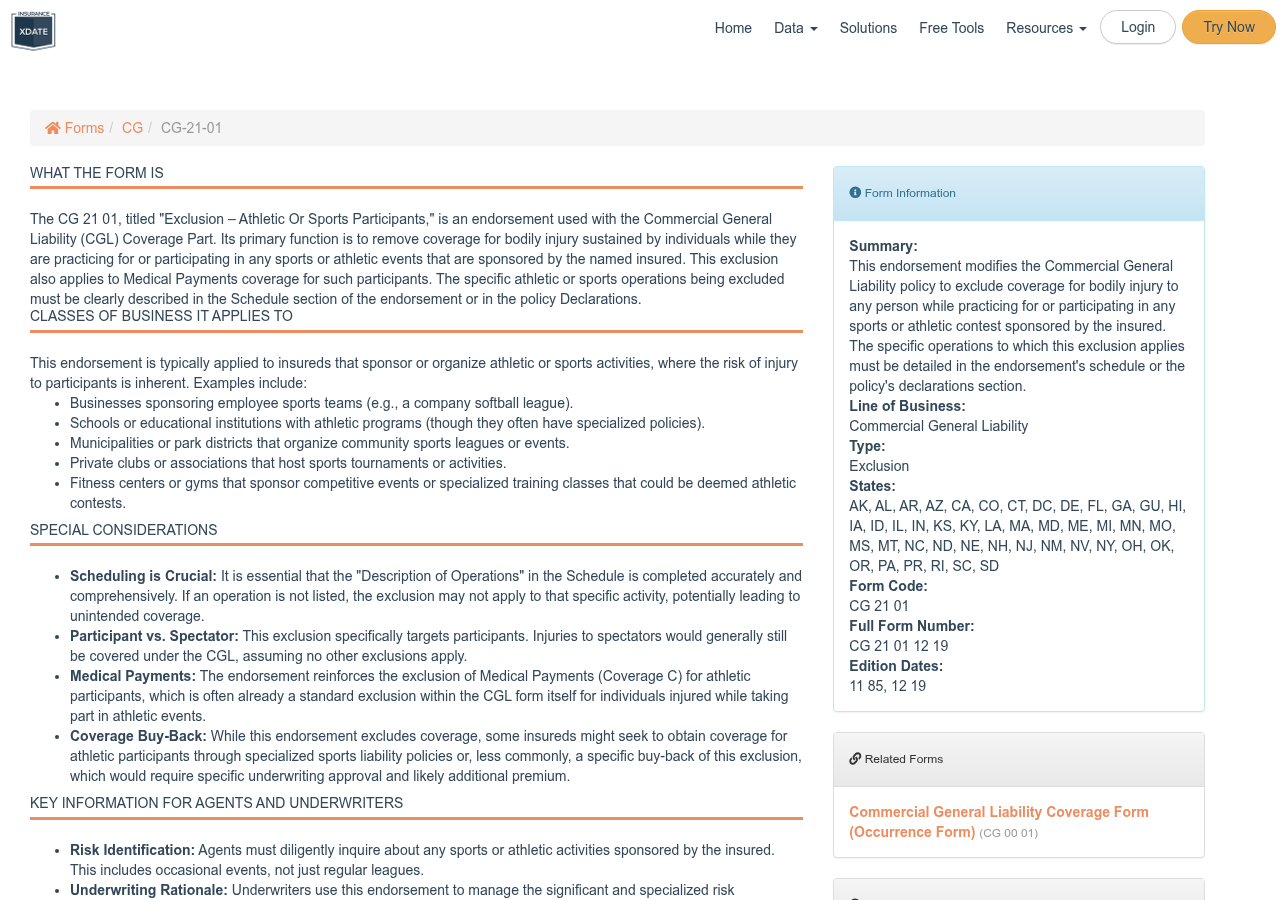
Source 1 of 2 · How endorsements modify coverage
An ISO endorsement reference (CG 21 01 shown). Sub-limits use the same mechanic: an endorsement attached to the base policy modifies the headline limit for a specific category of claim. The structure is in the policy form, not the Dec page.
The sub-limits we see most often on FEC policies:
| Activity / category | Common sub-limit | Implication |
|---|---|---|
| Trampoline or inflatable injuries | $50,000 to $100,000 | One trampoline-park claim usually exceeds it |
| Amusement devices (go-karts, bumper cars, mechanical rides) | $100,000 to $250,000 | The bumper-car case above lives in this row |
| Climbing wall or ropes course | $250,000 | Falls from height are routinely above this |
| Food-related claims (food poisoning, allergic reactions) | $50,000 | A multi-victim food event exceeds it quickly |
None of these limits is wrong on its own. The problem is the gap between what the operator believes they bought ("$1,000,000 of coverage") and what the policy really pays at a claim ("the sub-limit applicable to this activity").
The trap is the disconnect between the Dec page and the policy form. The Dec page sells the headline number. The policy form sets the actual payout. An FEC operator who only reads the Dec page is bringing one number to the carrier and the carrier is bringing a different one.
Bobby Sharp, Action Sports Practice Lead, Specialty Insurance
The injury frequency a sub-limit is supposed to manage
A sub-limit is the carrier's response to a category they expect to produce claims. The injury frequency at multi-activity venues is well documented in industry safety reporting. IAAPA, the global trade association for the amusement and attractions industry, publishes an annual Fixed-Site Amusement Ride Safety Report through the National Safety Council that tracks ride-related injuries and the underlying activity data (IAAPA Annual Safety Reports).
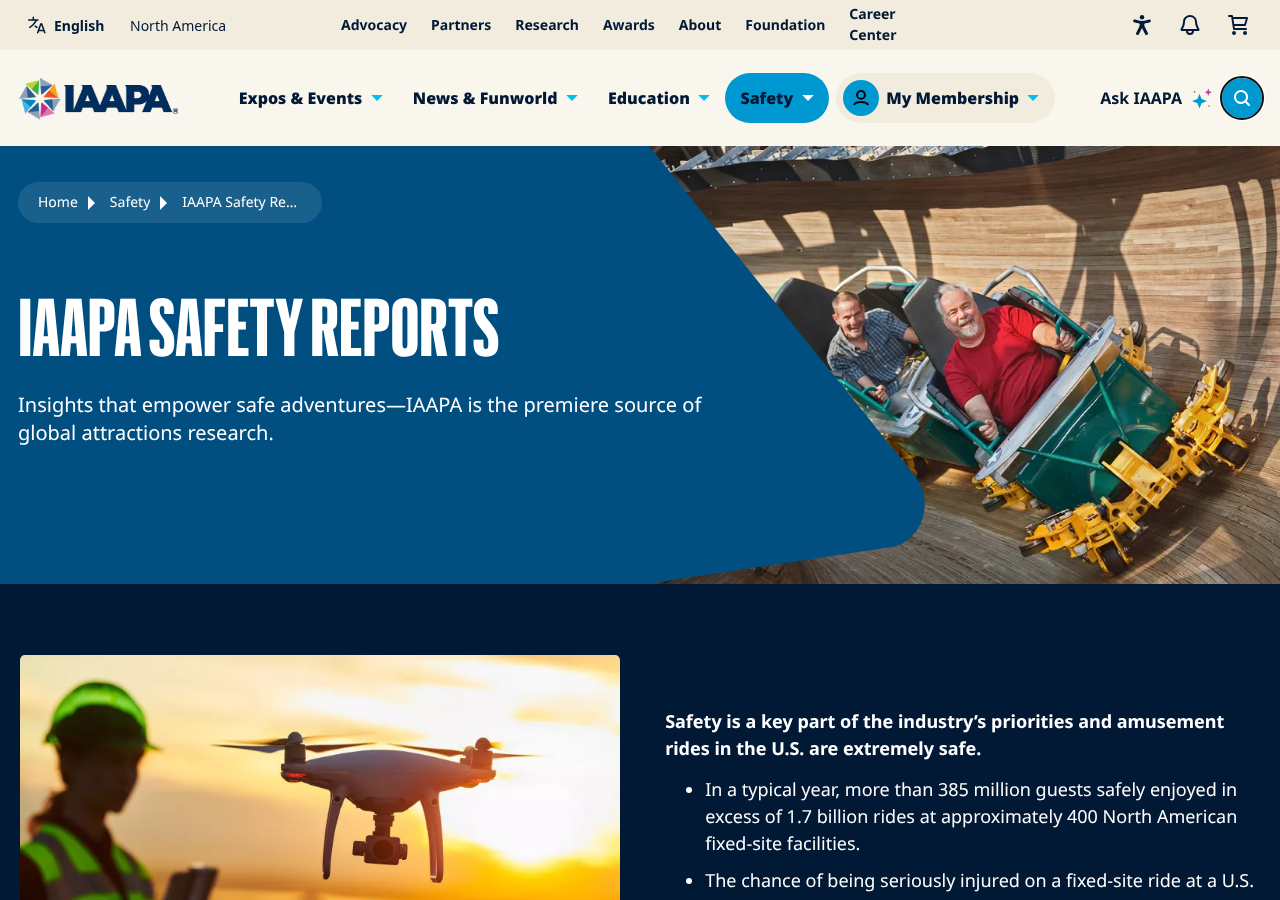
Source 2 of 2 · Industry safety reporting
IAAPA Annual Safety Reports, produced in partnership with the National Safety Council. The published industry record on ride-related injury frequency that informs how carriers structure sub-limits at multi-activity venues.
For an FEC running multiple attractions under one roof, each attraction has its own injury-frequency profile, and a single blended $1M limit, then sub-limited by category, is the structure carriers use to manage that. The fix is not to fight the sub-limits; it is to either negotiate them up to realistic numbers for the actual exposure, or to add umbrella coverage that sits on top.
How to find the sub-limits on your own policy
Pull the full policy, not the certificate, and search it for two things.
First, search for the word "sub-limit" or "per-occurrence limit for." Anywhere those phrases appear with a dollar figure lower than the headline limit, you have a sub-limit on the category named in that section.
Second, look in the schedule of endorsements at the back of the policy. Each endorsement modifies the base policy in a specific way, and many of them attach sub-limits to specific activities. Read each one against what you operate.
If you find sub-limits, three questions decide whether they are a problem.
- Does the sub-limit category match an attraction I operate? If you run a trampoline park, a $50,000 trampoline sub-limit is a problem. If you do not run trampolines, the same sub-limit is irrelevant.
- Is the sub-limit large enough to cover a realistic claim on that attraction? A serious bumper-car claim is almost always above $250,000. A serious trampoline claim is almost always above $250,000. A $50,000 to $100,000 sub-limit on either is too small.
- Is there an umbrella that sits on top of the sub-limited base? If yes, the umbrella's per-occurrence layer may pick up where the sub-limit ends. If no, the sub-limit is the cap.
The FEC underwriter who buys the cheapest policy is the one paying for the sub-limits. The policy is cheap because the carrier capped its exposure on the categories most likely to produce claims. Reading the dec page does not surface that. Reading the endorsement schedule does.
Bobby Sharp, Action Sports Practice Lead, Specialty Insurance
"Specialty Insurance has been an incredible foundation for our business. They are personal, professional, and easy to work with."
Ballahack Airsoft LLC
Verified customer review
How to fix an FEC policy with sub-limit problems
Four moves, in order.
- Inventory your attractions by category: amusement devices, trampolines, inflatables, climbing, ropes, food, alcohol. Each one has its own sub-limit risk profile.
- Get the sub-limits in writing from the carrier, by category. Compare each one to a realistic serious-claim number for that attraction.
- Negotiate the sub-limits up to numbers that match the real exposure. For most FECs running multiple attractions, $1M per occurrence with $500,000 to $1M sub-limits is closer to realistic than $1M with $50,000 to $100,000 sub-limits.
- Add umbrella or excess coverage. $2M to $5M of excess liability is usually a modest premium against the catastrophic-claim exposure of a multi-attraction FEC. The bumper-car case at the top of this article does not happen if the operator had $2M of umbrella sitting on top, because the umbrella picks up the gap between the $100,000 sub-limit and the settlement.
The broader version of this discipline is in our writeup on the action-sports insurance mistakes that cost a claim, and the multi-location version is in opening a second location and what changes.
Frequently Asked Questions
What is a sub-limit on an insurance policy?
A sub-limit is a cap that applies to a specific category of claim, even when the policy's overall limit is higher. A policy with a $1,000,000 per-occurrence limit can carry a $100,000 sub-limit on amusement-device injuries, meaning the policy pays no more than $100,000 on a claim in that category regardless of the headline number.
Where do FEC sub-limits typically apply?
Common sub-limit categories on FEC policies include trampoline and inflatable injuries, amusement-device injuries (go-karts, bumper cars, mechanical rides), climbing wall and ropes-course incidents, and food-related claims (food poisoning, allergic reactions).
How do I find the sub-limits in my own policy?
Pull the full policy, not the certificate, and search for the words "sub-limit" or "per-occurrence limit for." Read every endorsement at the back of the policy, since many endorsements attach sub-limits to specific activities.
Does umbrella insurance cover what a sub-limit does not?
Often, yes, if the umbrella sits on top of the policy where the sub-limit applies and the umbrella's drop-down provisions respond. The exact answer depends on the policy language, so confirm in writing with the carrier or broker before you rely on it.
What limits should a multi-attraction FEC carry?
For most FECs running multiple attractions, $1M to $2M per occurrence with sub-limits negotiated up to realistic numbers ($500,000 to $1M depending on attraction), plus $2M to $5M of umbrella or excess coverage. The exact mix depends on attraction count, revenue, and claim history.
Sources
- IAAPA Annual Safety Reports, in partnership with the National Safety Council. iaapa.org
- ISO Commercial General Liability form CG 21 01 (endorsement-mechanics reference). insurancexdate.com
- Specialty Insurance. The Insurance Mistakes That Cost Action-Sports Operators a Claim
- Specialty Insurance. Opening a Second Location: What Changes in Your Action-Sports Insurance