


A waiver is a defense, not a coverage
Every action-sports operator has heard some version of the logic: "We have everyone sign a waiver, so we're covered." Some version of it has been said in every climbing gym, trampoline park, axe-throwing venue, and go-kart track in the country. It is understandable, the waiver feels like a legal shield, and it is sitting in the binder.
It is also wrong. A waiver and an insurance policy are different instruments. A waiver is a defense the venue can raise against a participant's claim. Insurance is what pays the medical bill, the defense costs, and the settlement when the claim arrives. Treating one as a substitute for the other is the single most expensive mistake we see in action-sports risk management, because the moment the waiver does not hold, the venue learns there was nothing behind it.
Here is what a waiver does, where it fails, and how to use both correctly.
What a well-drafted waiver does
A waiver is a contract. Signed by an adult participant, drafted to match the law of the state, and presenting the inherent risks of the activity, a waiver can shift some liability back onto the participant for those inherent risks.
The classic action-sports waiver win is summary judgment. The participant sues, the venue files a motion citing the signed waiver, and the court grants the motion before the case ever reaches a jury. The leading example in the recreation space is McCune v. Myrtle Beach Indoor Shooting Range, Inc., 364 S.C. 242 (2005), where the South Carolina Court of Appeals upheld a venue's waiver and granted summary judgment after a participant lifted her protective mask and was struck in the eye (McCune v. Myrtle Beach Indoor Shooting Range).
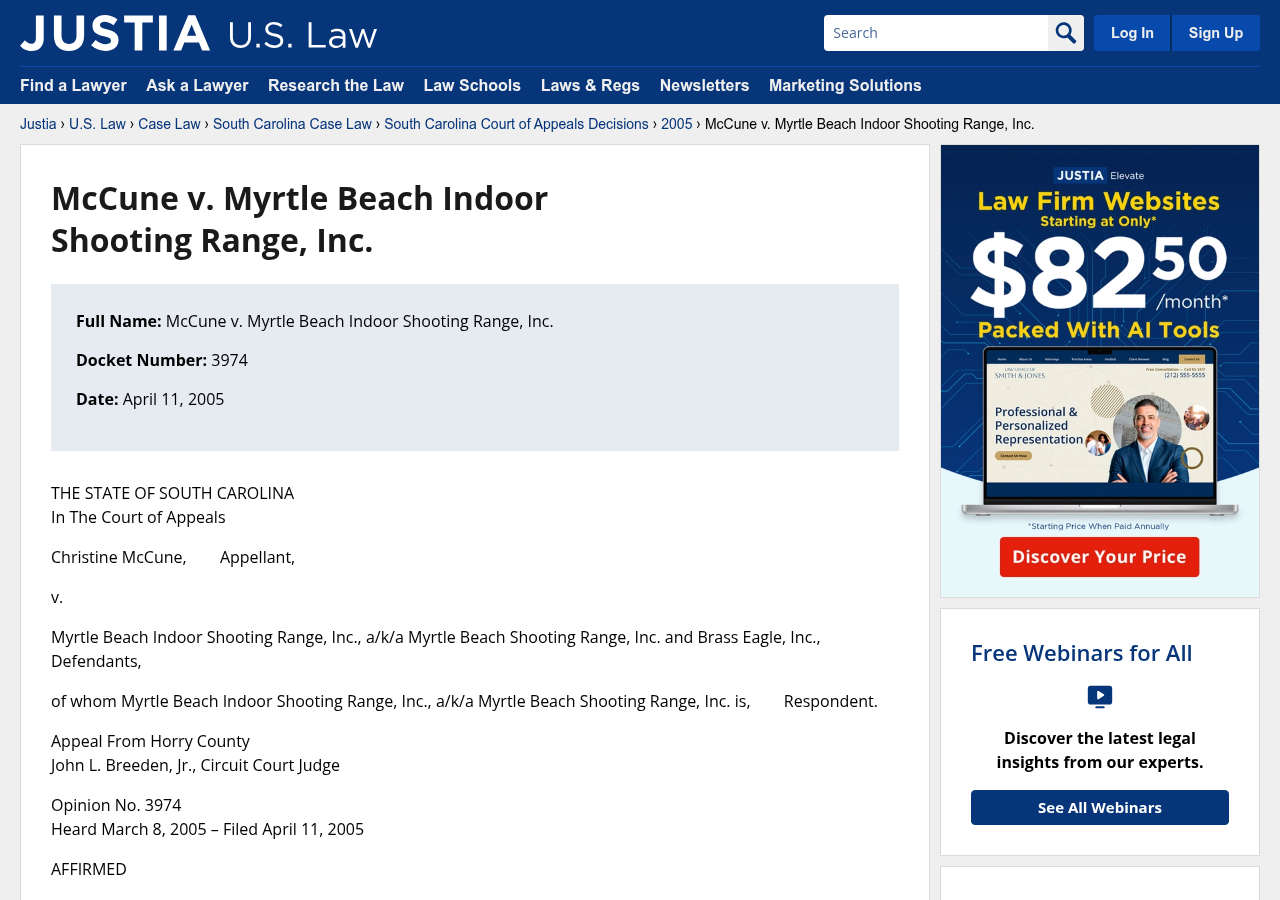
Source 1 of 2 · Anchor recreation-waiver precedent
McCune v. Myrtle Beach Indoor Shooting Range, Inc., 364 S.C. 242 (S.C. Ct. App. 2005). The court upheld the venue's waiver and granted summary judgment after a participant lifted her mask. This is what a strong waiver delivers at its best.
Source: law.justia.com/cases/south-carolina/court-of-appeals/2005/3974.html
That outcome is what a good waiver looks like at the end of a claim, and it is also the limit of what a waiver can do.
Where waivers fail
Five fact patterns void or weaken waivers at action-sports venues. Plaintiff's counsel looks for these first.
1. Gross negligence or recklessness
Even in jurisdictions that broadly enforce recreational waivers, the waiver does not release a defendant from liability for gross negligence (conduct showing extreme indifference to safety) or willful misconduct. A plaintiff's firm that focuses on paintball and recreation injury claims sets this out cleanly: gross negligence, public policy bars, confusing or hidden waiver language, fraud in execution, and intentional acts are the five common grounds plaintiff's counsel uses to attack a venue's release (Reiff Law Firm, paintball-waiver analysis).
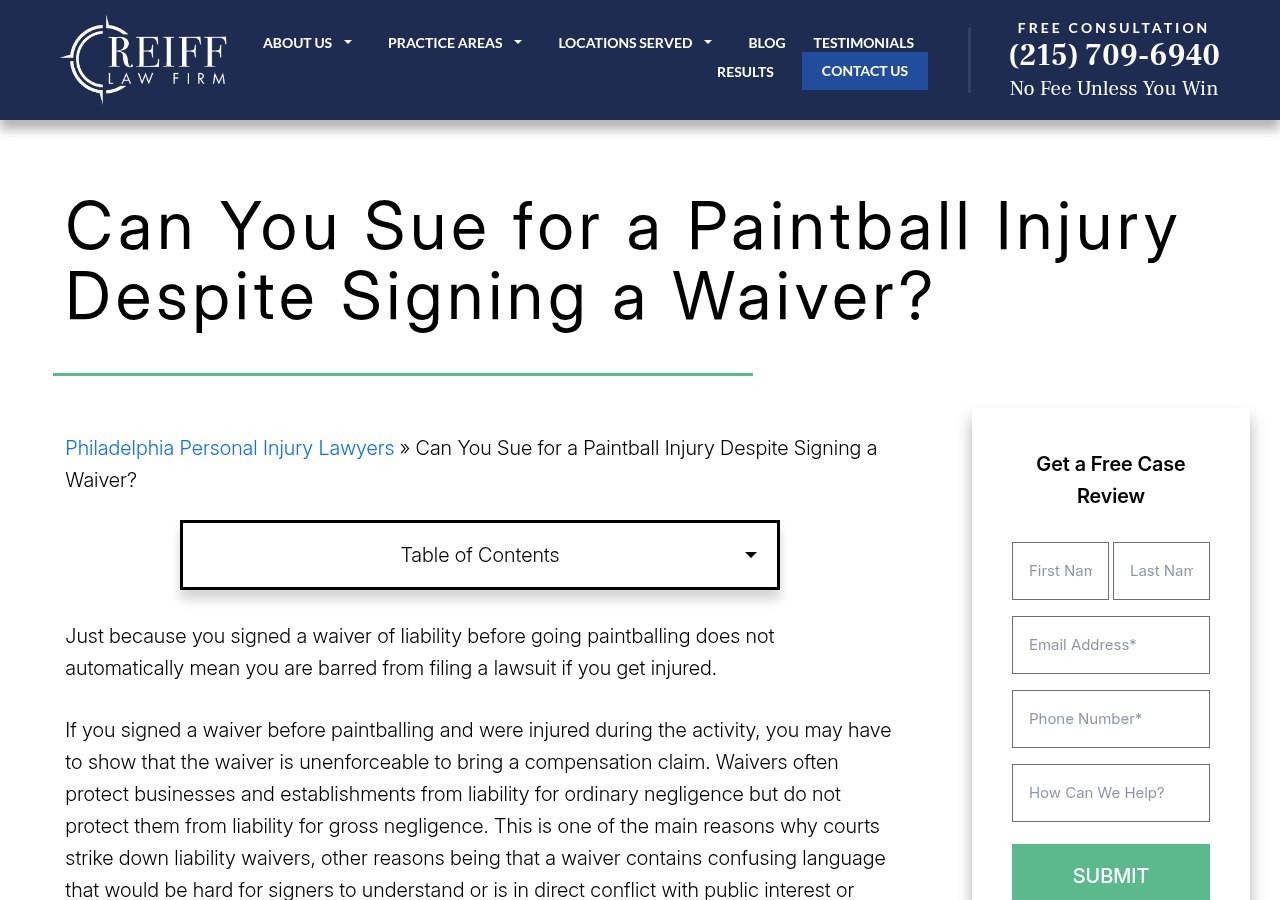
Source 2 of 2 · Plaintiff-side waiver analysis
Reiff Law Firm's analysis of recreation waivers in injury cases. The five grounds plaintiff's counsel uses to attack a venue's release: gross negligence, public-policy bars, confusing language, fraud in execution, and intentional acts.
Source: reifflawfirm.com/can-you-sue-for-a-paintball-injury-despite-signing-a-waiver
If a climbing gym ignored a known hazard, a trampoline park failed to maintain equipment, or a go-kart track let a vehicle run with a documented defect, the waiver is unlikely to protect against the resulting claim.
2. Public policy bars (state-specific)
Some states refuse to enforce recreational waivers altogether, particularly when minors are involved or when the venue is open to the public. New York General Obligations Law § 5-326 voids waivers for places of amusement charging a fee. The Wisconsin Supreme Court voided a fitness-center waiver in Atkins v. Swimwest on public-policy and ambiguity grounds. A venue operating in either state should treat its waiver as a soft layer, not a hard one.
3. Hidden or confusing language
Courts have voided waivers where the release language was buried in dense paragraphs, printed in small type below an unrelated section, or contradicted by other provisions. The defense bar's working rule: the release paragraph is conspicuous (bold, separate, signed on its own line), plain-language, and not contradicted anywhere else in the document.
4. Minors
A waiver signed by a parent on behalf of a minor child is unenforceable in many states. Where it is enforceable, the enforceability is often narrower than for adult-signed waivers. A venue that runs youth play needs a minor's release drafted to the law of the operating state, reviewed by local counsel.
5. Third parties
A waiver only binds the people who sign it. Spectators, bystanders, vendors, and other customers are outside its scope. The participant's friend who came along to watch and was struck by an errant projectile, the vendor who tripped over equipment, the visitor who slipped in the parking lot, none of them signed a waiver and none of them are bound by one.
A waiver is a defense. Insurance is what pays. The venue that treats the waiver as the coverage is the venue whose owner finds out, on the day a serious claim arrives, that nothing was behind the waiver.
Bobby Sharp, Action Sports Practice Lead, Specialty Insurance
What insurance does that a waiver cannot
The waiver and the policy do different jobs. The clean version of the difference:
| What it does | A waiver | Insurance |
|---|---|---|
| Pays the participant's medical bills | No | Yes (Participant Accident) |
| Pays defense costs while the case is litigated | No | Yes |
| Pays a judgment or settlement when liability is found | No | Yes (Participant Legal Liability) |
| Provides a defense at the summary-judgment stage | Sometimes, if enforced | Always, as part of the defense the carrier provides |
| Covers spectators, vendors, and bystanders | No, only signers | Yes (General Liability) |
| Survives a gross-negligence finding | No | Yes |
A waiver does not provide anyone with anything. It limits what the signing participant can collect from the venue. Insurance pays. That is the distinction. The two work together: a strong waiver, used alongside strong insurance, gives the defense the best chance at summary judgment and pays the settlement when summary judgment does not hold. The broader coverage-gap pattern, where operators assume the waiver does the work the policy is supposed to do, runs through every action-sports vertical we underwrite (we documented the wider pattern in the action-sports coverage gaps a generalist agent will miss).
The right way to think about it: the waiver is the seatbelt and the airbag is the insurance. The seatbelt does most of the work in a small impact. The airbag is what keeps the operator alive in a serious one. Operators who think they only need the seatbelt are reading the wrong number on the speedometer.
Bobby Sharp, Action Sports Practice Lead, Specialty Insurance
"Specialty Insurance diligently takes their time and works with you, making sure your business has all the correct and specific coverages you need. There is no other source out there that does what they do."
Gel Tag San Diego LLC
Verified customer review
What a venue should do this week
Three steps close the gap between waiver and coverage.
- Review the waiver template. Confirm a conspicuous release paragraph, a separate signature line for the release, a clear assumption-of-risk section listing the venue's specific hazards, a gross-negligence carve-out clause, and a state-of-law clause naming the operating state. Have local counsel admitted in your state review it once.
- Confirm participant-injury coverage is named on the policy. A waiver does not substitute for Participant Accident and Participant Legal Liability coverage. We covered the distinction at length in participant injury vs general liability.
- Log every waiver to the date of play. When a claim arrives, the defense file needs the participant's signed waiver matched to the date of the incident. A waiver in a binder that no one can find is the same as no waiver at all. The first-24-hours playbook is in how to handle an injury claim at your action-sports venue.
Frequently Asked Questions
Do waivers replace insurance for an action-sports venue?
No. A waiver is a contract defense that can sometimes end a case at summary judgment when enforced. It does not pay medical bills, defense costs, or settlements. Insurance pays those. The two work together.
Are recreation waivers enforceable in every state?
No. Some states refuse to enforce them, particularly for places of amusement charging a fee. New York General Obligations Law § 5-326 voids them for fee-charging amusement venues. Wisconsin has voided them on public-policy and ambiguity grounds. Operators in those states should treat the waiver as a soft layer of protection only.
Does a waiver protect against gross-negligence claims?
No. Across nearly every US jurisdiction, a waiver cannot release a defendant from liability for gross negligence or willful misconduct. This is one of the five common grounds plaintiff's counsel uses to defeat a recreation waiver.
Are parent-signed waivers binding on minor children?
In many states, no. Courts are split, and where parental waivers are enforceable they are often narrower than adult-signed ones. A venue running youth play needs a minor's release drafted to state law and reviewed by local counsel.
What is a gross-negligence carve-out clause?
A clause stating that the waiver does not apply to grossly negligent or willful conduct. Including it signals that the venue is asserting the release only as to ordinary negligence, which is what most jurisdictions enforce. Without the carve-out, plaintiff's counsel can argue the entire waiver overreaches.
Sources
- McCune v. Myrtle Beach Indoor Shooting Range, Inc., 364 S.C. 242 (Ct. App. 2005). law.justia.com
- Reiff Law Firm. "Can You Sue for a Paintball Injury Despite Signing a Waiver?" 2024, updated Feb 2025. reifflawfirm.com
- New York General Obligations Law § 5-326.
- Atkins v. Swimwest Family Fitness Center, 691 N.W.2d 334 (Wis. 2005).
- Specialty Insurance. The Action-Sports Coverage Gaps a Generalist Agent Will Miss
- Specialty Insurance. Participant Injury vs General Liability
- Specialty Insurance. How to Handle an Injury Claim at Your Action-Sports Venue